Neuropathy
How to Treat Neuropathy Without Surgery
Non-surgical neuropathy treatment in Salem Oregon using Neubie therapy. Get expert care at HWY Physical Therapy Clinic for nerve pain relief.
Dr. Raj Pusuluri offers Neubie (NeuFit) therapy in Salem, OR for neuropathy in adults 50+. Direct-pay physical therapy that retrains nerves. Book today.
If you have neuropathy, you already know the feeling. The numbness that creeps into your feet. The burning or tingling that shows up at night. The moment when a floor you have walked across a thousand times suddenly feels uncertain under your feet.
And you may know something else too: the feeling of being told there is nothing more to do. A lot of people over 50 come to us after hearing exactly that. They have tried a pill that made them foggy. They have been handed a small buzzing device and sent home. And they walked away thinking this is just something they have to live with now.
We want to offer a different conversation. At HWY Physical Therapy in Salem, Dr. Raj Pusuluri uses a technology called the Neubie, and it takes a genuinely different approach to nerve and muscle problems. No other physical therapy clinic in Salem offers it. Here is what it is, in plain language, and who it can and cannot help.
The Neubie (the name is short for Neuro-Bio-Electric Stimulator) is an FDA-cleared medical device that uses direct current to stimulate your nerves and muscles. It is used by licensed clinicians as part of hands-on physical therapy, not as a gadget you take home and forget about.
Here is the idea behind it. After an injury, surgery, illness, or years of a condition like diabetes, your nervous system can get stuck in protective patterns. It quiets down muscles, guards against movement, and keeps sending signals that no longer serve you. The Neubie is designed to work with that nervous system directly, helping to re-educate it so that the right muscles switch back on and move the way they are supposed to.
The company behind it, NeuFit, describes a three-step approach that Dr. Raj follows in the clinic:
The Neubie is FDA-cleared for a specific set of uses, and it is worth being precise about them. Those cleared indications include neuromuscular re-education, increasing range of motion, improving local blood circulation, preventing muscle atrophy, reducing muscle spasms, and the management of chronic and post-surgical pain. Those are exactly the kinds of challenges that make neuropathy so frustrating to live with.
If you have been handed a small electrical stimulation device before, it was probably a TENS unit. Understanding the difference matters, because it is the whole point.
Most electrical stimulation devices, TENS units included, use alternating current. That means the electrical signal switches direction many times every second. It can feel good in the moment, and it can dull pain for a little while, but it is essentially masking the signal. It covers up the pain rather than changing what your nerves and muscles are doing.
The Neubie uses direct current instead. As NeuFit puts it plainly, the Neubie is not a TENS unit. By sustaining current in one direction, the Neubie is built to maximize neuromuscular re-education, meaning it works on retraining the connection between your brain, your nerves, and your muscles rather than just quieting a symptom. The waveform is also engineered to be more comfortable on the skin than older direct-current devices.
In short: a TENS unit is designed to make pain feel further away. The Neubie is designed to help your nervous system work better. Those are two very different goals.
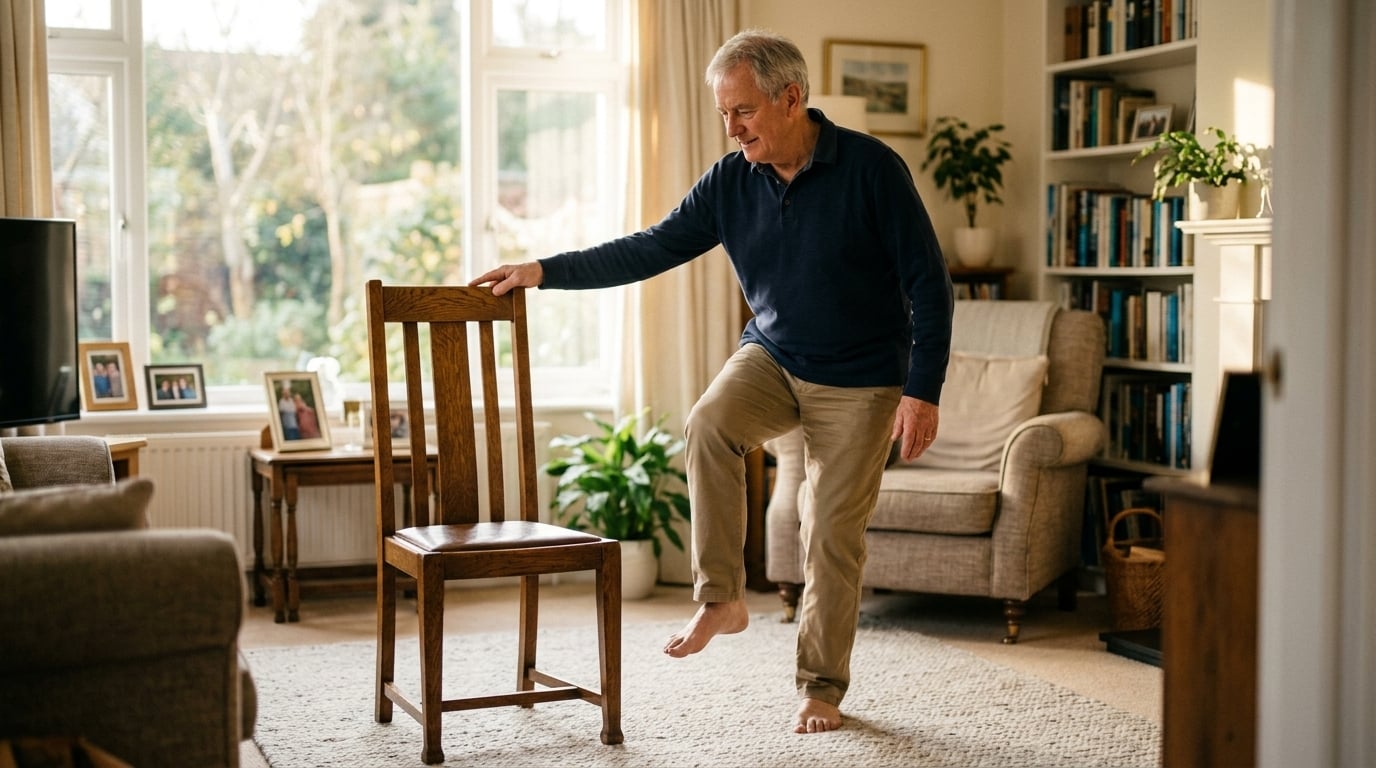
When most people think about neuropathy, they think about the burning and the tingling. Those symptoms are miserable, and they matter. But if you are over 50, there is a quieter danger that often matters even more: your balance.
Here is why. Healthy feet are constantly sending your brain a stream of information. They tell it where the ground is, whether the floor is level, whether you are starting to tip. That sense of where your body is in space is called proprioception, and you rely on it every second you are on your feet without ever thinking about it.
Neuropathy interrupts that stream. As the nerves in your feet lose sensitivity, your brain stops getting clear signals, and your body loses one of its main tools for staying upright. That is not a small thing. Research on older adults has found that peripheral neuropathy is an independent risk factor for falls, meaning it raises your risk on its own, separate from any other health issue. Studies have found the fall risk for older adults with peripheral neuropathy is roughly two to three times higher than for those without it.
And a fall at our age is rarely just a fall. It can mean a fractured hip, a long recovery, a loss of confidence, and a fear of falling that quietly shrinks your world until you stop going places you used to love. This is exactly why we treat neuropathy as seriously as we do. It is not only about comfort. It is about keeping you on your feet and independent.
This is also where the Neubie fits into a bigger plan. On its own, no device fixes balance. But by helping re-educate the connection between your nerves and your muscles, the Neubie can support the two things that genuinely protect you: strength and balance training. Dr. Raj pairs the Neubie with targeted exercises so the work builds on itself. The stimulation helps wake up muscles and movement patterns, and the training turns that into steadier standing, more confident walking, and a lower risk of the fall you are trying to avoid.
We are careful about what we claim, so here is the honest picture. A randomized controlled trial published in the Journal of Diabetes Research in 2025 compared direct-current stimulation using the Neubie against a standard TENS unit for people with diabetic peripheral neuropathy. It included 150 participants across 13 sites in the United States.
The results were striking. The group treated with the Neubie showed significant improvements in neuropathy symptom scores, in sensation (both fine touch and vibration sense), in pain, and in some measures of nerve conduction. The group treated with the TENS unit showed no significant improvement in any of those measures.
Those measures can sound like jargon, so here is what they actually mean for a real person:
That is one study, and no single study is the final word. But it is real, peer-reviewed research showing measurable change in the nerves themselves, not just a temporary dip in pain, for exactly the kind of neuropathy many of our patients live with.
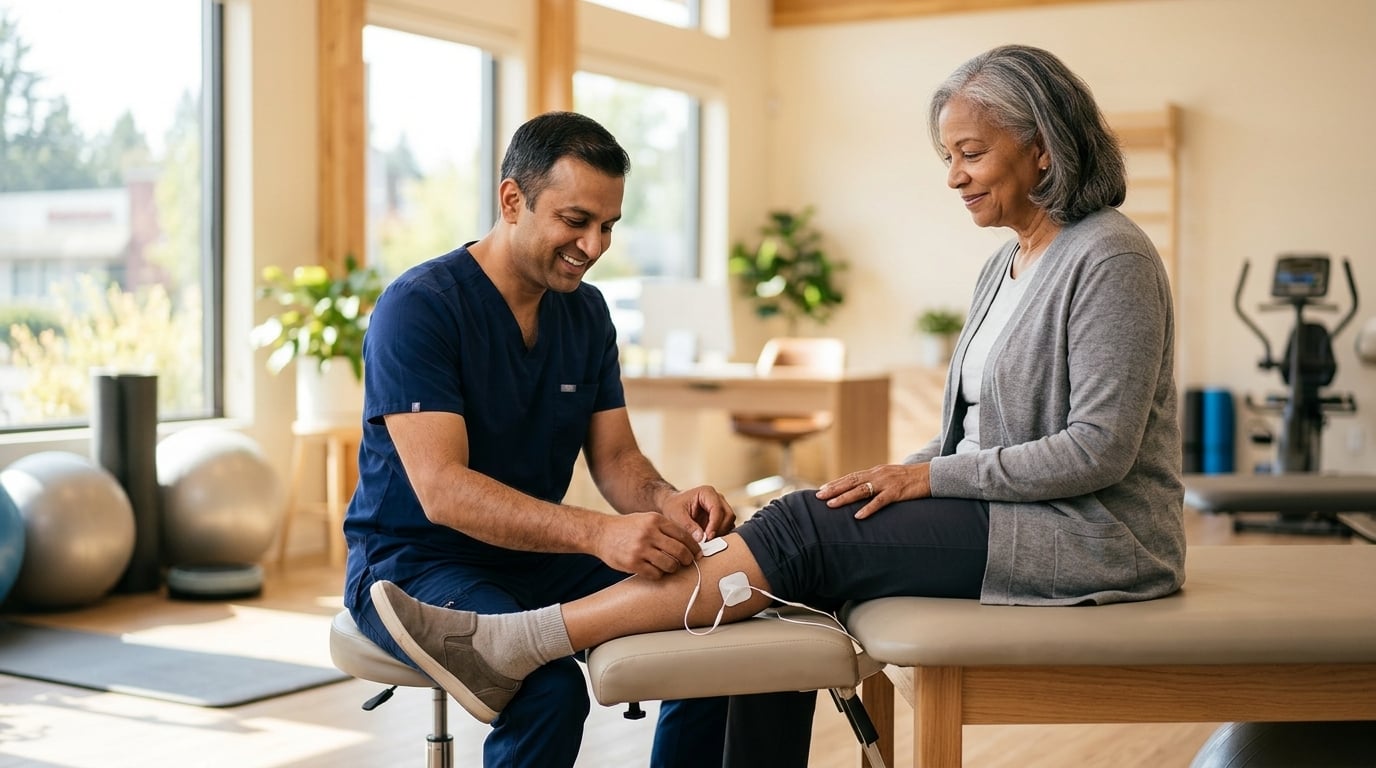
The Neubie is a tool. What makes it work is how it is used, and that is where Dr. Raj Pusuluri comes in. He is a doctor of physical therapy who has built his practice around adults over 50 and healthy aging, so he understands that the goal is rarely just less tingling. The goal is walking to the mailbox without watching your feet. Getting up from a chair without a second thought. Feeling steady enough to keep doing the things you love.
A typical visit is not you sitting alone with a machine. Dr. Raj maps where your nervous system is holding back, then pairs the Neubie's stimulation with targeted movement and exercise so your body relearns better patterns. It is active, hands-on, and built entirely around what you are trying to get back to. Because neuropathy so often steals balance and confidence, that work usually connects directly to strength and fall-prevention training, which are two of the most important things you can do to stay independent as you age.
If you have never done physical therapy before, or if past experiences left you cold, it helps to know what to expect. Here is how a first evaluation with Dr. Raj generally goes.
Step one: your story. Before any device comes out, Dr. Raj listens. When did the symptoms start? Where exactly do you feel them? What has gotten harder, walking the dog, standing at the stove, getting up in the night? What have you already tried? This is not a formality. Your goals shape the entire plan.
Step two: a hands-on assessment. Dr. Raj checks your sensation, your strength, your balance, and how you move. This is where he gets a real picture of how the neuropathy is affecting your daily life and your fall risk, not just your comfort.
Step three: mapping with the Neubie. Following the NeuFit method, Dr. Raj uses the Neubie to scan and identify the areas where your nervous system is guarding, under-firing, or holding you back. This is the Identify step, and it points to exactly where the work should focus.
Step four: a first taste of treatment. In many cases you will feel the Neubie in that first visit, paired with gentle, guided movement. You get a sense of what the sessions feel like and what the approach involves before committing to anything more.
Step five: a plan you understand. You leave knowing what Dr. Raj found, whether the Neubie and physical therapy are a sensible fit for you, roughly what a course of care might involve, and what the honest expectations are. No pressure, no jargon, no promises we cannot keep.
If coming in for that first visit feels like a lot, you do not have to start there. A $25 Wellness Screening Call by video lets you talk it all through from your own living room first.
We would rather be straight with you than oversell. Physical therapy, with or without the Neubie, cannot reverse all nerve damage, and we will never promise a cure. What it can do is one of the most effective things available: help you manage neuropathy symptoms, rebuild strength and balance, reduce your fall risk, and stay independent.
The Neubie may be a good fit if you are dealing with neuropathy symptoms like numbness, tingling, burning, or weakness, along with the balance and mobility problems that come with them, and you want an active approach rather than another prescription.
It is not for everyone. The Neubie should not be used by people with a cardiac pacemaker or by anyone who is pregnant. And it works best as part of a full physical therapy plan, not as a one-time fix. The honest answer about whether it is right for you comes from an evaluation, not a blog post.
Does the Neubie hurt? You will feel the stimulation, and it can be intense during certain movements, but the device is specifically engineered to reduce the skin irritation and discomfort that older direct-current devices caused. Dr. Raj adjusts everything to your comfort and works with you throughout the session.
Is the Neubie FDA-cleared? Yes. The Neubie is an FDA-cleared medical device. Its cleared uses include neuromuscular re-education, improving circulation, reducing muscle spasms, and managing chronic and post-surgical pain, all of which are relevant to living with neuropathy.
Can I start without coming into the clinic? Yes. You can begin with a virtual telehealth consultation from the comfort of your own home. It is a simple way to talk through your symptoms, learn whether the Neubie and physical therapy are a good fit, and decide on next steps before you ever come in.
How much does it cost? HWY Physical Therapy is direct-pay, with no insurance required and clear pricing. You can start with a $25 Wellness Screening Call. A full initial evaluation is $175, and follow-up visits are $50 for adults 65 and over, or $75 for those under 65.
How many sessions will I need? Honestly, it depends. Neuropathy varies enormously from person to person, and so does how the body responds. Some people notice changes early, others need a longer, steadier course of care. Rather than guess, Dr. Raj will give you a realistic picture after your evaluation, once he has seen how your nervous system responds. We would rather set honest expectations than sell you a number.
Is the Neubie safe if I have diabetes? Diabetes is one of the most common causes of peripheral neuropathy, and the 2025 research on the Neubie for neuropathy was conducted specifically with people who have diabetic peripheral neuropathy. That said, every person is different, and diabetes affects the body in many ways. Whether it is right for you is a question for your evaluation, where Dr. Raj can review your health history. As always, the Neubie is not for people with a cardiac pacemaker or who are pregnant.
Can I keep using my TENS unit at home alongside this? That is a great question to bring to your evaluation. The Neubie and a TENS unit do different jobs, so Dr. Raj will talk you through how they fit together for your situation rather than us giving a blanket answer here. Bring your device and any questions with you.
Coming in with a few questions helps you get the most from your visit. Here are some worth jotting down:
If you are tired of being told nothing more can be done, let's have a real conversation about your neuropathy. HWY Physical Therapy is the only clinic in Salem offering Neubie nerve re-education, and Dr. Raj would be glad to talk through whether it is right for you.
Start with a $25 Wellness Screening Call from home, or book your visit here: Book your appointment. You can also call us directly at (971) 202-1979.
HWY Physical Therapy 2615 Portland Rd NE Salem, OR 97301 Phone: (971) 202-1979 Hours: Monday to Friday, 8:00 AM to 5:00 PM Walk-ins welcome.
Non-surgical neuropathy treatment in Salem Oregon using Neubie therapy. Get expert care at HWY Physical Therapy Clinic for nerve pain relief.
Learn how outpatient physical therapy for neuropathy improves balance, mobility, and confidence. NEUBIE therapy available at HWY PT.
Learn why neuropathy causes falls and balance problems. Discover exercises, gait therapy, and Neubie rehabilitation at HWY Physical Therapy Clinic.
.png)
Whether you have questions about enhancing strength, increasing mobility, ensuring home safety, managing pain effectively, or preventing falls, I am here to provide expert guidance.
Limited Time Offer - $25 - Learn More