Getting up from a chair shouldn’t feel like a struggle.
Yet for many older adults, that simple movement brings a sharp reminder of knee pain.
You might notice it after sitting for a while.
You lean forward, try to stand, and your knees feel stiff, weak, or even painful.
Some people start using their hands to push themselves up.
Others avoid sitting too long because they know what’s coming next.
This can be frustrating.
It can also raise concerns about balance, safety, and independence.
The truth is, this kind of knee pain is common in seniors.
But that doesn’t mean you have to live with it.
In this guide, you’ll learn:
- Why knee pain happens when standing up
- What conditions might be causing it
- Simple ways to reduce pain right away
- Exercises that actually help
- When to seek expert help in Salem, Oregon
Small changes can make a big difference.
And the right approach can help you move with confidence again.
Why Do Elderly People Have Knee Pain When Getting Up From a Chair?
Knee pain when getting up from a chair usually comes down to three things: stiff joints, weak muscles, and wear in the knee joint.
These issues tend to show up more with age.
After sitting for a while, the knee joint becomes stiff.
The natural fluid that keeps the joint moving smoothly doesn’t circulate as much when you’re still.
At the same time, muscles that support the knee—especially the thighs and hips—may not be strong enough.
So when you stand up, more pressure goes directly into the knee joint.
In many seniors, there’s also some level of joint wear, often from osteoarthritis.
This makes the knee more sensitive to load during movements like standing up.
The result is that first movement feels painful or tight.
Once you start walking, the pain may ease as the joint loosens up.
Why Knee Pain Happens When Getting Up From a Chair in Elderly Individuals
This movement may seem simple, but it puts a surprising amount of stress on the knees.
For seniors, a few key changes in the body make this motion more difficult and painful.
Joint Pressure Increases During Sit-to-Stand Movement
When you stand up, your knees take on most of your body weight.
The pressure on the knee joint can be several times your body weight during this transition.
In younger adults, the joint handles this load well.
In older adults, the cushioning inside the knee may be thinner, so the pressure feels more intense.
This is why that first push to stand often triggers pain.
The joint is suddenly asked to handle a high load after being still.
Muscle Weakness in Seniors Leads to Knee Strain
Strong thigh and hip muscles help lift your body when you stand.
If these muscles are weak, the knees have to do more work.
This shifts extra stress onto the joint.
Over time, even simple movements like standing up can feel harder and more painful.
Many seniors don’t realize this is happening.
They feel knee pain, but the real issue often starts with muscle weakness.
Knee Stiffness After Sitting for Long Periods
Sitting for long periods reduces movement in the knee joint.
This slows down the flow of joint fluid that keeps things smooth.
As a result, the knee feels stiff when you first try to move.
That stiffness can quickly turn into pain when you stand.
After a few steps, the joint loosens up.
That’s why the pain often improves once you start walking.
Is Knee Pain When Standing Up Normal in Seniors or a Warning Sign?
Many older adults assume knee pain is just part of aging.
That’s partly true, but not the full story.
Normal Age-Related Knee Changes
As you age, the knee joint naturally goes through wear and tear.
Cartilage becomes thinner, and joints may feel stiff after sitting.
You might notice mild discomfort when standing up.
It often improves after a few steps or light movement.
This kind of pain is usually manageable.
It doesn’t stop you from doing daily activities.
When Knee Pain Signals a Bigger Problem
Pain that is sharp, worsening, or constant should not be ignored.
It may point to conditions like arthritis, meniscus damage, or joint inflammation.
Watch for signs like:
- Pain that does not improve with movement
- Swelling around the knee
- Feeling like the knee might give out
- Needing support every time you stand
If standing up becomes difficult or painful every time, your body is asking for attention.
Addressing it early can prevent bigger mobility issues later.
Common Causes of Knee Pain When Standing Up From Sitting in Seniors
Knee pain during this movement is usually not random.
There’s often a specific underlying cause that affects how the joint handles load.
Osteoarthritis Knee Pain When Standing Up From Sitting
Osteoarthritis is the most common reason for knee pain in older adults.
It happens when the cartilage in the knee slowly wears down over time.
Without enough cushioning, bones rub more during movement.
This makes standing up feel painful, especially after sitting still.
Many people notice stiffness first, then pain with movement.
The discomfort often improves slightly as the joint warms up.
Patellofemoral Pain Syndrome in Elderly
This condition involves the kneecap not moving smoothly over the joint.
It creates pain at the front of the knee during bending and standing.
You may feel discomfort when getting up, climbing stairs, or sitting for long periods.
The pain is often dull but can become sharp with movement.
Muscle imbalance and poor alignment usually play a role here.
That’s why strengthening exercises can make a big difference.
Meniscus Degeneration and Age-Related Knee Damage
The meniscus acts as a cushion inside your knee.
With age, it can weaken or develop small tears.
This can cause pain when standing, along with clicking or catching sensations.
Some people also feel like their knee locks briefly.
These changes don’t always come from injury.
They can develop slowly over time.
Weak Knees and Reduced Mobility in Older Adults
Sometimes the issue isn’t damage, but weakness.
Muscles around the knee lose strength if they’re not used regularly.
This makes it harder to control movement when standing up.
The knee ends up taking more stress than it should.
Balance can also be affected.
That’s when simple movements start to feel unstable or unsafe.
Symptoms That Should Not Be Ignored With Knee Pain in Elderly
Some level of discomfort can be normal with age.
But certain symptoms are your body’s way of saying something isn’t right.
Sharp Knee Pain When Standing Up
A sharp or sudden pain when you stand up is not something to ignore.
It may point to issues like cartilage damage or joint irritation.
If the pain feels intense or catches you off guard, it needs attention.
This is especially true if it keeps happening.
Knee Swelling, Clicking, or Instability
Swelling around the knee often means inflammation inside the joint.
It can make movement feel tight and uncomfortable.
Clicking or popping sounds may not always be serious.
But if they come with pain or a catching feeling, it could signal internal damage.
A knee that feels unstable or like it might give out is a bigger concern.
This increases the risk of falls.
Difficulty Getting Up From a Chair Without Support
If you always need to push off your hands or rely on support, take note.
This often points to muscle weakness or reduced joint function.
It may start gradually, but it can affect daily independence over time.
Addressing it early can help you stay active and confident.
How to Get Up From a Chair Without Knee Pain (Safe Techniques for Seniors)
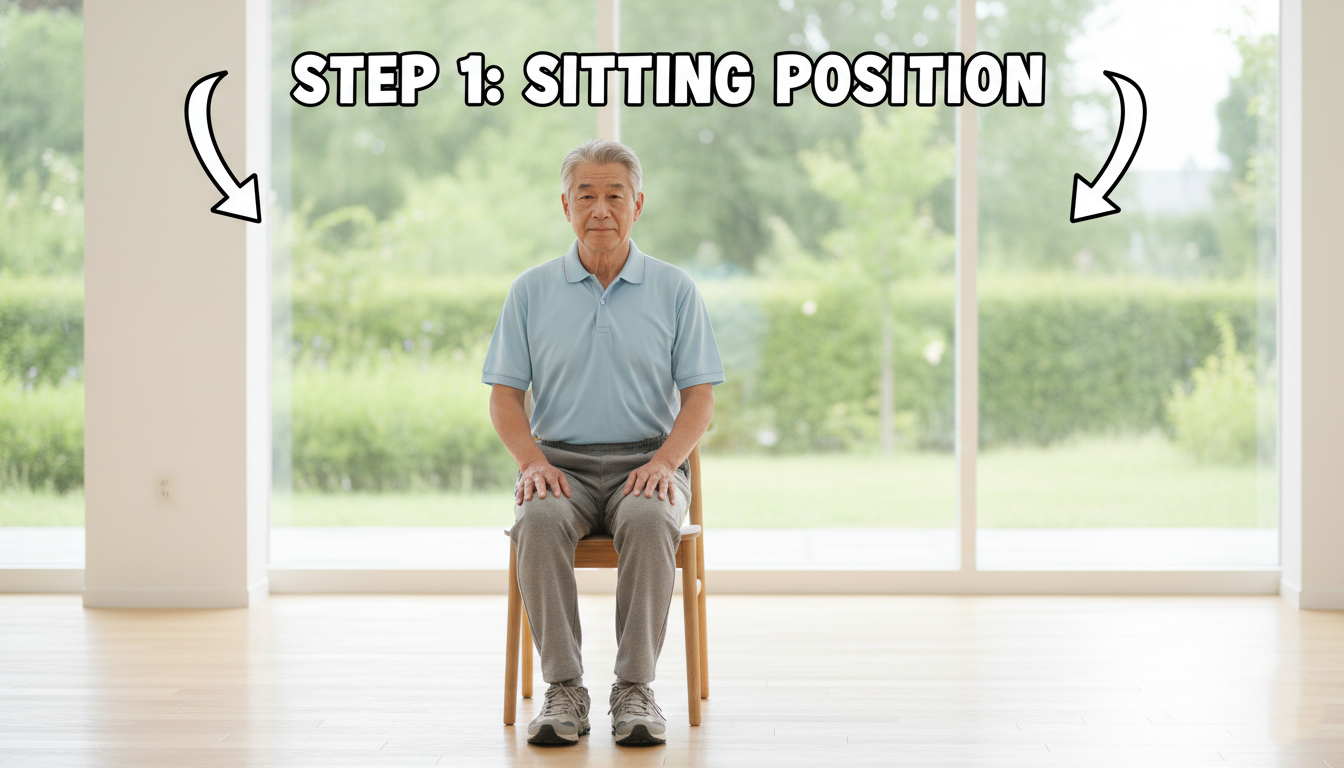
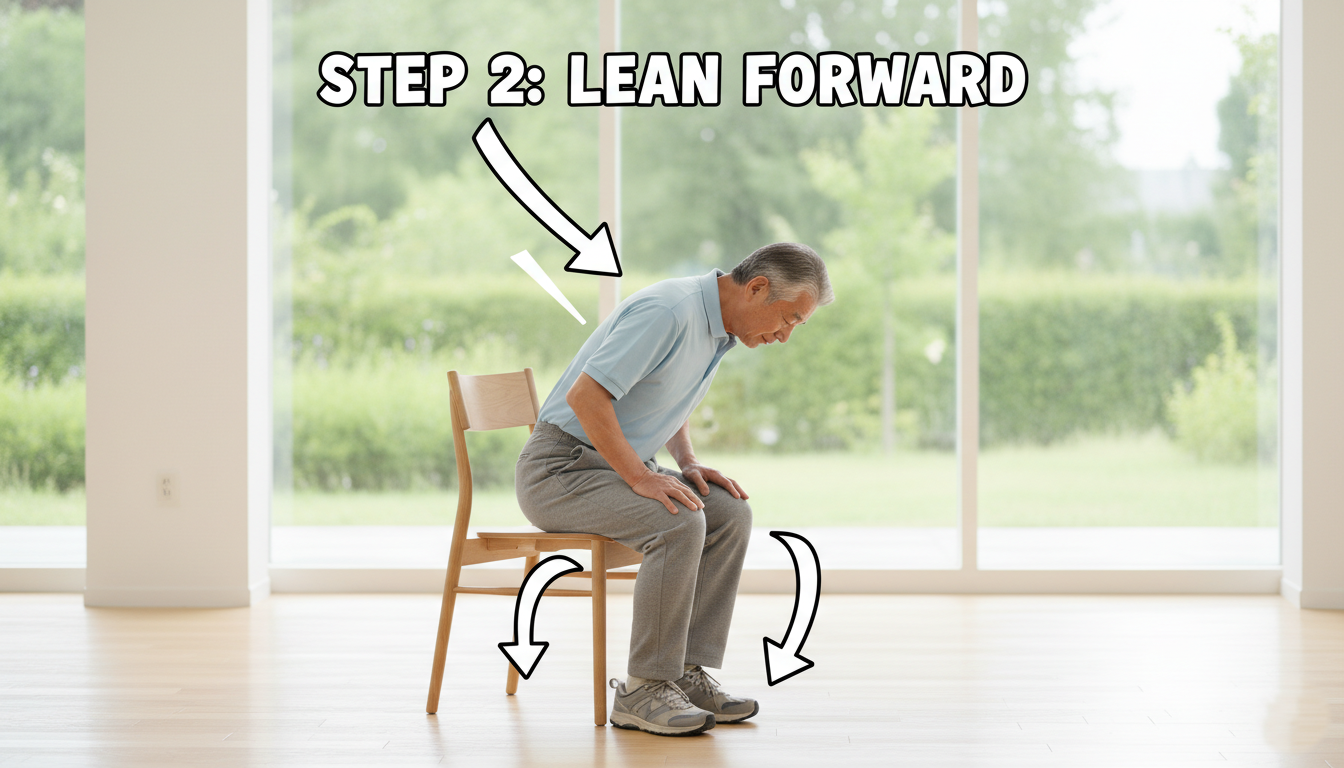
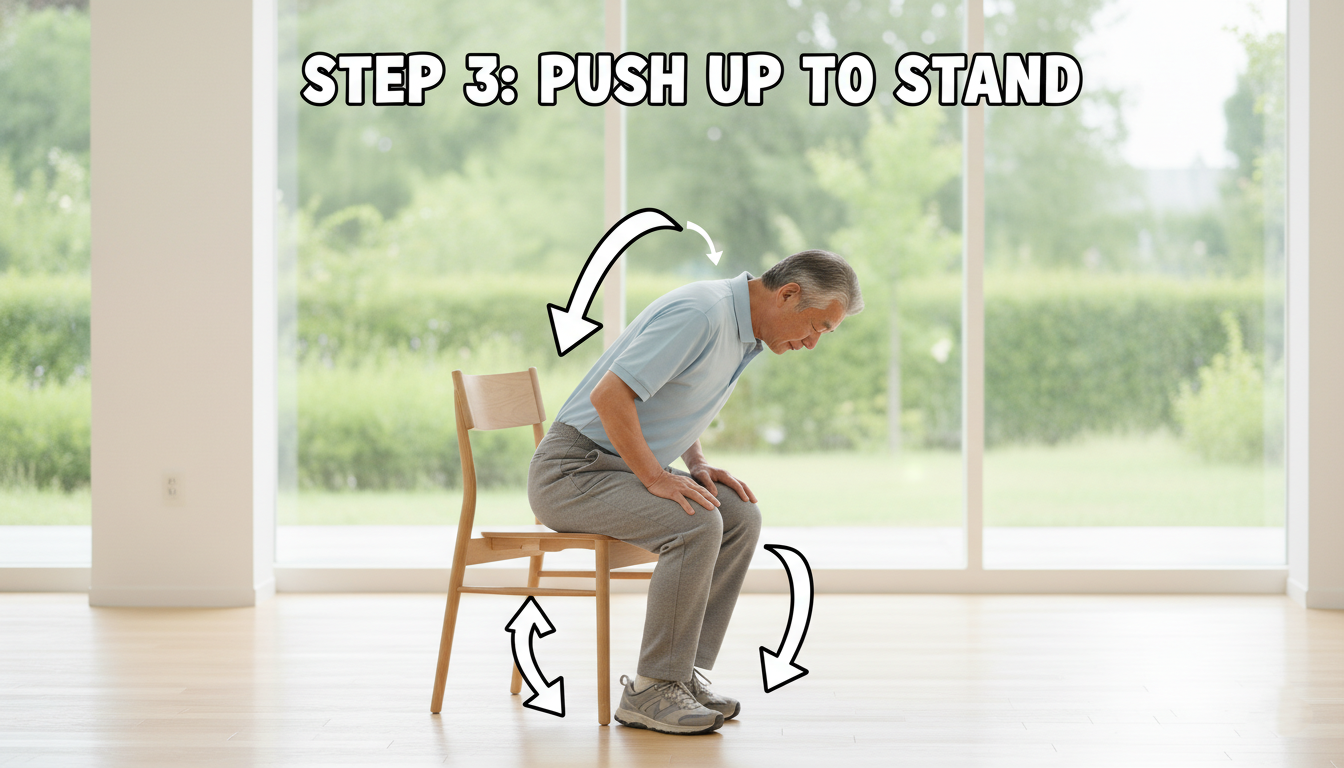
The way you stand up matters more than most people think.
Small adjustments can reduce strain on your knees right away.
Proper Sit-to-Stand Technique for Elderly
Start by sitting near the edge of the chair.
Keep your feet flat on the ground and slightly behind your knees.
Lean your upper body forward.
This helps shift your weight so your legs don’t take all the load at once.
Push through your legs as you stand.
Keep the movement slow and controlled instead of rushing.
Using Armrests and Support the Right Way
Using your hands is not a bad habit.
It’s a smart way to reduce pressure on your knees.
Place your hands on the armrests or your thighs.
Use them to assist the movement, not replace your legs.
Over time, try to rely a little less on your hands.
This helps build strength gradually.
Common Mistakes That Increase Knee Pain
Many people try to stand up with their feet too far forward.
This puts extra strain directly on the knees.
Others lean backward instead of forward.
That makes the movement harder and less stable.
Quick, jerky movements can also trigger pain.
A steady and controlled motion is much safer for your joints.
Best Exercises for Knee Pain When Standing Up Elderly at Home
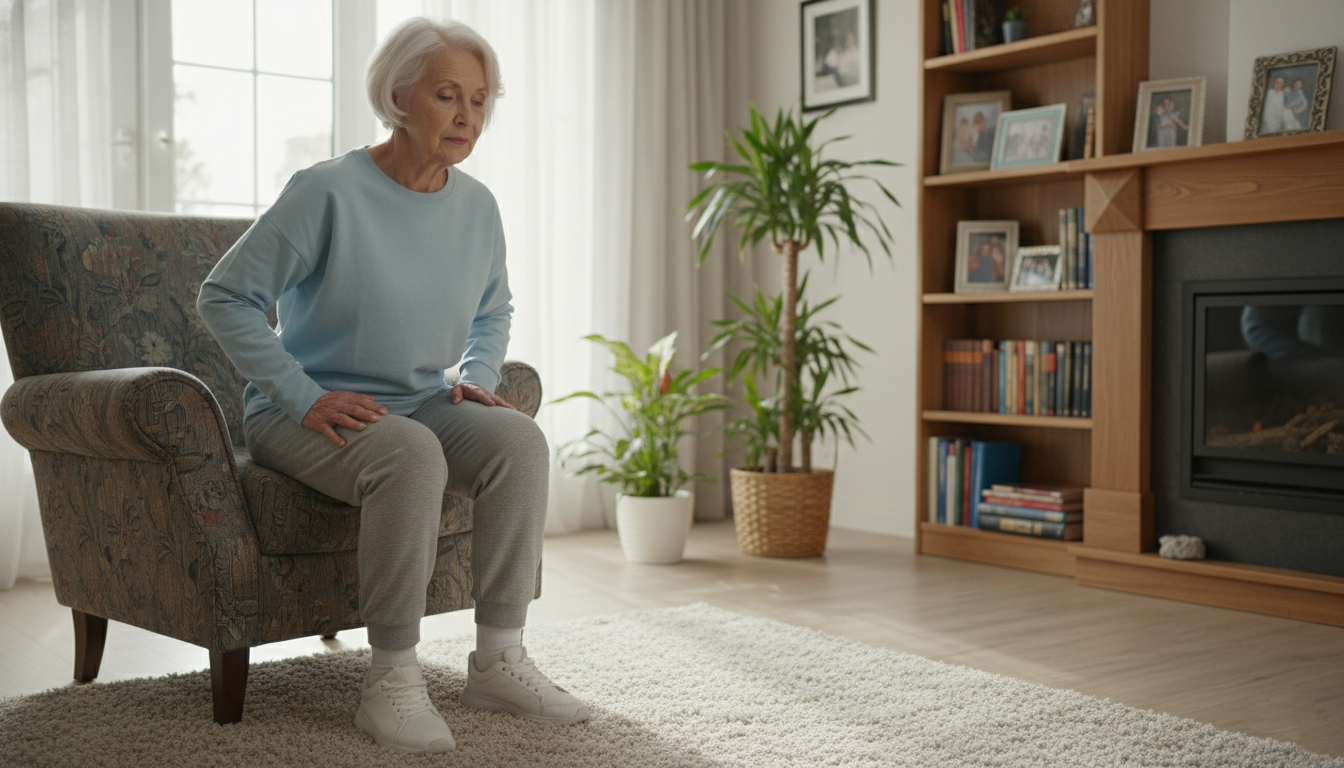
The right exercises can make standing up feel easier and less painful.
You don’t need anything complicated—just simple, consistent movements.
Strengthening Exercises for Weak Knees in Seniors
Stronger muscles take pressure off your knees.
Focus on slow, controlled movements.
Try these:
- Chair Squats
- Sit and stand from a chair slowly
- Use your hands if needed at first
- Repeat 8–10 times
- Seated Leg Raises
- Sit upright and lift one leg straight
- Hold for 3–5 seconds, then lower
- Repeat 8–10 times per leg
- Heel Raises
- Stand and slowly lift your heels
- Hold briefly, then lower
- Helps improve balance and support
These exercises build strength where it matters most.
Over time, standing up will feel more controlled.
Gentle Stretches for Knee Stiffness After Sitting
Stretching helps reduce stiffness before you stand.
It prepares the joint for movement.
- Hamstring Stretch (seated)
- Extend one leg and reach toward your toes
- Calf Stretch (standing)
- Step one foot back and press the heel down
Hold each stretch for about 15–20 seconds.
Keep the movement gentle and steady.
How Often Should Seniors Exercise for Knee Pain Relief
Consistency matters more than intensity.
Aim for light exercise most days of the week.
Start with short sessions.
Even 10–15 minutes daily can make a difference.
Listen to your body.
If something causes sharp pain, stop and adjust.
How to Reduce Knee Pain in Elderly Naturally at Home
You don’t always need complex treatments to feel better.
Simple daily habits can ease knee pain and make movement smoother.
Heat vs Ice for Knee Pain Relief
Heat helps relax stiff joints and muscles.
It’s best used before movement, like getting up after sitting.
Ice works better for swelling or sharp pain.
Use it after activity if the knee feels irritated.
A good rule is simple:
- Use heat for stiffness
- Use ice for swelling
Daily Habits That Protect Your Knee Joints
Small changes in your routine can reduce strain on your knees.
These habits add up over time.
- Avoid sitting for too long without moving
- Stand up slowly instead of rushing
- Keep your weight evenly balanced when standing
- Stay active with light walking or movement
Even short breaks from sitting can help reduce stiffness.
Your joints need regular movement to stay healthy.
Supportive Footwear and Home Modifications
What you wear and how your home is set up matters.
It can make daily movements safer and easier.
- Wear shoes with good support and cushioning
- Avoid slippery floors or loose rugs
- Use chairs with armrests for better support
These small adjustments reduce pressure on your knees.
They also lower the risk of falls.
When to Seek Professional Help for Knee Pain in Salem, Oregon
Sometimes knee pain doesn’t improve with home care.
That’s when getting the right help can make a big difference.
Signs You Need Physical Therapy for Knee Pain
If your pain keeps coming back, don’t ignore it.
Ongoing discomfort often means the underlying issue isn’t being addressed.
Watch for signs like:
- Pain that lasts for weeks
- Trouble standing up without support
- Reduced movement or stiffness that limits daily activity
- Feeling unstable while walking or standing
These signs suggest your knee needs more than rest.
It needs guided treatment and strengthening.
How Physical Therapy Helps Seniors With Knee Pain
Physical therapy focuses on improving how your body moves.
It doesn’t just treat pain—it targets the cause.
A good program can help you:
- Build strength in the right muscles
- Improve balance and stability
- Reduce pressure on the knee joint
- Move with more confidence
The goal is simple.
Help you stay independent and active.
Knee Pain Treatment at HWY Physical Therapy in Salem Oregon
At HWY Physical Therapy, Dr. Raj works closely with seniors facing knee pain.
The focus is on safe, personalized care that fits your daily life.
You’ll get a plan designed around your needs and comfort level.
The aim is to help you stand, walk, and move without fear or pain.
Preventing Knee Pain When Getting Up From a Chair in Seniors
Preventing knee pain is often easier than treating it later.
A few consistent habits can protect your knees and keep you moving comfortably.
Building Strength and Balance Over Time
Strong muscles support your knees during daily movements.
They reduce how much pressure goes directly into the joint.
Focus on simple strength exercises a few times a week.
Even light training can improve stability and control.
Balance is just as important.
Better balance lowers your risk of falls and builds confidence.
Staying Active Without Overloading the Knees
Too much rest can make stiffness worse.
But overdoing activity can also increase pain.
The key is to stay active in a controlled way.
Walking, light stretching, and gentle exercises work well.
Avoid sudden increases in activity.
Build up slowly so your knees can adapt.
Creating a Knee-Friendly Daily Routine
Your daily habits shape how your knees feel over time.
Small changes can make everyday movements easier.
- Take short breaks if sitting for long periods
- Use proper technique when standing up
- Choose supportive chairs and footwear
- Keep your living space safe and easy to move around
These steps help reduce strain on your knees.
They also help you stay independent and active longer.
FAQs About Knee Pain When Standing Up From Sitting in Elderly
Why do my knees hurt after sitting for a long time?
When you sit for a while, your knee joint becomes stiff.
The fluid that helps it move smoothly slows down, making the first movement uncomfortable.
Once you start walking, the joint loosens up.
That’s why the pain often improves after a few steps.
How can seniors strengthen weak knees?
The best way is through simple, consistent exercises.
Focus on movements like chair squats, leg raises, and light walking.
You don’t need intense workouts.
Doing a little every day builds strength safely over time.
Should elderly people avoid sitting for long periods?
Yes, long sitting can increase stiffness and discomfort.
It’s better to take short breaks and move around every 20–30 minutes.
Even standing up briefly can help.
Regular movement keeps joints flexible.
Can knee pain be reversed without surgery?
In many cases, yes.
With the right exercises, movement habits, and guidance, pain can improve significantly.
The key is to address the root cause early.
Waiting too long can make recovery harder.
Topics to Read Further
Contact HWY PT for Expert Advice and Support
Struggling with knee pain every time you stand up from a chair?
You don’t have to push through it or figure it out on your own.
At HWY Physical Therapy in Salem, Oregon, Dr. Raj helps seniors move better with less pain.
The focus is on simple, safe treatment that fits your daily life.
You’ll work on improving strength, reducing stiffness, and building confidence in movement.
The goal is to help you stay independent and active.
Call 971-202-1979 or visit Center 50+, Salem City Building to get started.
.png)