You broke a bone after 50. What the evidence really says about driving, lifting and walking again, and the tests that matter more than the calendar.
Somebody told you six weeks. The six weeks are up. The cast is off, or the boot is off, and nobody has told you whether you can drive to your daughter's house on Saturday.
That gap is the most frustrating part of breaking a bone after 50. The urgent part gets handled well. The part where you rebuild an ordinary life gets handled with a shrug and the phrase "listen to your body."
So let us do better than that. Here is what the research really says about driving, lifting and walking again. Some of it is solid. Some of it is thin, and we will tell you which is which.
One promise up front. The honest answer to "when" is almost never a date. It is a test you can pass or fail. We will give you the tests.
First, the things that should not wait
Most of fracture recovery is slow and boring. A few things are not. Call your surgeon or your doctor the same day if you notice any of these.
- New severe pain after a stretch of getting better
- A hand or foot that turns cold, pale, numb or tingly
- A cast or brace that suddenly feels much tighter than it did
- Fingers or toes you can no longer move on your own
- A fever
- A wound that opens, weeps or smells
- New pain, swelling, warmth or redness in your calf
That last one matters because a clot can form in a leg that has not moved much. The CDC lists swelling, pain or tenderness, warmth, and redness or discoloration as the signs of a clot in a deep vein.
Call 911 for new shortness of breath or chest pain, especially if it gets worse when you breathe in deeply. That can mean a clot has moved to a lung. The CDC's advice on those symptoms is blunt: seek medical help immediately.
The American Academy of Orthopaedic Surgeons lists five cast warnings in particular. Increased pain with a feeling that the cast is too tight. Numbness and tingling in the hand or foot. Burning and stinging. Excessive swelling below the cast. And loss of active movement in the fingers or toes.
Why everyone says six weeks, and what it actually means
Six weeks is not magic. It is roughly how long the early, structural part of bone healing takes for many common breaks. It is not the moment your bone becomes normal again.
Bone heals in overlapping stages. A blood clot forms at the break right away. Within about two weeks, per the StatPearls fracture healing overview, soft repair tissue forms and gives the break some provisional stability. A soft bridge then hardens into new bone. Finally, the bone remodels itself back toward its original shape.
That last stage is the one nobody mentions. The same source states that bone remodeling can continue for months to years after clinical union. Your bone is still being rebuilt long after your doctor says it has healed.
"Healed on the X-ray" is not the same as "ready"
Here is the sentence that should be printed on every discharge paper. The AAOS puts it plainly:
pain usually stops long before the fracture is solid enough to handle the stresses of normal activity
And in the same place:
even after your cast or brace is removed, you may need to continue limiting your movement until the bone is solid enough for normal activity
In plain words: feeling fine is not evidence. The cast coming off is a step in the process, not the finish line.
Healing times vary a lot by bone. The AAOS says finger fractures take about 3 to 4 weeks, while others take 6 to 8 weeks, several months, or longer, with 3 to 6 months as an average. A broken wrist typically comes out of the cast at about 4 to 6 weeks but takes roughly 3 months before the wrist is ready for all activities, and full recovery can take up to a year.
Age matters too. StatPearls states directly that older adults have a lower capacity for fracture healing than younger people, and that aging changes the body's inflammatory response during healing. That is not a reason for gloom. It is a reason to stop comparing your timeline to your 30 year old neighbor's.
Driving: the honest answer first
You want a number. The research mostly cannot give you one, and we are not going to pretend otherwise.
The best overview available is a 2023 scoping review in EFORT Open Reviews by Khaliq and colleagues, which pulled together 68 articles on returning to driving after arm or leg surgery. Its verdict on that whole body of work:
The evidence available from the studies reviewed was of poor methodological quality
The same review notes there was a lack of adequately powered, high quality randomized trials with large sample sizes. And it describes what most articles fall back on instead:
Many articles provide generic guidelines on return to driving when patients feel safe to perform an emergency stop procedure with adequate steering wheel control
Read that again. The field's working standard is not a calendar. It is whether you can stop the car in an emergency.
The numbers that do exist
Some figures have been published, and they are worth knowing as rough anchors. A 2020 JBJS Reviews article by Frane and colleagues collected recommendations for leg procedures. For a right ankle fracture it gives at least 6 to 12 weeks. For a right knee replacement, 1 to 4 weeks. For a left knee replacement, 2 weeks. For a hip replacement, 1 to 4 weeks.
The same article is careful about how those should be read. It states that individual factors must be taken into account, naming the extent of injury, which side was injured, current driving habits, whether the car is manual or automatic, and other medical conditions.
Two sources here disagree slightly, and you deserve to see that rather than have it smoothed over. For a right ankle fracture, JBJS gives at least 6 to 12 weeks while AAOS says you can probably resume driving at 9 to 12 weeks. Neither is wrong. The range is genuinely uncertain.
For arms, the EFORT review reports that surgically treated wrist fractures are safe to return to driving between 2.14 and 7 weeks, and that a minimum of six weeks away from driving should be the approach after shoulder replacement. That wrist range is enormous, which tells you how much the question depends on the person.
The test that beats the calendar
Before you drive, you should be able to do all of these.
- Perform a hard emergency stop, or a fast swerve, without pausing to think about it
- Grip and turn the wheel with full control, both hands
- Sit in the driver's seat and reach every control without pain that distracts you
- Do it without a cast or brace that blocks the movement
- Do it without pain medicine that makes you drowsy
If you hesitate on any one of those, you are not ready, regardless of what week it is.
We are not the people who clear you to drive, and neither is your therapist. The EFORT review is direct about where responsibility sits, noting that surgeons cannot "clear" patients as being safe to drive and that the onus is on patients to drive safely. That review describes a European setting, so check your own physician's position and your own auto insurer's position before you get behind the wheel.
Lifting and carrying
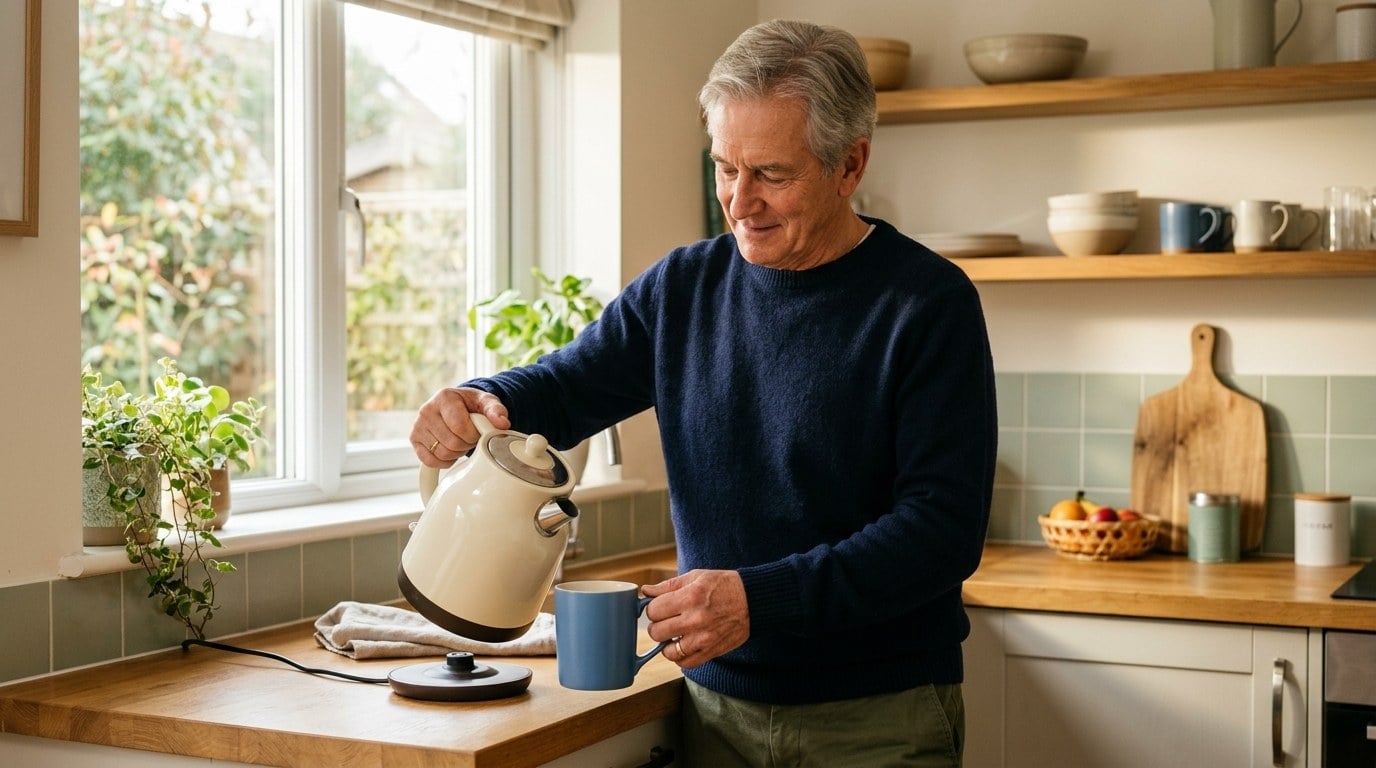
There is much less research here than there is on driving, and anyone who hands you a neat table of pound limits is making it up.
What we can do is give you a progression by function. Move to the next step only when the current one is easy and pain free the next morning.
- Move the limb with no load. Open and close the hand, bend and straighten, wiggle the toes.
- Carry your own body part. Lift the arm or leg against gravity alone.
- Everyday light objects. A full coffee mug. A book. A phone.
- Two-handed household loads. A laundry basket, a full kettle, a bag of groceries held against the body.
- One-handed awkward loads. A gallon of milk in the injured hand. A suitcase.
- Dynamic and unpredictable loads. A grandchild who moves. A dog on a leash. A wheelbarrow.
Step six is the one people skip, and it is the one that matters. A grandchild is not a fixed weight. A toddler who lunges sideways loads your wrist or your hip in a way no dumbbell ever will.
The AAOS timeline for a broken wrist gives a useful shape. Most people return to light activities such as swimming or lower body gym work within 1 to 2 months, while more demanding activities may be resumed between 3 and 6 months after the injury. Notice that those are activity categories, not weights.
One more honest note. The AAOS says some people have mild stiffness or aching in a wrist for two years or longer, and that many people have stiffness and swelling in an injured ankle for many months even after the fracture has healed. Lingering stiffness is common. It is not proof that something went wrong.
Walking and weight bearing: what those words actually mean
You were probably handed one of four instructions with no translation. Here they are in plain words.
- Non weight bearing. The foot does not touch the ground at all. You hold the leg up when you stand or walk.
- Touch down, or toe touch. The toes may rest on the floor for balance only. Your weight stays on the other leg.
- Partial weight bearing. Some of your weight goes through the leg, but not all of it. You still need crutches, a walker or a cane.
- Weight bearing as tolerated. You put through as much as feels comfortable, and you use pain as the guide.
These instructions exist for a real reason. The AAOS is unusually direct about the ankle:
It is very important to follow your doctor's instructions about weightbearing. If you put weight on the injured ankle too early, the fracture fragments may move out of place, and the fracture may not heal (nonunion) or may not heal correctly (malunion).
The problem with "partial"
Nobody can actually do it. Writing in Future Science OA, Abdalbary reviewed the evidence on partial weight bearing after hip fracture and reported a study by Yu and colleagues which tested several teaching methods, including a bathroom scale. Its conclusion was that
partial weight bearing could not accurately be reproduced with any of the weight-bearing techniques prescribed
This is exactly the kind of thing a physical therapist is for. Practicing a load level with feedback, on a scale or on force plates, is a skill. Being told a percentage in a clinic corridor is not.
Does loading the bone help or hurt?
Both, depending on timing. StatPearls notes that callus formation depends on appropriate relative motion between the fracture fragments, and that appropriate mechanical stimulation such as strain helps tissue form at the bone ends. Bone responds to being used. Too early, though, and you get the nonunion problem above.
There is some trial evidence on the earlier end. A multicenter randomized trial by Smeeing and colleagues, published in the European Journal of Trauma and Emergency Surgery, randomized 115 patients after surgery for an ankle fracture into three groups. At six weeks, the unprotected weight bearing group scored higher on ankle function, 61.2 against 51.8 and 45.8, and they returned to work sooner, at 4.1 weeks against 5.7 and 7.0. The authors reported no significant differences in complication rates between the groups.
That is 115 people with surgically treated ankle fractures. It is not permission to ignore your surgeon. It is a reason to ask your surgeon whether your restrictions can move sooner rather than assuming they cannot.
A broken bone after 50 is a signal, not just an injury
This is the section nobody writes, and it may be the most valuable one here.
If you broke a bone from standing height or less, that break is telling you something about the bone, not just about the fall. The AAOS puts it in ordinary language: if you trip over a rug at home and break your wrist or your hip, this is most likely because of underlying bone weakness. The same source advises that anyone who breaks a bone after age 40 should be evaluated for future fracture risk.
In 2020, the American Society for Bone and Mineral Research assembled a multistakeholder coalition and published consensus recommendations in the Journal of Bone and Mineral Research. The scope is specific and we will name it every time: the recommendations address prevention of a second fracture among people aged 65 and older who have had a hip or vertebral fracture. The coalition developed 13 recommendations, 7 primary and 6 secondary.
The coalition's opening line is a judgment on the whole system. It states that fractures related to bone thinning are undertreated. It recommends that risk assessment, including fall history, should happen at regular intervals, with referral to physical and occupational therapy as appropriate. And on timing it is clear: because the risk of a second fracture is highest in the early period after the first one, prompt treatment is recommended.
There is a parallel finding on the spine. The StatPearls chapter on vertebral compression fractures states that a single vertebral fracture dramatically increases the risk of later vertebral and other fractures related to bone thinning.
So here is the one question to take to your physician: should I have a bone density assessment? The AAOS describes the DXA scan as the main way doctors look for low bone mass, and says it can find low bone mass before a fracture happens. AAOS also notes that after a broken wrist your doctor may recommend testing your bones for weakness.
We are not the ones who order that test or manage what follows from it. We are simply telling you to ask, because plenty of people never get asked. If you want the falls side of this picture, our guide on spotting unsteadiness in an older parent covers it properly.
One honest limit on the exercise side, from AAOS: after age 30, weight bearing exercise can help slow bone loss and maintain bone mass and strength, but it cannot make denser bones. Exercise is worth doing. It is not a rebuild.
Why you still feel weak, and what physical therapy does about it
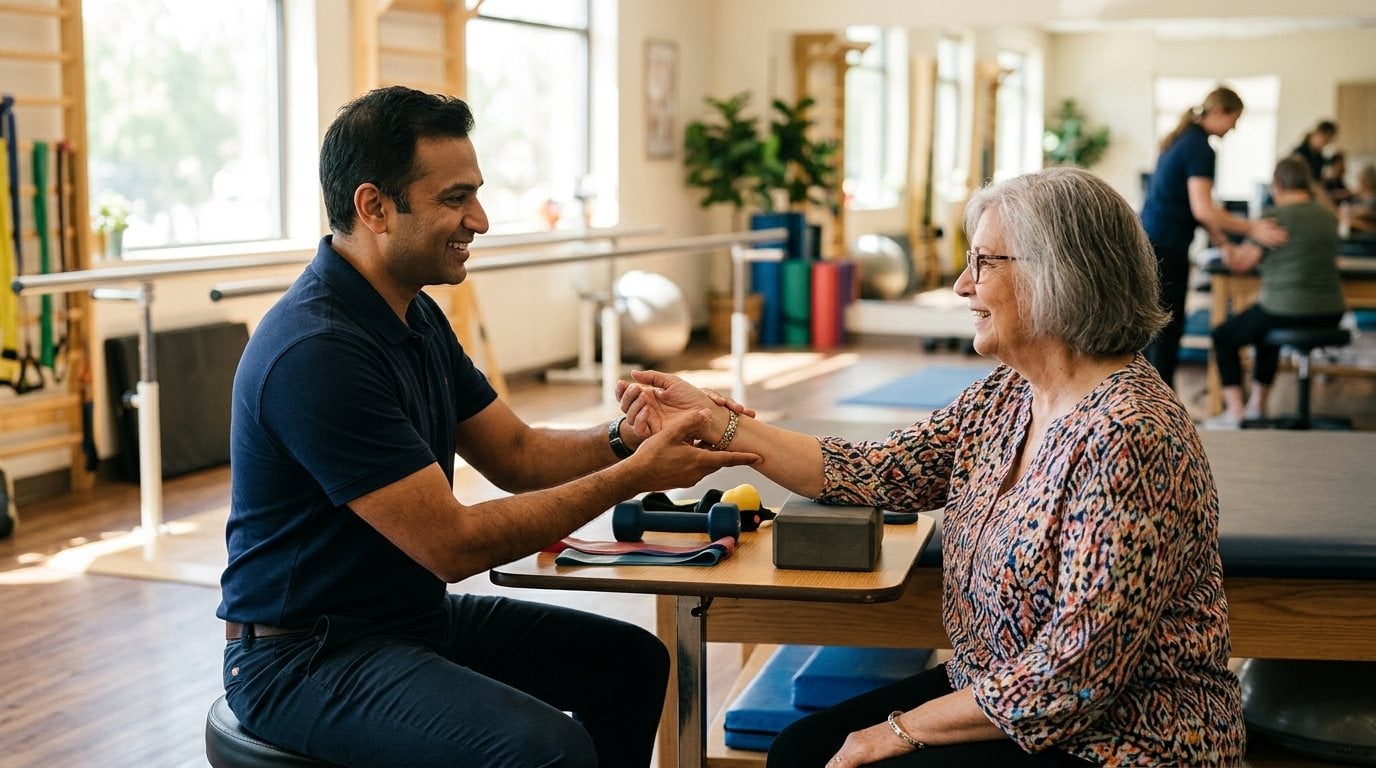
Your bone healed. Your leg did not. Those are two different projects, and only one of them happens on its own.
Muscle shrinks fast when a limb stops working. A 2022 review in the Journal of Cachexia, Sarcopenia and Muscle by Hardy and colleagues pooled 29 studies on disuse in the lower limb. By day 28 the calf muscles had lost the most, at 11.2 percent, followed by the quadriceps at 9.2 percent, the hamstrings at 6.5 percent and the muscles that lift the foot at 3.2 percent.
Scope matters with those figures. Most of that evidence came from healthy volunteers and from intensive care patients. Only 3 of the 29 studies, covering 39 people, involved an actual fracture. Treat the numbers as a shape, not as your personal forecast.
What we do at each stage
While you are still immobilized. We work everything that is not broken. The other leg, the trunk, the arms, your balance in sitting, and your general fitness. This is not filler. It is why some people walk out of the boot and others limp out of it.
As restrictions lift. Range of motion first, then load, in that order. Practicing your actual weight bearing instruction with feedback, so partial means something. Retraining a normal walking pattern before a limp becomes a habit.
Late stage and full return. Strength, endurance, balance under real conditions, and the specific tasks you care about. Stairs. Getting off a low sofa. Carrying a grandchild. Walking on uneven Salem sidewalks in the rain.
The hip fracture evidence supports this last phase strongly. The 2022 Cochrane review by Fairhall and colleagues included 40 randomized trials with 4,059 participants from 17 countries. After hospital discharge, mobility programs produced a small but clinically meaningful improvement in mobility, SMD 0.32 with a confidence interval of 0.11 to 0.54, rated high certainty evidence. Walking speed improved too, SMD 0.16, also high certainty.
The in-hospital picture is weaker and we will say so. There the improvement looked moderate, SMD 0.53, but the certainty was rated low. The reviewers concluded that programs including training of gait, balance and functional tasks are particularly effective.
The Neubie is one tool we have in clinic for the post-surgical and post-injury phase. It is an FDA-cleared device using direct current, distinct from a TENS unit, and its cleared uses include managing post-surgical and post-traumatic pain, preventing muscle wasting and increasing local blood circulation. It does not heal a fracture, it is not the main event in this kind of rehab, and it is available in clinic only.
What we do not do
We do not set bones. We do not read your X-rays or decide when your fracture has united. We do not clear you to drive. We do not manage bone medication.
What we do is the part between "your bone is healed" and "you have your life back." If you want to know what a first visit actually involves, we wrote that up here. And if you are already in therapy and unsure whether it is working, this guide gives you checkpoints at weeks 2, 4 and 6.
If you are reading this for a parent
You are probably the one driving them to appointments and noticing what the clinic does not see.
Three things are worth your attention. First, ask directly whether a bone density assessment has been arranged, because this is the item that falls through the cracks most often. Second, watch the weight bearing instruction at home, not in the clinic, since that is where the crutches get abandoned. Third, notice confidence as well as function. Many people stop moving after a fracture because they are frightened, not because they are unable.
If your parent is refusing to walk, or moving far less than their instructions allow, say so out loud at the next appointment. That is clinical information, and nobody else in the room has it.
Frequently asked questions
My doctor said six weeks. Why do I still feel weak?
Because the six weeks described the bone, not the muscle. The AAOS notes plainly that you will likely lose muscle strength and range of motion in the injured area, and that specific exercises help restore strength, joint motion and flexibility. Bone repair happens whether you participate or not. Strength does not.
Can I drive if my left foot is in a boot and the car is automatic?
Ask your physician, and ask your insurer. The evidence base here is weak. The JBJS review names transmission type as one of the individual factors that must be considered, so the question is legitimate, but neither we nor a review article can answer it for your specific car and your specific injury.
How long until I can carry my grandchild again?
Later than you want, and the number depends on the bone. Use the progression above and treat a moving child as the final step, not an early one. A child who wriggles creates loads you cannot predict, which is exactly what a healing bone is least ready for.
Does a fracture at 62 mean I have osteoporosis?
Not automatically, and we are not the ones to diagnose it. It does mean the question should be asked. AAOS advises evaluation of future fracture risk for anyone who breaks a bone after age 40, and describes the DXA scan as the main tool for finding low bone mass. Take it to your physician.
The ASBMR recommendations you cited, do they apply to me?
Only if you match the scope, and it is narrow. Those consensus recommendations address people aged 65 and older who have had a hip or vertebral fracture. If you are 55 with a broken wrist, they were not written about you, though the underlying idea that a fracture should trigger a look at bone health still holds through the AAOS guidance.
Should I just wait until it stops hurting?
No, and this is the trap. The AAOS states that pain usually stops long before the fracture is solid enough to handle the stresses of normal activity. Pain is a poor measure in both directions here. It can clear too early, and it can linger long after the bone is fine.
Ready to get back to normal activity?
If you are somewhere between "the cast is off" and "I trust this limb again," that gap is exactly what we work on.
Start with a Wellness Video Call. It is a virtual visit, you do it from your armchair, and it is a straightforward conversation about where you are, what your restrictions are, and what the next step looks like. If in person makes more sense, we will tell you that too.
Direct-pay, no insurance required. Dr. Raj Pusuluri, PT, DPT, works with adults over 50 all day, every day.
Book your Wellness Video Call or call (971) 202-1979.
Still weighing a procedure against conservative care? That is a different question and we answered it separately, in our guide to deciding between surgery and physical therapy after 50.
HWY Physical Therapy
North Salem 2615 Portland Rd NE, Salem, OR 97301 (at Center 50+) Walk-ins welcome
South Salem HWY Physical Therapy Clinic South Salem 180 Ramsgate Square S, Salem, OR 97302 By appointment only
Phone (both locations): (971) 202-1979 Hours: Monday to Friday, 8:00 AM to 5:00 PM
This article is general information, not medical advice. It does not replace the instructions your surgeon or physician gave you about your specific fracture. If your restrictions differ from anything described here, follow your own clinical team.
Sources
- Conley RB, et al. Secondary Fracture Prevention: Consensus Clinical Recommendations from a Multistakeholder Coalition. J Bone Miner Res. 2020. PubMed 31538675
- Khaliq M, Giannoudis VP, Palan J, Pandit HG, van Duren BH. Return to driving post upper or lower extremity orthopaedic surgical procedures: a scoping review of current published literature. EFORT Open Reviews. 2023. PMC10714384
- Frane N, Bandovic I, Hu V, Bitterman A. Return-to-Driving Recommendations After Lower-Extremity Orthopaedic Procedures. JBJS Reviews. 2020. PubMed 33298680
- Fairhall NJ, Dyer SM, Mak JC, Diong J, Kwok WS, Sherrington C. Interventions for improving mobility after hip fracture surgery in adults. Cochrane Database of Systematic Reviews. 2022. PMC9451000
- Hardy EJO, et al. The time course of disuse muscle atrophy of the lower limb in health and disease. Journal of Cachexia, Sarcopenia and Muscle. 2022. PubMed 36104842
- Smeeing DPJ, et al. Weight-bearing or non-weight-bearing after surgical treatment of ankle fractures: a multicenter randomized controlled trial. European Journal of Trauma and Emergency Surgery. PMC7026225
- Abdalbary SA. Partial weight bearing in hip fracture rehabilitation. Future Science OA. 2017. PMC5729597
- StatPearls. Fracture Healing Overview. NBK551678
- StatPearls. Vertebral Compression Fractures. NBK448171
- American Academy of Orthopaedic Surgeons, OrthoInfo. Fractures (Broken Bones)
- American Academy of Orthopaedic Surgeons, OrthoInfo. Care of Casts and Splints
- American Academy of Orthopaedic Surgeons, OrthoInfo. Distal Radius Fractures (Broken Wrist)
- American Academy of Orthopaedic Surgeons, OrthoInfo. Ankle Fractures (Broken Ankle)
- American Academy of Orthopaedic Surgeons, OrthoInfo. Hip Fractures
- American Academy of Orthopaedic Surgeons, OrthoInfo. Osteoporosis
- Centers for Disease Control and Prevention. About Venous Thromboembolism (Blood Clots)
- NeuFit. The Neubie
.png)