A meniscus tear is a common injury in the knee. Your meniscus is a small piece of cartilage that works like a cushion between your thigh bone and shin bone. It helps your knee move smoothly. But sometimes, it can tear if you twist your knee quickly or put too much pressure on it. This can happen during sports, walking on uneven ground, or even just standing up the wrong way. People with a torn meniscus often feel pain, swelling, or have trouble moving their knee.
The good news is, many people with a meniscus tear do not need surgery. Instead, physical therapy for meniscus tear can help you heal. Physical therapy uses gentle exercises and treatments to reduce pain, make your knee stronger, and help you move better. It’s safe, effective, and lets you stay active while healing.
For people living in Portland, Eugene, Salem, Gresham, and Hillsboro, Oregon, choosing local care is a smart idea. Local physical therapy clinics understand your community and can work with your schedule. You won’t need to travel far to get help. If you are near Center 50+ in Salem, you can visit Dr. Raj at HWY Physical Therapy, located at 2615 Portland Rd NE, Salem, OR 97301 (Call 971-202-1979). He offers expert care and understands how to help you recover step-by-step.
What Is a Meniscus Tear? Understanding the Basics
Your knee is like a strong but delicate machine. Inside your knee are two small, rubbery pieces of cartilage called the menisci (one is called a meniscus). They sit between your thigh bone and shin bone. Their job is to act like shock absorbers. They help your knee bend, straighten, and carry your body weight without pain.
A meniscus tear happens when one of these cushions gets damaged. This can occur in several ways:
- Twisting your knee suddenly
- Squatting too low or too fast
- Lifting something heavy with poor posture
- Getting older (because the cartilage can wear down over time)
When the meniscus tears, you may feel:
- A popping sound or snap in the knee
- Pain when moving or walking
- Swelling around the knee
- Trouble bending or straightening the knee fully
- A feeling like your knee is locking or catching
There are different kinds of meniscus tears. Some are small and heal with rest and care. Others may take longer to recover. The most common types include:
- Radial tears (straight cuts across the meniscus)
- Horizontal tears (flat tears along the top or bottom)
- Complex tears (a mix of shapes and directions)
- Degenerative tears (due to age and wear)
The good news is that physical therapy for meniscus tear helps with most of these injuries. You don’t always need surgery. Instead, with the right exercises and treatments, your knee can get stronger and feel better over time.
Types of Meniscus Tears and Their Severity
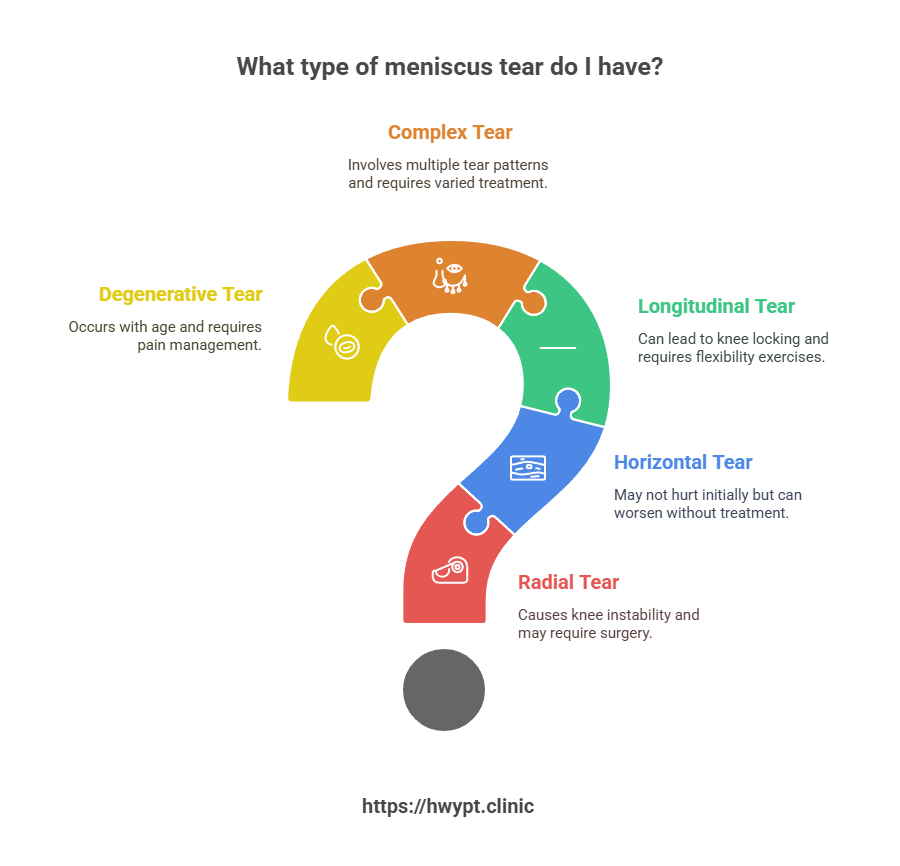
Not all meniscus tears are the same. Some are small and heal quickly. Others are bigger and need more time and care. The type of tear can affect how your knee feels and how it heals. Knowing the kind of tear you have helps your physical therapist choose the best treatment.
Here are the most common types of meniscus tears:
1. Radial Tear
This tear goes straight across the meniscus, like cutting a pie. It is one of the most common types. Radial tears can make the knee feel weak or unstable. Some need surgery, but many can be helped with physical therapy for meniscus tear.
2. Horizontal Tear
This tear goes across the surface of the meniscus. It’s often caused by too much stress over time. Horizontal tears may not hurt much at first but can grow larger if not treated. Physical therapy can keep the tear from getting worse and help your knee move better.
3. Longitudinal Tear
This tear runs along the edge of the meniscus. It can turn into a "bucket handle" tear if it flips inside the knee. This kind of tear may cause the knee to lock. A therapist can help you keep it flexible and reduce swelling.
4. Complex Tear
This is a mix of two or more tear patterns. It can be harder to treat because it affects different parts of the meniscus. A mix of strength training, balance work, and rest can still help in many cases.
5. Degenerative Tear
These tears happen slowly as you age. The cartilage wears down like an old sponge. You may not remember any injury, but your knee might feel sore or stiff. Physical therapy for degenerative meniscus tear can ease pain and keep your joints healthy.
The severity of the tear matters too. A small tear near the edge of the meniscus can heal faster because that area gets more blood. A deep tear in the center heals slower because there is less blood flow. But even if your tear is in a slow-healing spot, physical therapy can help reduce pain and improve strength.
Why Physical Therapy for Meniscus Tear Works
When you hurt your meniscus, you might think surgery is the only way to feel better. But that’s not always true. In many cases, physical therapy for meniscus tear can help you heal without needing surgery. It is safe, natural, and often just as helpful.
Physical therapy works because it:
- Reduces pain without using strong medicines
- Lowers swelling in your knee
- Makes muscles stronger around your knee so it doesn’t get hurt again
- Improves movement, so you can walk, bend, and climb stairs without trouble
Your meniscus has areas that can heal on their own if they get the right support. That’s what therapy gives you — support and training. It teaches your body how to move in a safe way while your knee gets better.
Another reason why physical therapy works well is that it helps your whole leg. If your knee hurts, other parts like your hips, ankles, or back may start working harder. This can cause more pain. A therapist watches how you walk, sit, or stand, and helps fix those small problems too.
Also, physical therapists don’t just treat the injury. They help you learn how to prevent future tears. You’ll get tips on safe movements, better balance, and how to stay strong without hurting your knees again.
Best of all, physical therapy for meniscus tear is not scary. It doesn’t involve needles or big machines. Most people feel better week by week with simple exercises, stretches, and gentle hands-on care.
Customized Physical Therapy Programs for Meniscus Tear Recovery
Every person and every meniscus tear is different. That’s why a customized physical therapy program is so important. It means your therapist will create a plan just for you — based on your pain, your body, and how active you are.
Here’s how it usually works:
1. First Visit: Checkup and Planning
Your therapist will ask questions about how your knee feels and what caused the pain. They will look at how you walk, bend, and move. This helps them make a plan that fits your needs.
2. Early Stage: Rest and Pain Control
If your knee is swollen or very sore, the first goal is to help it feel better. You may:
- Put ice on it
- Learn how to rest the knee the right way
- Do small movements to keep the joint from getting stiff
This stage helps your knee calm down.
3. Middle Stage: Gentle Movement and Strength
Once the pain starts to go away, it’s time to move more. Your therapist will guide you through:
- Stretching to help your knee bend and straighten
- Strength exercises for your thigh, calf, and hip muscles
- Balance training so your body moves safely
These steps help protect your meniscus and keep the rest of your leg strong.
4. Final Stage: Going Back to Daily Life
As your knee heals, your therapy will become more active. You may practice:
- Walking longer distances
- Going up and down stairs
- Getting in and out of chairs safely
- Doing activities you enjoy — like gardening or playing sports
Your therapist will watch closely to make sure everything is safe and your knee keeps improving.
5. Home Program
You’ll also get exercises to do at home. These are simple moves that help you heal faster. Your therapist will teach you how to do them right, so you can keep getting better even between visits.
A good physical therapy for meniscus tear plan is like a map. It shows the way from pain to healing — step by step. With patience and the right care, your knee can feel strong again.
Physical Therapy for Meniscus Tear in Salem, Oregon
If you're in Salem, Oregon, and have a meniscus tear, you're in a great place to start healing. Many people here are looking for ways to stay active and move without pain. One of the best ways to do that is through physical therapy for meniscus tear.
In Salem, you can find expert care that helps you:
- Reduce swelling and pain in your knee
- Strengthen your leg muscles for better support
- Learn how to walk, bend, and move safely
- Avoid surgery with natural healing methods
A local expert who can help is Dr. Raj at HWY Physical Therapy, located at Center 50+, Salem City Building, 2615 Portland Rd NE, Salem, OR 97301 (Call 971-202-1979). He works closely with people who have knee injuries and helps them feel better step by step.
Physical therapy in Salem is also easy to access. You won’t have to travel far, and you can find appointments that fit your schedule. That means you can keep living your life while you get stronger.
Many people in Salem enjoy walking, gardening, or staying active with friends. Don’t let a meniscus tear hold you back. With the right care and a steady plan, you can feel better and return to the things you love.
Home Exercises and Self-Care Tips for Meniscus Tear Patients
.png?width=792&height=654&name=physical%20therapy%20for%20meniscus%20tear%20-%20visual%20selection%20(1).png)
Healing from a meniscus tear doesn’t stop when you leave the clinic. What you do at home can help your knee get better even faster. With the right home exercises and self-care, you can keep your progress going every day.
Here are some simple tips that many people in Portland, Eugene, Salem, Gresham, and Hillsboro find helpful:
1. Do Easy Exercises at Home
These movements help your knee stay strong and flexible. Always do them slowly and stop if you feel sharp pain.
- Heel Slides: Sit or lie down. Slide your heel toward your body, then slide it back out.
- Quad Sets: Sit with your leg straight. Tighten your thigh muscle and hold for a few seconds, then relax.
- Straight Leg Raise: Lie on your back. Lift your leg a little off the ground while keeping it straight.
These exercises help build muscle without putting too much stress on the knee.
2. Use Ice to Reduce Swelling
If your knee feels warm or looks puffy, use an ice pack. Put it on for about 15 to 20 minutes. Do this a few times a day to help bring the swelling down.
3. Keep the Knee Elevated
When resting, try to keep your leg raised on a pillow. This helps reduce swelling and feels more comfortable.
4. Avoid Movements That Hurt
Don’t squat, kneel, or twist your knee too much. These can make the tear worse. Move gently and use support like a cane if your therapist says it’s okay.
5. Wear Supportive Shoes
Flat, sturdy shoes with good grip help keep you safe. They also support your knees during walking and standing.
6. Be Consistent
Doing your exercises every day — even just for a few minutes — helps your knee heal faster. It’s better to go slow and steady than to rush and cause more injury.
Always follow the plan your physical therapist gives you. If something feels wrong, call and ask. Healing takes time, but with the right care at home, you can make strong progress.
Preventing Future Knee Injuries After a Meniscus Tear
Once your knee starts to feel better, it's important to keep it that way. A meniscus tear can heal well with physical therapy, but if you’re not careful, it could happen again. The good news is that there are easy ways to protect your knee in the future.
Here are some simple tips to help keep your knees safe:
1. Keep Your Muscles Strong
Strong muscles support your knee and help you move better. Keep doing the exercises your physical therapist taught you — even after your knee feels fine. Focus on your thighs, hips, and calves. These muscles take pressure off your knee and help you stay balanced.
2. Stay Flexible
Stiff muscles can pull on your joints and cause pain. Stretching keeps your body loose and ready to move. You don’t need to do big stretches. Just a few minutes each day can help a lot.
3. Move the Right Way
Learn how to bend, sit, stand, and lift things the safe way. Avoid quick twisting, deep squatting, or kneeling for a long time. If you need to get something off the floor, bend your knees gently and keep your back straight.
4. Wear Good Shoes
Your feet affect your knees. Shoes with soft support and good grip help you walk the right way. Avoid heels or shoes with worn-out soles.
5. Warm Up Before You Move
Before doing any activity — like walking, gardening, or climbing stairs — take a few minutes to warm up. Gentle movement helps get your joints ready and lowers the chance of getting hurt.
6. Listen to Your Body
If your knee feels sore or tired, take a break. Rest is part of healing too. Don’t ignore pain. It’s your body’s way of saying, “slow down.”
7. Keep a Healthy Weight
Extra weight puts more pressure on your knees. Staying at a healthy weight can help your knees feel better and last longer.
By taking small steps each day, you can protect your knee and enjoy a pain-free life. These habits don’t take much time, but they make a big difference in how you feel.
When to Consider Surgery vs. Physical Therapy
If you have a meniscus tear, you may wonder if you need surgery. The answer depends on the kind of tear you have, how bad it is, and how your knee feels over time. For many people, physical therapy for meniscus tear works well and helps them avoid surgery altogether.
When Physical Therapy Is the Right Choice
In most cases, physical therapy is the first and best step. It’s gentle, safe, and helps your knee heal naturally. If your tear is small or on the outer edge of the meniscus — where there is more blood flow — it can heal without surgery. Therapy helps:
- Lower pain and swelling
- Make the knee stronger
- Improve your balance and movement
- Avoid future injuries
If you can walk, bend, and do your daily activities (even with a little pain), therapy is a good option. Many people get back to normal with just stretching, strengthening, and rest.
When Surgery Might Be Needed
Sometimes, physical therapy may not be enough. You might need surgery if:
- Your knee locks or gets stuck
- The tear is very large or deep
- You still have strong pain after months of therapy
- The knee feels unstable even with exercise
In these cases, a doctor might suggest surgery to fix or remove the torn piece. After surgery, you will still need physical therapy to help your knee heal and get strong again.
Talk to Your Therapist
Your physical therapist watches your progress closely. They can tell if therapy is helping or if something more might be needed. Always share how you feel. The goal is to heal your knee in the safest and best way for you.
Choosing the Right Physical Therapist for Meniscus Tear Recovery
When you have a meniscus tear, the person who helps you recover matters a lot. A good physical therapist can guide you step by step and help you feel strong again. Choosing the right therapist makes healing faster, safer, and more comfortable.
Here’s what to look for when picking a therapist near you in Portland, Eugene, Salem, Gresham, or Hillsboro:
1. Find Someone Who Understands Knee Injuries
Not all therapists treat the same kinds of injuries. Look for someone who has experience with knee problems like meniscus tears. They’ll know the best exercises and treatments to help your knee heal.
2. Make Sure They Listen to You
A good therapist will ask you how your knee feels, what activities you want to return to, and what worries you. They should treat you like a person, not just a knee. You should feel safe, heard, and cared for.
3. They Should Create a Plan Just for You
Your knee is different from everyone else’s. Your therapist should make a custom recovery plan that fits your age, your activity level, and how serious your injury is. The plan should be easy to follow and adjust as you get better.
4. The Clinic Should Be Easy to Reach
It helps when your therapist is nearby. You’re more likely to stick with therapy if it’s in your city and easy to get to. Look for locations that are close to home or work.
5. Ask Questions Before You Start
It’s okay to ask questions before starting. Ask things like:
- “Have you treated meniscus tears before?”
- “What will therapy be like?”
- “How long will it take to feel better?”
Getting answers will help you feel confident about your care.
If you're near Salem, you can reach out to Dr. Raj at HWY Physical Therapy at Center 50+, Salem City Building, 2615 Portland Rd NE, Salem, OR 97301. Call 971-202-1979 for help with your knee. He provides thoughtful care and makes a plan that fits your life.
Conclusion: Physical Therapy Is the Smart Choice for Meniscus Tears in Oregon
A meniscus tear can be painful and make it hard to move. But you don’t have to live with that pain. Many people in Portland, Eugene, Salem, Gresham, and Hillsboro have healed their knees with physical therapy — without needing surgery.
Physical therapy for meniscus tear is safe, simple, and effective. It helps you:
- Reduce knee pain
- Move more easily
- Build strong muscles to support your knee
- Get back to your daily life
Whether your injury is new or has been bothering you for a while, therapy can help you feel better. And the best part? You can get this care right in your own city, from people who understand your needs.
Recovery takes time and effort, but you don’t have to do it alone. With the right help and a good plan, your knee can heal and stay strong for years to come.
Topics to Read Further
If you want to learn more and take better care of your knees, here are some helpful topics to search on Google:
- Best Exercises for Meniscus Tear Recovery at Home
- Signs Your Meniscus Tear Needs Medical Attention
- How to Prevent Knee Injuries During Daily Activities
Contact HWY PT for Expert Advice and Support
If you're struggling with knee pain or recovering from a meniscus tear, don’t wait. The right care can make a big difference in how fast and how well you heal. At HWY Physical Therapy, we listen to your needs and create a personal recovery plan that fits your life.
Visit us at Center 50+, Salem City Building, 2615 Portland Rd NE, Salem, OR 97301
Call 971-202-1979 to schedule your visit or ask questions today.
Let us help you move better, feel stronger, and return to the life you enjoy.

.png)