Golf may not look like a high-impact sport, but the swing is explosive.
Over time, that repeated rotation can strain the back, shoulders, elbows, and hips.
Many golfers wait until pain forces them off the course. Others keep playing through discomfort and hope it goes away.
Physical therapy for golfers is not just about treating injuries. It is about improving mobility, strengthening key muscle groups, and making your swing more efficient.
A proper movement assessment can reveal why your back tightens after 18 holes. It can also show why your drives have lost distance or consistency.
Whether you are a weekend golfer or play competitively in Salem, Oregon, your body must move well to perform well.
The right rehab and performance plan can help you reduce pain, increase power, and stay on the course longer.
Golf should not hurt. It should improve with time and smart training.
Why Physical Therapy for Golfers Is More Than Just Injury Treatment
Most golfers think about physical therapy only after an injury.
That approach limits performance and shortens playing time.
A golf swing places high rotational stress on the spine, shoulders, hips, and elbows.
Even small movement restrictions can lead to compensation and pain.
The physical demands of a golf swing
A full swing requires hip rotation, thoracic spine mobility, core stability, and shoulder control.
All of this happens in less than two seconds.
If one area lacks mobility, another area absorbs extra force.
That is why limited hip rotation often leads to low back pain.
Why golfers commonly experience pain
Repetition is the biggest factor.
Hundreds of swings each week add up.
Poor warm-up habits, weak stabilizing muscles, and limited flexibility increase strain.
Over time, minor irritation turns into tendon pain, joint stiffness, or muscle tightness.
How physical therapy improves longevity in the game
Physical therapy identifies movement faults before they become injuries.
It also builds strength in areas that protect your swing.
When your body moves efficiently, you generate power with less stress.
That means fewer setbacks and more consistent rounds on the course.
Common Golf Injuries Treated with Sports Physical Therapy
Golf may seem low impact, but the swing creates powerful rotational forces.
Over time, those forces can overload joints and soft tissues.
In Salem, many recreational golfers deal with nagging pain that slowly affects performance. Early treatment prevents small issues from turning into long layoffs.
Low back pain from golf swing mechanics
Low back pain is one of the most common complaints among golfers.
It often comes from limited hip mobility or poor core stability.
When the hips do not rotate well, the lower back twists more than it should.
That repeated stress leads to stiffness, muscle strain, or joint irritation.
Golfer’s elbow and forearm tendon pain
Golfer’s elbow causes pain on the inside of the elbow.
It develops from repetitive gripping and swinging.
Tenderness increases during impact or follow-through.
Targeted therapy reduces tendon stress and restores strength.
Shoulder pain and rotator cuff injuries
The shoulder controls the club through a wide range of motion.
Weak rotator cuff muscles or poor thoracic mobility increase strain.
Golfers may feel pain at the top of the backswing or during follow-through.
Rehab improves shoulder stability and control.
Hip pain and limited rotation in golfers
Strong hip rotation creates power.
Restricted movement shifts force to the back and knees.
Hip stiffness often reduces driving distance.
Mobility training restores fluid rotation.
Wrist and knee pain in recreational golfers
Wrist pain may occur after striking the ground or repetitive impact.
Knee discomfort often develops from poor weight transfer.
Both respond well to corrective strengthening and movement retraining.
How Poor Mobility Affects Your Golf Swing (Hip Rotation, Thoracic Mobility & Core Strength)
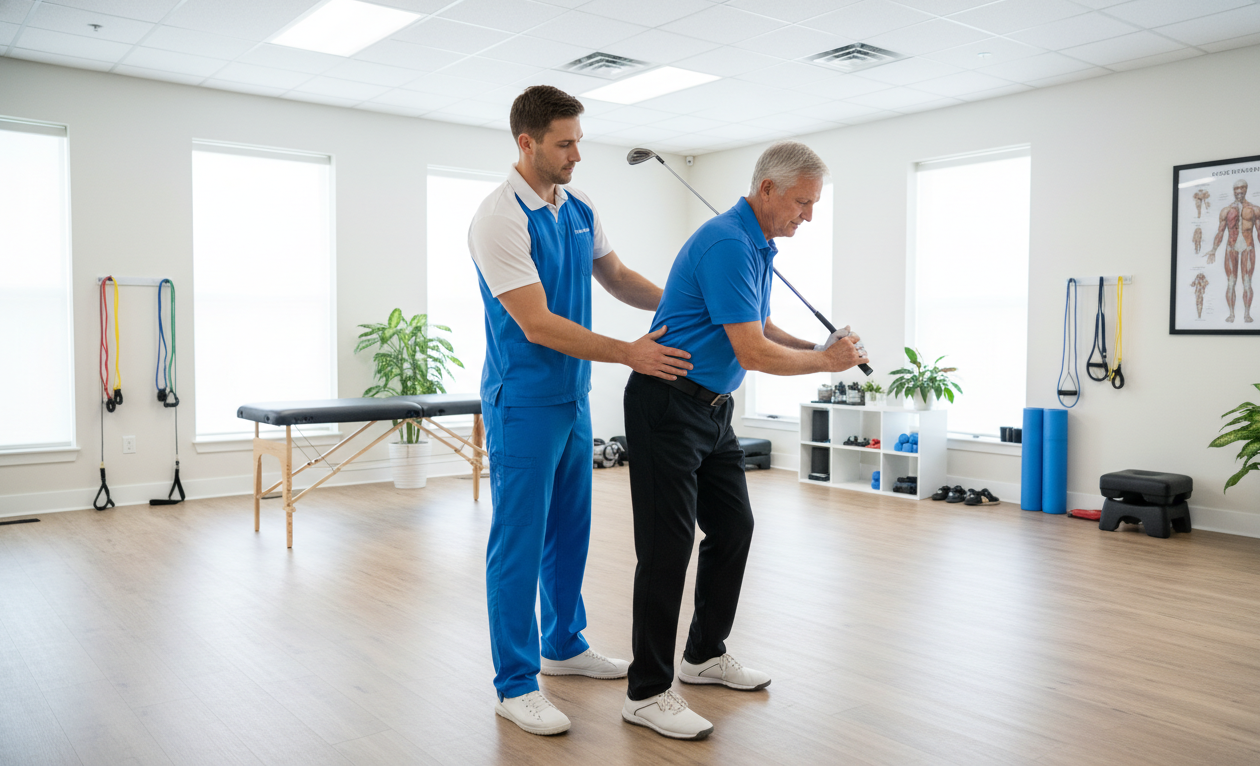
Your golf swing depends on smooth rotation and controlled power.
When mobility is limited, your body compensates in ways that increase strain and reduce performance.
Limited hip rotation and power loss
The hips generate much of your swing speed.
If they cannot rotate fully, your lower back twists more to make up the difference.
This extra stress often leads to stiffness or pain after a round.
It also reduces clubhead speed and limits driving distance.
Tight hip flexors and weak glutes are common in golfers who sit most of the day.
Improving hip mobility restores power and protects the spine.
Thoracic spine stiffness and shoulder stress
The mid-back, or thoracic spine, should rotate freely during a swing.
If it is stiff, the shoulders absorb more force.
This increases strain on the rotator cuff and surrounding muscles.
Over time, that can lead to shoulder pain or reduced range of motion.
Improving thoracic mobility helps distribute force evenly through the swing.
Weak core muscles and low back strain
Your core stabilizes the spine during rotation.
Without proper strength, the lower back handles more load than it should.
This leads to fatigue and discomfort late in a round.
Strong core muscles create a stable base for power transfer.
Balance deficits and swing consistency
Balance affects timing and control.
Poor stability can cause inconsistent ball striking.
Single-leg strength and coordination drills improve control through impact.
Better balance often translates to more consistent shots.
How Physical Therapy Improves Your Golf Handicap and Driving Distance
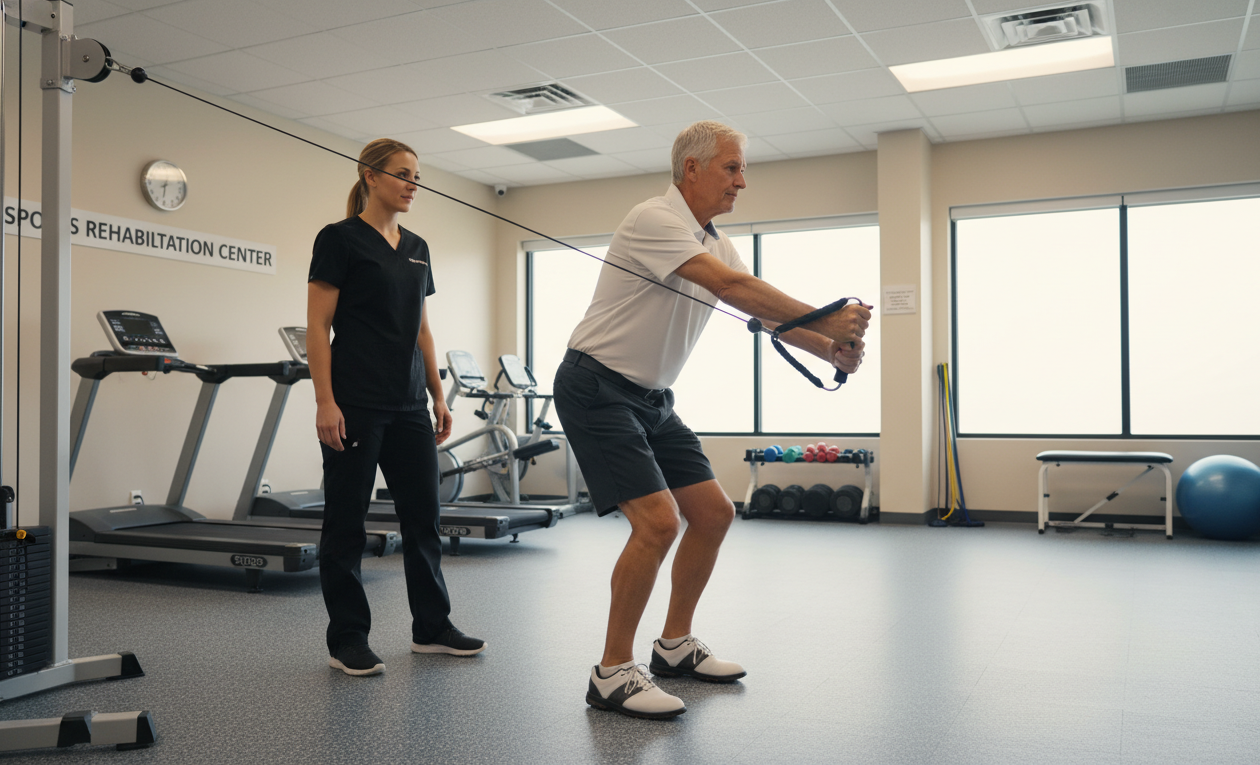
Lower scores are not just about better clubs.
They come from better movement.
In this section, you’ll see how physical therapy improves swing efficiency, increases power, and helps golfers in Salem play more consistent rounds.
Increasing clubhead speed through mobility
Clubhead speed depends on rotation and timing.
If your hips and thoracic spine move freely, energy transfers smoothly from the ground up.
Restricted mobility slows that chain reaction.
Improving hip and mid-back rotation often leads to measurable gains in swing speed.
More speed usually means more distance.
More distance means shorter approach shots.
Improving ball striking consistency
Inconsistent contact often comes from poor balance or limited stability.
If your body sways or collapses during rotation, the club path changes.
Physical therapy strengthens stabilizing muscles.
That improves control through impact.
Better control leads to more consistent ball flight and fewer mishits.
Strength training for more distance
Golf-specific strength training focuses on glutes, core, and upper back muscles.
These areas generate power without overloading the spine.
Stronger muscles allow you to swing aggressively without losing control.
That confidence often shows up in lower scores.
Injury-free training means more practice time
Pain limits practice.
Less practice limits improvement.
When your body feels strong and stable, you can train more consistently.
Consistent practice is one of the biggest factors in lowering your handicap.
Physical Therapy vs Personal Training for Golfers
Golfers often wonder whether they need a personal trainer or a physical therapist.
The answer depends on pain, movement quality, and goals.
In this section, you’ll learn when corrective rehab is necessary and when general fitness training is enough.
Identifying movement faults vs building general strength
Personal trainers focus on improving overall strength and conditioning.
That works well if your body moves properly and you are pain-free.
Physical therapists assess joint mobility, muscle imbalances, and movement restrictions.
They look for the root cause of pain or performance limitations.
If your hips do not rotate well or your thoracic spine is stiff, adding weight alone will not fix the issue.
Addressing pain before performance
Training through pain often makes injuries worse.
Tendon irritation or joint strain needs correction before adding intensity.
Physical therapy restores proper mechanics first.
Once movement improves, strength gains become safer and more effective.
When you need a physical therapist instead of a trainer
If you have persistent back, shoulder, elbow, or hip pain, start with a physical therapist.
If you feel limited in rotation or unstable during your swing, a movement assessment is essential.
Fix the foundation first.
Then build performance on top of it.
Return to Golf After Injury: A Step-by-Step Rehab Roadmap
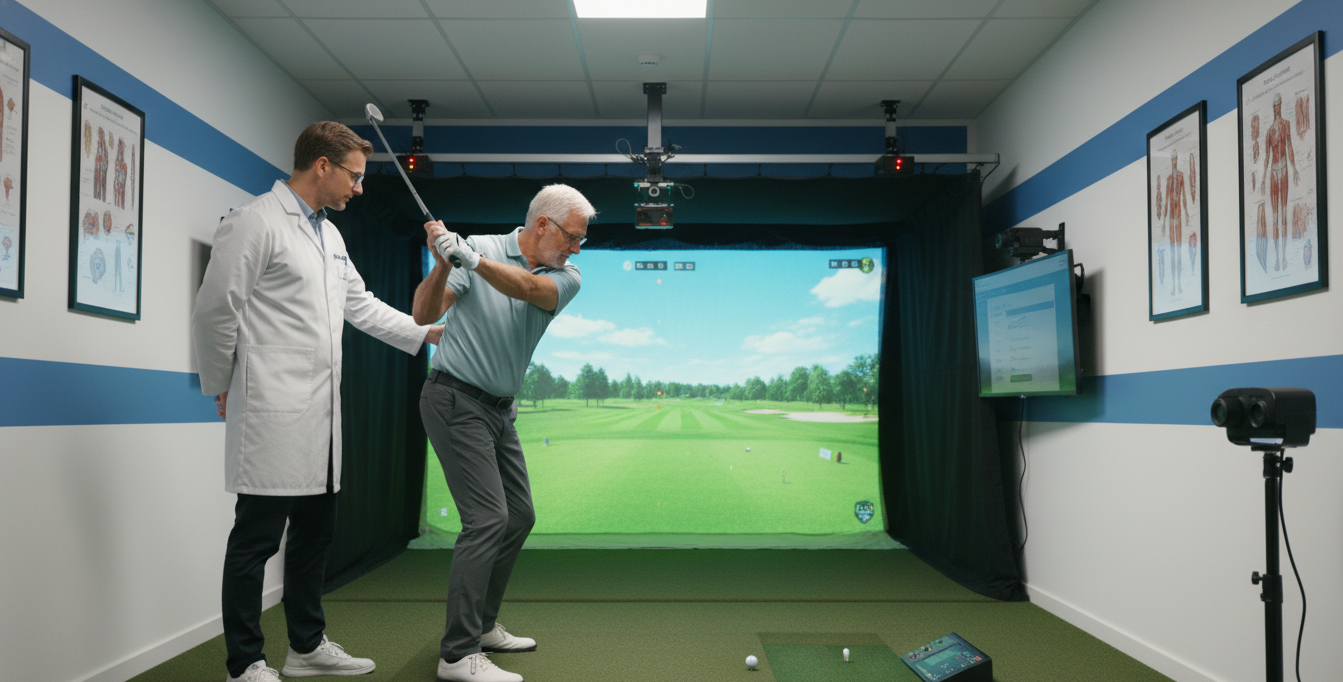
Returning too soon after an injury can restart the cycle of pain.
In this section, you’ll learn how a structured rehab plan helps golfers safely return to full rounds.
Phase 1: Pain reduction and mobility restoration
The first goal is calming irritated tissue.
This may include manual therapy, mobility work, and targeted exercises.
Focus areas often include hip rotation, thoracic mobility, and shoulder control.
Restoring range of motion reduces stress during the swing.
Golfers may begin with light putting and chipping if pain allows.
Full swings are usually delayed until movement improves.
Phase 2: Strength and controlled swing practice
Once pain decreases, strength becomes the priority.
Core stability, glute strength, and rotator cuff endurance are emphasized.
Golf-specific drills are reintroduced gradually.
Half swings and controlled range sessions test tolerance.
Volume increases slowly.
Pain should not spike during or after practice.
Phase 3: Progressive return to full rounds
When strength and mobility are stable, golfers transition back to the course.
Start with nine holes before attempting eighteen.
Rest days between rounds allow tissues to recover.
Monitor soreness and adjust accordingly.
Signs you’re ready to play 18 holes again
You should complete a full practice session without pain.
You should also feel confident in rotation and balance.
If your swing feels controlled and strong, you are likely ready to return fully.
A gradual plan protects long-term performance.
Golf Injury Prevention Exercises Every Golfer Should Do
Preventing injury is easier than rehabbing one.
In this section, you’ll learn simple exercises that protect your swing and keep you playing longer.
These movements focus on mobility, stability, and rotational strength.
They take only a few minutes and can be done before a round or workout.
Hip mobility drills
Strong hip rotation protects the lower back.
Limited hip motion forces the spine to twist more than it should.
Try:
- Standing hip openers before tee time
- 90/90 seated hip rotations
- Lunge with rotation stretch
Move slowly and control each rep.
The goal is smooth range, not speed.
Thoracic rotation exercises
Your mid-back should rotate freely during a swing.
Stiffness here often leads to shoulder pain.
Effective drills include:
- Open book rotations on the floor
- Seated torso turns with a club across shoulders
- Cat-cow movements for spinal mobility
These improve rotation without stressing the lower back.
Core stability movements
A stable core transfers power efficiently.
Without stability, energy leaks during impact.
Helpful exercises include:
- Dead bugs
- Side planks
- Pallof presses
Focus on control and breathing.
Shoulder strengthening for rotator cuff health
Healthy shoulders guide the club path.
Weak stabilizers increase strain during follow-through.
Use light resistance bands for:
- External rotations
- Scapular rows
- Y and T raises
Consistency makes the biggest difference.
Real Case Example: How Physical Therapy Helped a Salem Golfer Return to the Course
Seeing the process in action makes it real.
Here is an example of how structured rehab helped a local golfer return stronger.
Initial injury and movement assessment
A 52-year-old Salem golfer came in with persistent low back pain after every round.
He noticed reduced driving distance and stiffness by the 12th hole.
Assessment showed limited hip rotation and weak core stability.
His lower back was rotating more than it should during the swing.
Rehab plan and progress
The plan focused on hip mobility, glute strength, and thoracic rotation.
Core stabilization exercises were added to protect the spine.
Within four weeks, pain during practice decreased significantly.
Swing drills were reintroduced gradually.
Return to play and performance gains
After eight weeks, he returned to playing full rounds without pain.
He also reported improved consistency off the tee.
Better movement led to more efficient power transfer.
He gained distance without increasing effort.
Smart rehab did more than remove pain.
It improved performance.
Physical Therapy for Golfers in Salem, Oregon
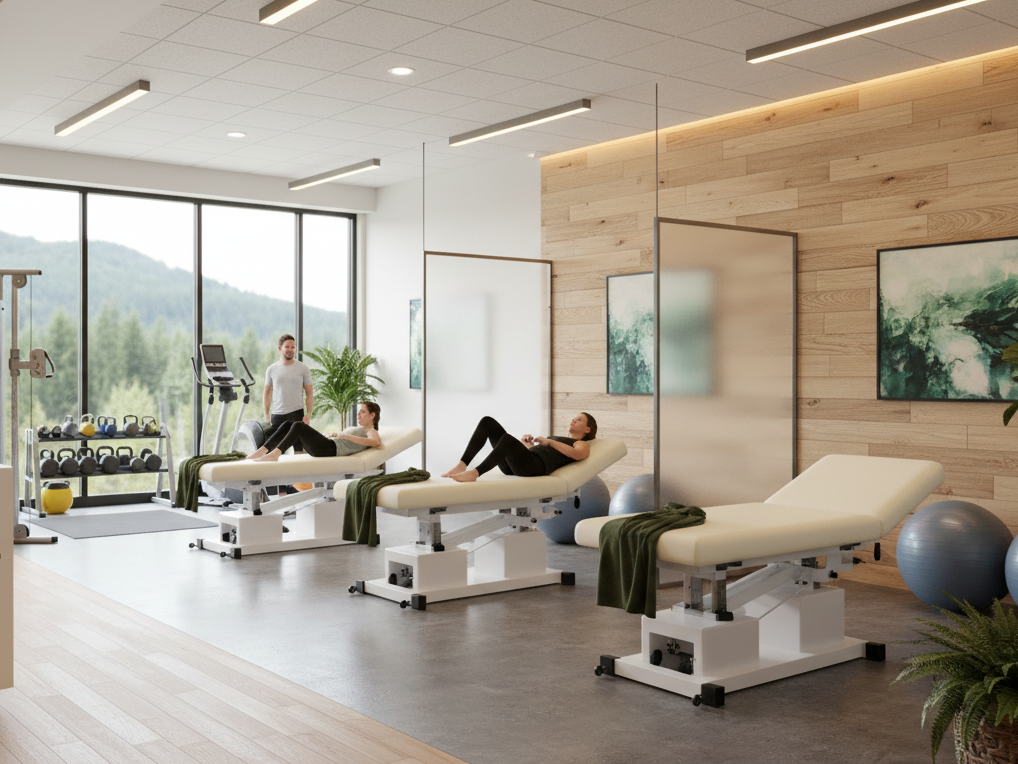
If you are a golfer in Salem dealing with pain or performance plateaus, local expertise matters.
Working with a provider who understands both rehab and swing mechanics can make a big difference.
Golf performance and sports rehab at HWY Physical Therapy
At HWY Physical Therapy, golfers receive one-on-one care focused on movement quality and injury prevention.
Each evaluation looks at hip rotation, thoracic mobility, shoulder stability, and core strength.
Instead of just treating symptoms, the goal is to correct the root cause of pain.
That helps golfers return to the course stronger and more efficient.
Personalized movement assessment for golfers
Every golfer swings differently.
A detailed movement assessment identifies restrictions that limit power or cause strain.
Testing may include:
- Hip rotation measurement
- Core stability screening
- Shoulder mobility evaluation
- Balance and weight transfer assessment
This allows for a customized rehab and performance plan.
Why Salem golfers trust Dr. Raj at HWY Physical Therapy
Dr. Raj focuses on sports rehabilitation and movement-based care.
Golfers appreciate the hands-on approach and performance-driven mindset.
HWY Physical Therapy is located at:
Center 50+, Salem City Building
2615 Portland Rd NE
Salem, OR 97301
Call 971-202-1979 to schedule an evaluation and start playing pain-free again.
How Often Should Golfers See a Physical Therapist?
The right schedule depends on your goals and current condition.
Some golfers need short-term rehab, while others benefit from ongoing performance care.
Off-season performance programs
The off-season is ideal for improving mobility and strength.
Without weekly rounds, your body can adapt to higher training loads.
Many golfers schedule sessions once per week during this period.
This builds a stronger foundation before the season starts.
Pre-tournament tune-ups
If you have an event coming up, a movement check can help.
Small mobility restrictions can affect timing and power.
A session one to two weeks before competition allows time for adjustments.
That can improve confidence on the course.
Maintenance therapy for injury prevention
Golfers with past injuries often benefit from periodic check-ins.
Monthly or bi-monthly visits can catch small issues early.
Staying proactive keeps minor tightness from becoming major pain.
Consistent maintenance helps you play more rounds with fewer setbacks.
Frequently Asked Questions About Physical Therapy for Golfers
Golfers often have similar questions before starting therapy.
Here are clear answers to help you decide your next step.
Can physical therapy improve my golf swing?
Yes, if movement limitations are affecting your mechanics.
Improving hip rotation, thoracic mobility, and core stability often leads to smoother swings.
Better mechanics reduce stress on joints.
That usually improves consistency and distance.
How long does golf rehab take?
It depends on the injury and how long symptoms have been present.
Mild strains may improve in four to six weeks.
More complex issues may take eight to twelve weeks.
Progress also depends on how consistent you are with exercises.
Do I need pain to see a physical therapist?
No.
Many golfers seek therapy to improve mobility and prevent injury.
A movement assessment can reveal hidden restrictions.
Fixing them early often prevents future setbacks.
Can physical therapy help me increase driving distance?
Yes, especially if mobility or strength limits power.
When your body moves efficiently, you generate more speed with less effort.
That often translates to longer, more controlled drives.
Topics to Read Further
If you want to dive deeper into golf performance and injury prevention, these resources offer helpful insights:
Learning how your body moves during the golf swing can change how you train.
Better knowledge often leads to better performance and fewer injuries.
Contact HWY PT for Expert Advice and Support
Golf should challenge your skills, not your body.
If pain, stiffness, or limited mobility is affecting your swing, it may be time for a professional assessment.
Dr. Raj at HWY Physical Therapy works with golfers in Salem, Oregon who want to return to play safely and improve performance.
Every program is customized to your swing, goals, and physical condition.
Visit HWY Physical Therapy at:
Center 50+, Salem City Building
2615 Portland Rd NE
Salem, OR 97301
Call 971-202-1979 to schedule your evaluation and get back to playing strong.
.png)