Staying independent after 65 is something most people care deeply about.
It’s what allows you to live life on your own terms without relying on others.
But here’s what often happens.
Simple daily tasks slowly start to feel harder.
Getting up from a chair takes more effort.
Walking feels less steady than it used to.
At first, these changes are easy to ignore.
Over time, they can lead to loss of confidence and increased fall risk.
The truth is, independence doesn’t disappear overnight.
It declines gradually when strength, balance, and mobility are not maintained.
The good news is that you can take control of this.
The right physical therapy exercises can help you stay strong, stable, and independent.
You don’t need intense workouts or complicated routines.
Simple, targeted movements done consistently can make a real difference.
In this guide, you’ll learn:
- The key abilities that support independence
- The best physical therapy exercises for seniors
- How to build a simple daily routine
- When to seek professional help
The earlier you start, the easier it is to stay independent.
And even if you’ve already noticed changes, it’s not too late to improve.
Why Staying Independent After 65 Gets Harder Over Time
Independence doesn’t suddenly disappear at a certain age.
It changes slowly as the body becomes less efficient.
Many seniors notice small shifts first.
Standing up takes longer, walking feels less steady, or balance feels slightly off.
These changes may seem minor, but they build over time.
Without action, they can affect everyday life in a big way.
What “Independence” Really Means for Seniors
Independence is about being able to handle daily activities on your own.
Things like getting out of bed, walking safely, or using stairs without help.
It also includes simple tasks like:
- Carrying groceries
- Getting in and out of a car
- Moving around the house confidently
When these tasks become difficult, reliance on others increases.
That’s when many people start to feel a loss of control.
Common Physical Changes After 65
Several natural changes in the body affect independence.
These changes happen gradually but have a real impact.
Muscle strength tends to decrease with age.
This makes movements like standing, climbing, or lifting more difficult.
Balance also becomes less reliable.
The body takes longer to react, increasing the risk of falls.
Joints may feel stiffer, especially in the hips and knees.
This limits movement and makes walking less smooth.
Coordination can slow down as well.
Even simple actions may require more effort and focus.
The important thing to remember is this.
These changes are common, but they can be improved with the right approach.
The 3 Key Abilities You Need to Stay Independent After 65
Staying independent isn’t about doing everything perfectly.
It’s about maintaining a few key physical abilities that support daily life.
When these abilities are strong, everyday tasks feel manageable.
When they decline, even simple movements can become challenging.
Strength – The Foundation of Daily Movement
Strength is what allows you to move your body with control.
It plays a role in almost every daily activity.
You use strength when:
- Getting up from a chair
- Climbing stairs
- Carrying groceries
Weak muscles make these tasks harder and less stable.
This increases the risk of fatigue and falls.
Balance – Preventing Falls and Staying Steady
Balance keeps you upright and steady as you move.
It helps your body adjust quickly when something feels off.
Good balance is important for:
- Walking on uneven surfaces
- Turning without losing stability
- Recovering from a small trip
When balance declines, confidence often drops too.
That’s when people start avoiding movement, which makes things worse.
Mobility – Moving Freely Without Pain or Stiffness
Mobility is how easily your body moves through its full range.
It affects how smoothly you can perform everyday actions.
Good mobility helps with:
- Bending down or reaching
- Walking comfortably
- Getting in and out of bed or a car
Stiff joints can limit movement and make activities feel restrictive.
Over time, this can reduce overall independence.
These three abilities work together every day.
Improving even one of them can make a noticeable difference in how you move and feel.
Best Physical Therapy Exercises for Seniors to Stay Independent
The right exercises don’t just improve fitness.
They help you perform everyday tasks with more ease and confidence.
These movements are simple, practical, and directly connected to daily life.
You don’t need special equipment, just consistency.
Sit-to-Stand Exercise (For Getting Up Easily)
This is one of the most important exercises for independence.
It strengthens the muscles you use every time you stand up.
Start by sitting in a sturdy chair.
Slowly stand up without using your hands if possible, then sit back down with control.
This movement trains your legs and improves coordination.
Over time, getting up from chairs or bed becomes much easier.
Heel-to-Toe Walk (For Better Balance While Walking)
This exercise improves how steady you feel while walking.
It also helps with coordination and control.
Walk in a straight line by placing one foot directly in front of the other.
Move slowly and focus on staying balanced.
At first, it may feel challenging.
With practice, your walking becomes more stable and controlled.
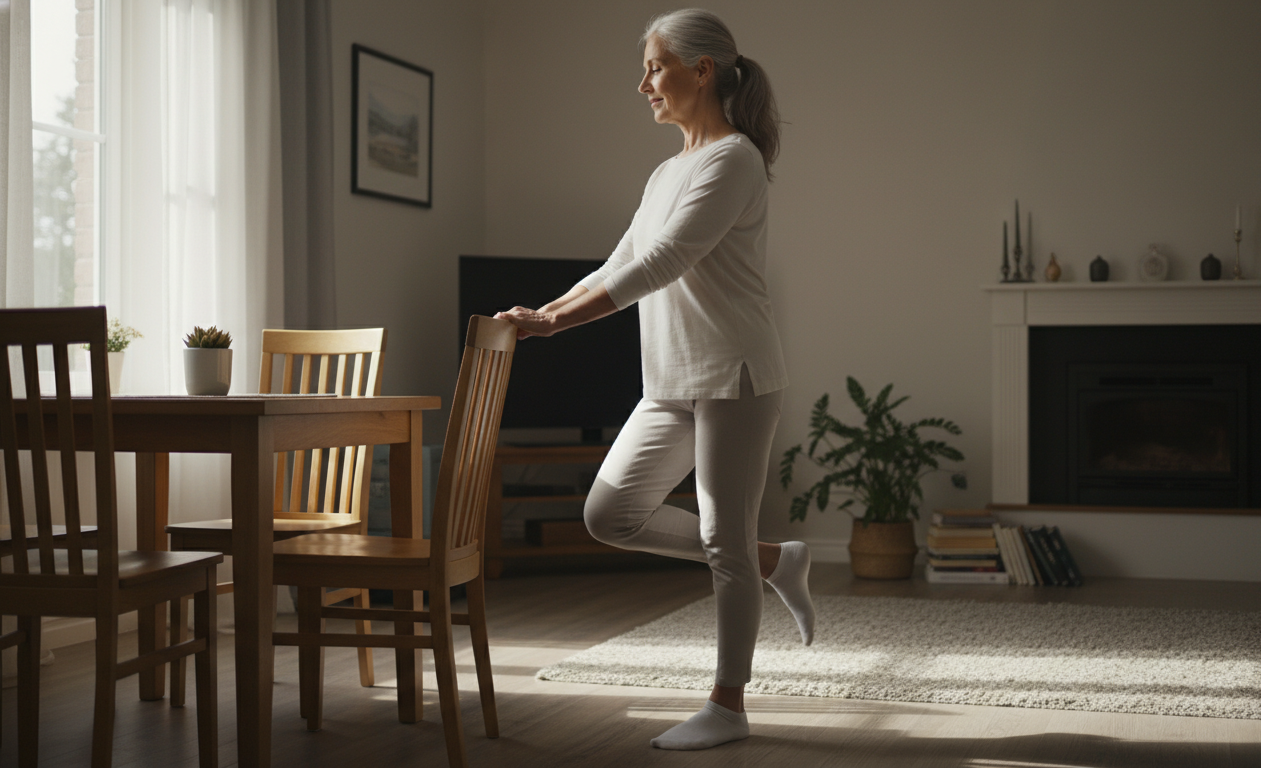
Single-Leg Stand (For Stability and Fall Prevention)
Standing on one leg helps your body learn to stay balanced.
It strengthens the small stabilizing muscles that prevent falls.
Hold onto a chair and lift one foot slightly off the ground.
Try to hold this position for a few seconds, then switch sides.
Even a few seconds of practice can make a difference.
This exercise builds confidence in your balance.
Step-Ups (For Stairs and Curbs)
Step-ups mimic real-life movements like climbing stairs.
They improve both strength and coordination.
Use a low step or sturdy platform.
Step up with one foot, bring the other foot up, then step back down.
Move at a comfortable pace and stay controlled.
This helps you handle stairs and uneven surfaces more safely.
Seated Leg Raises (For Building Strength Safely)
This is a good starting point if standing exercises feel difficult.
It helps build strength without putting too much strain on the body.
Sit upright in a chair and slowly lift one leg straight out.
Hold briefly, then lower it back down and repeat on the other side.
This strengthens the muscles needed for walking and standing.
It’s simple, but very effective when done regularly.
Real-Life Movements These Exercises Help You Improve

Exercises only matter if they make daily life easier.
That’s the real goal—moving better in the moments that matter.
These simple movements directly improve how you handle everyday tasks.
You’ll start to notice the difference in small but important ways.
Getting Out of Bed or a Chair Without Help
This is one of the first things people struggle with.
Weak legs and poor coordination make it harder to stand up smoothly.
Exercises like sit-to-stand build the strength needed for this movement.
Over time, you rely less on your hands or external support.
Walking Safely Without Fear of Falling
Walking should feel natural, not stressful.
But when balance declines, every step can feel uncertain.
Balance exercises help your body react faster and stay steady.
This makes walking indoors and outdoors feel more controlled.
Climbing Stairs and Navigating Curbs
Stairs require both strength and balance working together.
Without them, even a few steps can feel risky.
Step-ups train your body for this exact movement.
You’ll feel more confident going up and down stairs or stepping over curbs.
Carrying Groceries or Household Items
Carrying items requires stability while moving.
It challenges both your strength and balance at the same time.
As your strength improves, these tasks feel less tiring.
You’ll also feel more secure while moving with weight in your hands.
Simple Daily Exercise Routine for Seniors at Home

Starting a routine doesn’t have to feel overwhelming.
The key is to keep it simple and easy to follow.
You don’t need long workouts or complicated plans.
A short daily routine can be enough to maintain strength and balance.
10-Minute Daily Routine for Independence
You can complete this routine in just a few minutes each day.
It’s designed to support the movements you use most.
Start with sit-to-stand for a few repetitions to activate your legs.
Then move to heel-to-toe walking to improve balance and coordination.
Add a short single-leg stand on each side.
Finish with seated leg raises to build strength safely.
Move at a comfortable pace and take breaks if needed.
The goal is consistency, not speed.
How Often Should Seniors Exercise?
Daily movement works best for maintaining independence.
Even light activity done regularly can lead to steady improvement.
If daily feels like too much, aim for at least 4 to 5 days a week.
The more consistent you are, the better your results will be.
Safety Tips While Exercising at Home
Safety should always come first.
A few simple precautions can prevent injury.
Use a sturdy chair or nearby support when needed.
Avoid rushing through movements or pushing too hard.
Wear comfortable, non-slip footwear during exercises.
And most importantly, listen to your body and stop if something doesn’t feel right.
What Progress Looks Like Over Time (What to Expect)
One of the biggest concerns people have is how quickly they’ll see results.
The truth is, progress happens step by step, not overnight.
The good part is that even small improvements can make daily life easier.
You may start noticing changes sooner than you expect.
First 2 Weeks: Building Awareness and Stability
In the beginning, the focus is on getting comfortable with movement.
Exercises may feel a bit challenging at first, and that’s normal.
You might notice better control when standing or walking.
Even small gains in confidence can make a difference.
After 1 Month: Noticeable Strength and Balance Gains
By this stage, movements start to feel more natural.
Your body begins to respond faster and more efficiently.
Getting up from a chair may feel easier.
Walking can feel steadier and less tiring.
These changes may seem subtle, but they add up in daily life.
You’ll likely feel more confident moving around on your own.
Long-Term: Maintaining Independence and Confidence
With consistent effort, the benefits continue to grow.
Strength, balance, and mobility become more reliable.
You reduce your risk of falls and move with more ease.
Most importantly, you maintain your independence for longer.
Progress doesn’t have to be dramatic to be meaningful.
Steady improvement is what keeps you active and in control.
Common Mistakes Seniors Make When Trying to Stay Active
Trying to stay active is a great step.
But the way you approach it matters just as much as the effort itself.
Some habits can actually slow progress or increase the risk of injury.
Avoiding these mistakes can help you get better results safely.
Doing Too Much Too Soon
It’s easy to feel motivated and want quick results.
But pushing too hard in the beginning can lead to fatigue or strain.
Your body needs time to adjust.
Starting slow and building gradually works much better in the long run.
Ignoring Balance Training
Many people focus only on strength or walking.
Balance is often overlooked, even though it plays a major role in independence.
Without proper balance training, the risk of falls stays high.
Even if you feel strong, stability is just as important.
Skipping Consistency
Doing exercises once in a while won’t bring lasting results.
The body improves through regular, repeated effort.
Short daily sessions are more effective than occasional long workouts.
Consistency is what leads to steady improvement over time.
Small changes in approach can make a big difference.
When you focus on the right habits, progress becomes much easier and safer.
Quick Self-Check: Are You Losing Independence?
Loss of independence doesn’t happen all at once.
It usually shows up as small changes that are easy to overlook.
Taking a moment to check in with yourself can help you catch these early.
That way, you can take action before things become more difficult.
Signs to Watch For
Pay attention to how your daily movements feel.
Small struggles can be early warning signs.
You might notice:
- Getting up from a chair feels harder than before
- Walking feels slower or less steady
- You feel unsure on stairs or uneven surfaces
You may also start avoiding certain activities.
This often comes from a fear of falling or losing balance.
When Small Changes Become Bigger Problems
These changes may seem minor at first.
But over time, they can affect your confidence and mobility.
The less you move, the weaker your body becomes.
This creates a cycle that makes independence harder to maintain.
The good news is that early action can stop this cycle.
Even simple exercises can help you regain control and confidence.
When to Seek Physical Therapy for Seniors in Salem, Oregon
Staying active at home is a great start.
But sometimes, exercises alone are not enough to fix the problem.
If you’re noticing ongoing difficulty with movement, it may be time for professional help.
Getting guidance early can prevent bigger issues later.
Signs You Need Professional Guidance
Some changes are a clear signal that your body needs extra support.
Ignoring them can increase the risk of falls and loss of independence.
Watch for signs like:
- Struggling with basic movements like standing or walking
- Feeling unsteady even on flat surfaces
- Frequent near-falls or actual falls
- Avoiding activities due to fear of falling
These issues often don’t improve on their own.
They need a structured approach to address the root cause.
How Physical Therapy Helps Seniors Stay Independent
Physical therapy focuses on improving how your body moves in daily life.
It’s not just about exercise, but about function.
A therapist can:
- Identify weak areas affecting your balance and strength
- Guide you through safe, targeted exercises
- Help you move more confidently in real-life situations
This approach makes everyday tasks easier and safer.
It also helps break the cycle of fear and inactivity.
Senior Physical Therapy at HWY Physical Therapy in Salem, Oregon
At HWY Physical Therapy in Salem, Oregon, the focus is on helping seniors stay independent.
Dr. Raj works closely with each patient to understand their specific challenges.
Instead of generic routines, you get a plan tailored to your needs.
This includes strength, balance, and mobility training based on your daily life.
The goal is simple.
Help you move better, feel safer, and stay independent for as long as possible.
If you’ve started noticing changes in your mobility, now is the time to act.
Call 971-202-1979 to take the next step toward staying independent.
Can Exercise Really Help You Stay Independent After 65?
This is a question many people quietly wonder about.
Is it actually possible to maintain independence as you get older?
The answer is yes, in most cases, it absolutely is.
The body responds to movement at any age.
Even after 65, you can build strength, improve balance, and move more confidently.
The key is choosing the right kind of exercises and staying consistent.
You may not feel a big change overnight.
But over time, simple movements start to feel easier.
Getting up becomes smoother.
Walking feels steadier and less tiring.
These small improvements matter more than they seem.
They directly affect how independent you can stay in daily life.
The earlier you start, the easier it is to maintain your current ability.
But even if you’re starting later, progress is still very possible.
What matters most is taking that first step and sticking with it.
Consistency, not perfection, is what leads to lasting independence.
Frequently Asked Questions About Senior Exercise and Independence
What is the best exercise for seniors over 65?
There isn’t just one “best” exercise.
The most effective approach combines strength, balance, and mobility.
Movements like sit-to-stand, walking drills, and balance exercises work well.
They directly support everyday activities and help maintain independence.
How often should a 65-year-old exercise?
Consistency matters more than intensity.
Daily movement is ideal, even if it’s just 10–15 minutes.
If daily exercise isn’t possible, aim for at least 4 to 5 days a week.
Regular activity helps maintain strength and stability over time.
Can seniors regain strength after 65?
Yes, strength can improve at any age.
The body continues to respond to exercise, even later in life.
Progress may be slower compared to younger years.
But steady improvement is still very achievable with the right routine.
Is walking enough to stay independent?
Walking is helpful, but it’s not enough on its own.
It doesn’t fully address strength and balance.
To stay independent, you need a combination of exercises.
Adding simple strength and balance training makes a big difference.
Topics to Read Further
If you want to go deeper and keep improving your strength and independence, these topics are worth exploring:
These can give you more ideas and help you build a routine that fits your daily life.
Contact HWY PT for Expert Advice and Support
Staying independent after 65 doesn’t happen by chance.
It comes from taking the right steps at the right time.
If you’ve started to notice changes in your strength, balance, or mobility, don’t wait.
Early action can help you stay active and avoid bigger problems later.
At HWY Physical Therapy in Salem, Oregon, Dr. Raj focuses on helping seniors move better and stay independent.
Each plan is built around your daily needs, not a generic exercise list.
You’ll get guidance that actually fits your lifestyle.
The goal is to help you feel stronger, safer, and more confident in your movement.
If you want to stay independent and keep doing the things you enjoy, now is a good time to start.
Call 971-202-1979 to schedule your consultation and take the first step.
.png)