Many people notice their balance changing as they get older. You may feel slightly unsteady while walking or notice that standing up quickly makes you dizzy.
These changes can be surprising, especially if balance problems were never an issue before. The good news is that this is a common experience for many adults as the body ages.
Balance depends on several systems working together. Your muscles, inner ear, vision, and nervous system all play a role in keeping you stable.
As the years pass, these systems may not work as smoothly as they once did. Muscle strength can decline, reaction time slows, and the inner ear may become less sensitive.
Small changes like these can make it harder to stay steady while walking or turning.
The important thing to know is that balance problems are not something you simply have to live with. With the right exercises and support, many people can improve stability and reduce their risk of falls.
Why am I losing my balance as I get older?
Balance often declines with age because several body systems change over time. Muscle strength decreases, vision may weaken, and the inner ear becomes less sensitive to movement. Slower nerve signals and certain medications can also make older adults feel unsteady while walking or standing.
When these factors combine, the body has a harder time maintaining stability.
Why do people lose balance as they get older?
Many people assume losing balance is simply a normal part of aging. Aging does play a role, but balance problems usually happen because several body systems begin to change at the same time.
Your body relies on muscles, nerves, vision, and the inner ear to stay steady. When one of these systems weakens, balance becomes harder to maintain. When several decline together, instability becomes more noticeable.
Even small changes can affect the way you walk or stand. Reaction time may slow, leg strength may decrease, and your inner ear may not detect movement as clearly as it once did.
Some people also experience balance problems because of medications, chronic conditions, or reduced physical activity. These factors can make dizziness or instability more common.
The five main reasons balance declines with age
The most common reasons older adults lose balance include:
- Muscle weakness – Loss of muscle strength makes it harder to stabilize the body while walking or turning.
- Inner ear changes – The vestibular system in the inner ear helps control balance and may become less sensitive with age.
- Vision decline – Poor depth perception and reduced vision can make it harder to judge distances and maintain stability.
- Slower nerve signals – Aging nerves may respond more slowly, affecting coordination and reaction time.
- Medication side effects – Some medications can cause dizziness, lightheadedness, or instability.
Balance problems usually develop gradually. Recognizing the cause is the first step toward improving stability and preventing falls.
Why balance problems become more common as we age
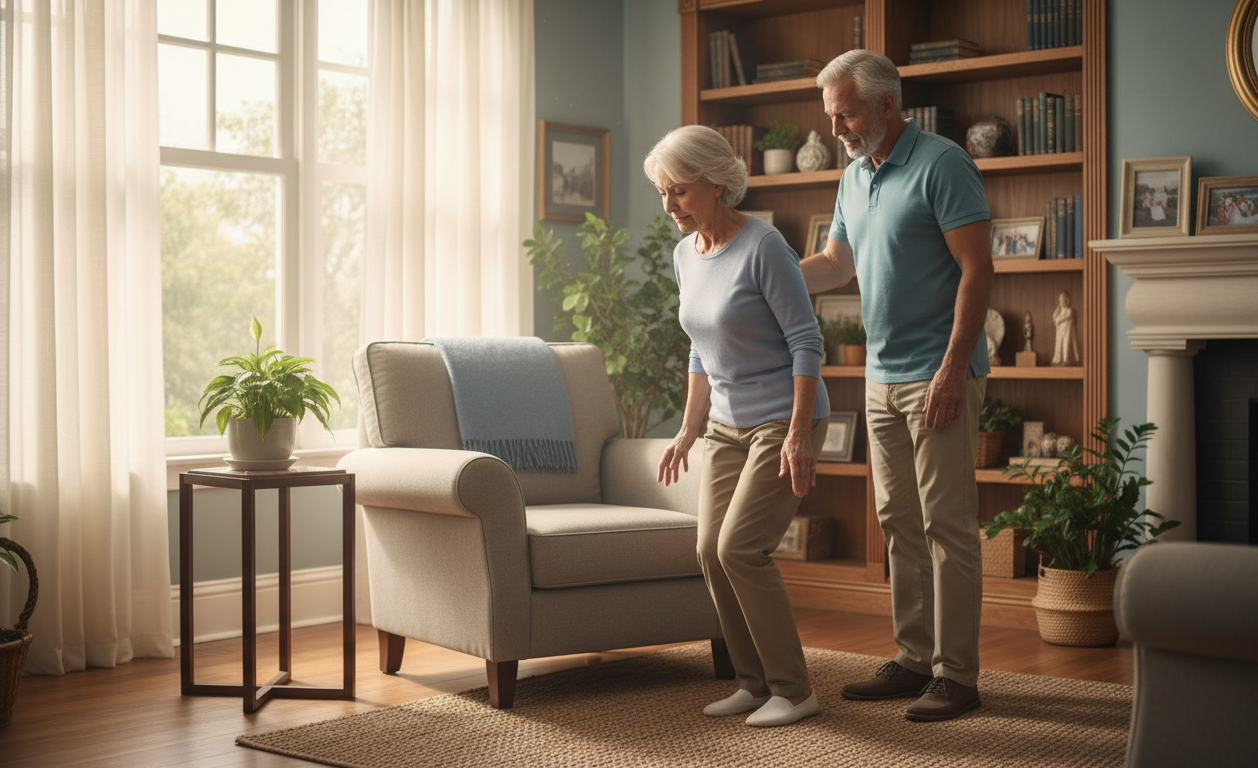
Balance is something most people rarely think about until it starts to change. Staying steady requires several systems in the body to work together at the same time.
Your brain constantly processes signals from the eyes, inner ear, muscles, and joints. These signals help the body understand movement and maintain stability.
As people age, these systems may not work as smoothly as they once did. Small changes in strength, vision, or nerve response can affect the ability to stay steady while walking or standing.
How the body maintains balance
Balance depends on three main systems working together.
- Inner ear (vestibular system) detects movement and head position.
- Vision helps the brain understand where the body is in space.
- Muscles and joints provide strength and feedback to control posture.
The brain combines information from these systems to keep the body upright and stable.
How aging affects balance control
As we get older, each of these systems may slowly change.
Muscle strength often decreases, especially in the legs. This makes it harder to stabilize the body when walking or recovering from a stumble.
Vision changes can also affect depth perception and awareness of obstacles. Poor lighting or uneven surfaces may become more challenging.
The inner ear may also become less sensitive to motion. When this happens, the brain receives weaker balance signals, which can lead to feelings of unsteadiness.
These gradual changes explain why balance problems become more common with age.
Common causes of balance problems in older adults

Balance problems in older adults often develop for several reasons rather than a single cause. Changes in the inner ear, muscles, vision, medications, or medical conditions can all affect stability.
Understanding these causes can help identify the right treatment and reduce the risk of falls.
Inner ear disorders and vestibular system changes
The inner ear contains a structure called the vestibular system, which helps control balance and spatial awareness. This system detects movement and sends signals to the brain about head position.
As people age, the vestibular system may become less sensitive. This can cause dizziness, vertigo, or a feeling that the room is spinning.
One common condition is benign paroxysmal positional vertigo (BPPV). This occurs when tiny crystals in the inner ear shift out of place and disrupt balance signals.
Muscle weakness and loss of strength with age
Muscle strength naturally declines with age. This process is called sarcopenia, and it affects many older adults.
Weak leg muscles can make it harder to stabilize the body while walking or standing. When strength decreases, even small trips or slips become harder to recover from.
Poor muscle strength also affects posture and coordination. This can lead to slower walking speed and a higher risk of falls.
Vision problems that affect stability
Vision plays a major role in maintaining balance. The eyes help the brain understand distance, movement, and body position.
Age-related vision changes can make it harder to detect obstacles or uneven surfaces. Conditions such as cataracts, glaucoma, or reduced depth perception may increase instability.
Low lighting can also make balance problems worse. When visual information is limited, the body has a harder time adjusting posture.
Medication side effects that cause dizziness
Some medications can cause dizziness or lightheadedness. These side effects may increase the risk of losing balance.
Common medications that affect balance include:
- Blood pressure medications
- Sedatives or sleep aids
- Certain antidepressants
- Medications that lower blood sugar
Taking multiple medications at the same time can increase these effects.
Chronic health conditions linked to balance problems
Several health conditions can also affect balance and coordination. These conditions may interfere with nerve signals, muscle control, or circulation.
Examples include:
- Diabetes, which can damage nerves in the feet
- Arthritis, which affects joint stability and movement
- Parkinson’s disease, which affects coordination and movement control
Managing these conditions and improving physical strength can often help reduce balance problems.
Early warning signs of balance problems in seniors
Balance problems often begin with small changes that are easy to overlook. Many people notice these signs before serious falls happen.
Recognizing these early symptoms can help older adults address balance issues before they become more dangerous.
Feeling unsteady while walking
One of the earliest signs of balance problems is feeling slightly unstable while walking. Some people may feel like they are drifting to one side or need to hold onto objects for support.
Walking on uneven surfaces or turning quickly may feel more difficult than before. This unsteadiness can slowly increase if the underlying cause is not addressed.
Dizziness when standing up
Some older adults experience dizziness when getting out of bed or standing up from a chair. This sensation may feel like lightheadedness or brief spinning.
These symptoms can happen when blood pressure changes quickly after standing. Inner ear problems or medication side effects may also cause dizziness.
Frequent stumbling or near falls
Another warning sign is tripping or stumbling more often than usual. Some people notice they catch their foot on small obstacles or struggle with steps and curbs.
Near falls can happen when balance reactions become slower. Paying attention to these warning signs can help prevent serious injuries later.
Why balance problems increase the risk of falls in older adults
Balance problems can make everyday movements more difficult and unpredictable. Even small changes in stability can increase the chance of falling.
Older adults often rely on quick reactions to catch themselves when they trip or slip. When balance declines, those reactions may become slower or less effective.
Weak muscles, slower reflexes, and reduced coordination can make it harder to recover from a stumble. As a result, minor missteps can lead to serious falls.
Many falls happen during routine activities such as walking, turning, or getting out of a chair. Uneven surfaces, poor lighting, or cluttered spaces can make the risk even higher.
How balance decline leads to falls
Balance decline affects the body’s ability to adjust quickly during movement. When the body cannot correct posture fast enough, a simple loss of footing may turn into a fall.
Reduced leg strength can also make it harder to stabilize the body. This is especially noticeable when climbing stairs, stepping over objects, or walking on uneven ground.
Common injuries caused by falls
Falls are one of the leading causes of injury in older adults. Even a single fall can lead to long recovery times and reduced independence.
Common injuries from falls include:
- Hip fractures
- Wrist or arm fractures
- Head injuries
- Cuts or bruises
Preventing falls often begins with improving balance, strength, and coordination through targeted exercises and training.
How balance problems are diagnosed
Balance problems can have many possible causes. A proper evaluation helps identify what is affecting stability and movement.
Healthcare professionals often begin by asking questions about symptoms. They may ask when the dizziness started, how often it happens, and what activities make it worse.
The evaluation may also include physical tests that check walking patterns, strength, and coordination. These tests help determine how well the body maintains balance during movement.
Balance and walking assessments
A balance assessment often begins with simple walking tests. These tests evaluate posture, step length, and stability while moving.
A therapist may observe how a person walks, turns, and stands from a seated position. These observations help identify weakness, poor coordination, or movement limitations.
Vestibular system testing
If dizziness or vertigo is present, the inner ear may be evaluated. These tests check how the vestibular system responds to head movements and position changes.
Certain movements may be used to trigger symptoms. This helps identify conditions such as benign positional vertigo.
Strength and mobility evaluation
Muscle strength and joint mobility also affect balance. Weak legs, stiff joints, or poor posture can make it harder to stay stable.
A strength and mobility evaluation checks how well the body supports balance during daily activities. The results help guide treatment and balance training programs.
How physical therapy helps improve balance and prevent falls
Many people believe balance problems are something they must accept as they age. In reality, balance can often improve with targeted training and therapy.
Physical therapy focuses on strengthening the body systems that control balance. With the right exercises, many older adults regain stability and confidence while walking.
A physical therapist evaluates movement patterns, muscle strength, and coordination. This evaluation helps identify which areas need improvement.
Treatment programs are designed to improve stability, reduce dizziness, and lower the risk of falls.
Balance retraining exercises
Balance retraining helps the body respond better to movement and changes in position. These exercises train the brain and muscles to work together more effectively.
Common balance exercises include:
- Standing balance activities
- Walking pattern training
- Coordination drills
- Controlled weight shifting
These exercises help improve stability during everyday activities like walking, turning, and reaching.
Vestibular rehabilitation therapy for dizziness
Some balance problems are caused by issues in the inner ear. Vestibular rehabilitation therapy focuses on improving how the brain processes balance signals.
Specific head and eye movements help retrain the vestibular system. These exercises can reduce dizziness, vertigo, and motion sensitivity.
Over time, many patients notice improved stability and fewer episodes of dizziness.
Strength training to improve stability
Strong muscles are essential for maintaining balance. Physical therapy often includes strengthening exercises for the legs, hips, and core.
These muscles help stabilize the body while walking, standing, and changing direction. Improving strength also helps the body recover more easily from trips or slips.
Personalized fall prevention programs
Every person experiences balance problems differently. Physical therapists create individualized programs based on each person’s needs and mobility level.
People experiencing balance problems in Salem can receive specialized therapy at HWY Physical Therapy Clinic with Dr Raj at Center 50+, Salem City Building.
Targeted balance therapy and fall prevention training can help older adults stay active and independent.
Simple balance exercises older adults can try at home

Regular balance exercises can help improve stability and reduce the risk of falls. These movements strengthen muscles and train the body to maintain better control during everyday activities.
Many balance exercises are simple and can be done safely at home. Practicing them a few times each week can help improve coordination and confidence while walking.
It is important to perform these exercises slowly and near a stable surface, such as a chair or countertop, for support if needed.
Heel-to-toe walking exercise
Heel-to-toe walking helps improve coordination and walking stability. This exercise trains the body to maintain balance while moving in a straight line.
To perform this exercise:
- Stand upright near a wall or counter for support.
- Place the heel of one foot directly in front of the toes of the other foot.
- Walk forward slowly in a straight line while maintaining this pattern.
- Continue for about 10–15 steps.
Standing on one leg
Standing on one leg helps strengthen the muscles that stabilize the body. It also improves balance control.
To try this exercise:
- Stand behind a chair and hold the back for support.
- Lift one foot slightly off the floor.
- Hold the position for 10–15 seconds.
- Switch legs and repeat.
Sit-to-stand strengthening exercise
This exercise strengthens the legs and improves stability when getting up from a chair.
To perform the exercise:
- Sit in a sturdy chair with your feet flat on the floor.
- Slowly stand up without using your hands if possible.
- Sit back down in a controlled motion.
- Repeat the movement 8–10 times.
Practicing these exercises regularly can help improve balance and reduce the chance of falls.
Daily habits that help maintain balance as you age
Small daily habits can make a big difference in maintaining balance and preventing falls. Simple lifestyle choices help keep the muscles, joints, and nervous system working properly.
Staying consistent with these habits can improve stability and make everyday movements safer.
Wear proper footwear
Shoes that provide good support can improve stability while walking. Footwear with non-slip soles and proper cushioning helps reduce the risk of slipping.
Avoid loose slippers or worn-out shoes that may cause instability.
Stay hydrated
Dehydration can sometimes cause dizziness or lightheadedness. Drinking enough water throughout the day helps maintain healthy blood pressure and circulation.
Proper hydration also supports muscle function and overall energy levels.
Keep your vision checked
Regular eye exams help detect vision changes that may affect balance. Clear vision helps the brain understand distance and detect obstacles.
Updating glasses or treating vision problems can make walking safer.
Maintain leg and core strength
Strong leg and core muscles support posture and stability. Regular physical activity such as walking, light strength training, or balance exercises helps maintain these muscles.
Keeping muscles active can improve coordination and reduce fall risk.
When balance problems may signal a serious health issue
Occasional dizziness or mild unsteadiness can happen as people age. Some balance symptoms, however, may indicate a more serious health problem.
Paying attention to certain warning signs can help ensure the right care is received at the right time.
Sudden loss of balance
A sudden loss of balance without a clear reason should not be ignored. This may sometimes be linked to neurological conditions or circulation problems.
If balance changes appear quickly or worsen rapidly, a professional evaluation is important.
Severe dizziness or vertigo
Severe dizziness or a spinning sensation may indicate an inner ear disorder. Conditions affecting the vestibular system can disrupt the brain’s ability to process balance signals.
Persistent vertigo or nausea should be evaluated to identify the underlying cause.
Repeated unexplained falls
Frequent falls or near falls are a serious warning sign. These incidents may indicate muscle weakness, nerve problems, or significant balance dysfunction.
Addressing the cause early can help reduce injury risk and improve mobility.
Topics to Read Further
If you would like to learn more about balance problems and fall prevention, these resources provide helpful information:
Frequently asked questions about balance problems in older adults
Is it normal to lose balance as you get older?
Some balance changes are common with aging because muscles weaken and the inner ear becomes less sensitive. Frequent dizziness or falls should still be evaluated because they may indicate an underlying problem.
At what age do balance problems start?
Balance often begins to change after age 60. Reduced muscle strength, slower reflexes, and vision changes can make stability more difficult.
Can balance problems be improved in older adults?
Yes. Balance exercises, strength training, and physical therapy can improve stability. Many people regain confidence in walking and reduce fall risk with proper training.
What vitamin deficiency causes balance problems?
Low levels of vitamin B12 or vitamin D may affect nerve function and muscle strength. These deficiencies can sometimes contribute to balance issues.
Contact HWY PT for Expert Advice and Support
Balance problems can make everyday activities feel uncertain. The right guidance and training can help restore stability and confidence.
Dr Raj at HWY Physical Therapy Clinic, located at Center 50+, Salem City Building, provides specialized therapy for balance problems, dizziness, and fall prevention.
Personalized treatment programs focus on improving strength, coordination, and walking stability. These programs help older adults stay active and maintain independence.
If you or a loved one are experiencing balance problems, early support can make a big difference.
Call 971-202-1979 to schedule an assessment and learn how targeted therapy can help improve balance and mobility.
.png)