Home oxygen therapy can help you breathe easier and stay active, but it works best when used safely and consistently. This guide walks you through simple steps that make oxygen therapy safe, comfortable, and easy to manage at home.
Understanding Home Oxygen Therapy and Why It’s Needed
Home oxygen therapy supports people who need extra oxygen to breathe comfortably during daily activities. It helps increase energy, reduce breathlessness, and make everyday tasks feel easier.
What Home Oxygen Therapy Does for Your Body
Oxygen therapy improves how much oxygen your lungs can deliver to your bloodstream. Better oxygen levels help your heart, muscles, and brain work more efficiently.
Common Conditions That Require Home Oxygen
Many people with COPD, chronic lung disease, and certain heart conditions benefit from home oxygen. Some people need it during activity, while others require it throughout the day.
Types of Oxygen Systems: Concentrators, Cylinders, and Portable Units
Oxygen concentrators pull oxygen from the air and deliver a steady supply. Cylinders provide stored oxygen, and portable units make it easier to move around or leave the house.
Setting Up Your Oxygen System Safely at Home
A safe setup helps your oxygen system work smoothly and reduces the risk of accidents. Creating the right environment also makes daily use easier and more comfortable.
Preparing Your Space for Oxygen Equipment
Choose an open area with good airflow and a stable power source for your concentrator. Keep the space free of clutter so the equipment can stay upright and secure.
Step-by-Step Setup for Oxygen Concentrators and Tanks
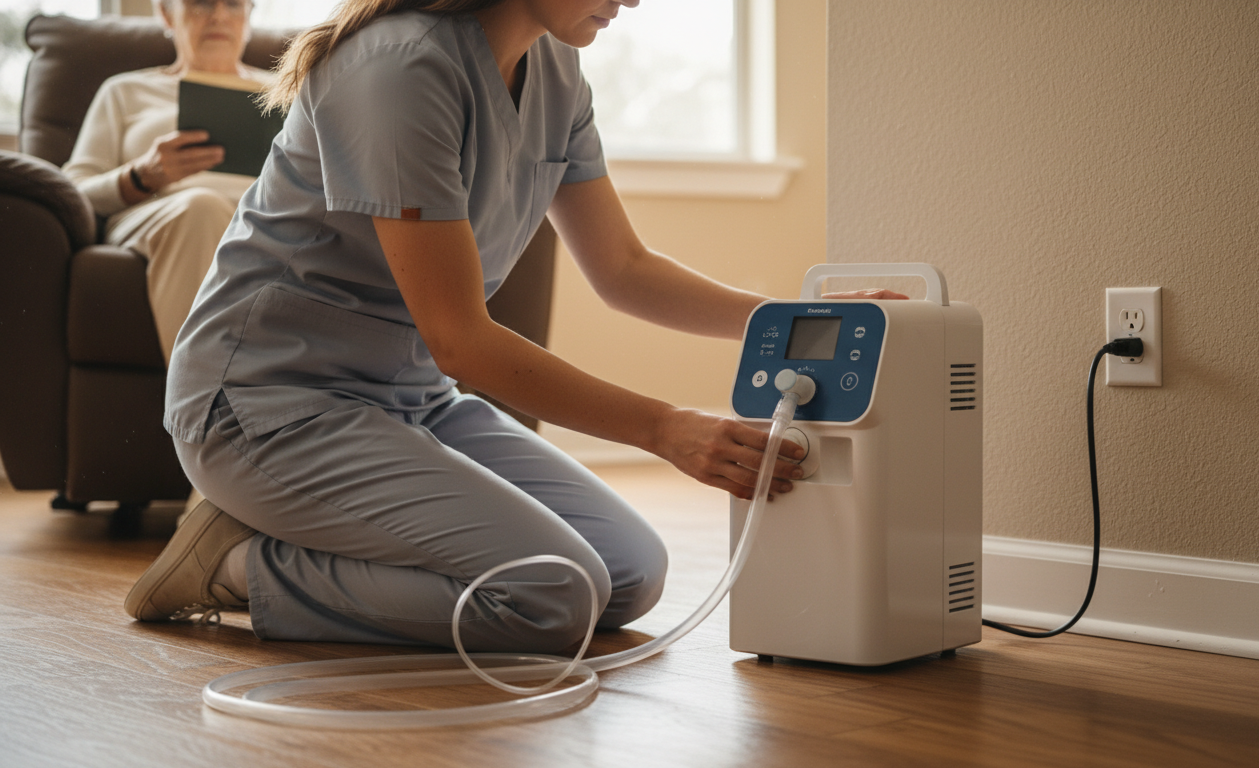
Place the concentrator at least a few inches away from walls or furniture so air can move freely. Connect the tubing, attach the cannula, and set the flow rate exactly as prescribed.
Essential First-Day Safety Precautions
Keep oxygen equipment away from open flames, heat sources, and smoking areas. Make sure power cords and tubing do not sit where people walk, as this helps prevent trips and falls.
Everyday Oxygen Therapy Safety Guidelines
Safe oxygen use protects both you and your home. Simple daily habits can prevent accidents and help your equipment work properly.
Fire and Heat Hazards to Avoid When Using Oxygen
Keep oxygen far away from open flames, candles, or smoking materials. Even small sparks can become dangerous when oxygen is nearby.
Electrical Safety and Ventilation Considerations
Plug your concentrator directly into a wall outlet instead of using extension cords. Make sure the machine has enough space for air to circulate around it.
Clothing, Products, and Household Items to Keep Away From Oxygen
Avoid using oil-based lotions, petroleum products, or aerosol sprays near your oxygen setup. These items can ignite easily in an oxygen-rich environment.
Maintaining and Cleaning Your Oxygen Equipment
Regular cleaning helps your oxygen equipment work smoothly and prevents infections. A simple routine keeps your tubing, filters, and humidifier parts safe to use every day.
How to Clean Cannulas, Tubing, and Humidifier Bottles
Wash humidifier bottles with warm, soapy water and let them air-dry completely before refilling. Cannulas and tubing should be replaced on the schedule provided, since cleaning them does not remove all residue.
Filter Care and Regular Device Inspections
Most concentrators have external filters that need gentle rinsing or wiping. Check for dust, bends in the tubing, or anything that blocks airflow, as these issues can reduce oxygen delivery.
When to Replace Parts or Schedule Professional Servicing
Replace cannulas, tubing, and humidifier bottles as recommended to keep airways clean and equipment reliable. Schedule servicing if you notice unusual noises, weak airflow, or frequent alarms from the concentrator.
Daily Living Tips for Comfort and Mobility With Home Oxygen
Home oxygen therapy should fit smoothly into your everyday routine. A few small adjustments can make moving, sleeping, and staying active much more comfortable.
Managing Oxygen Tubing to Prevent Tangles and Trips
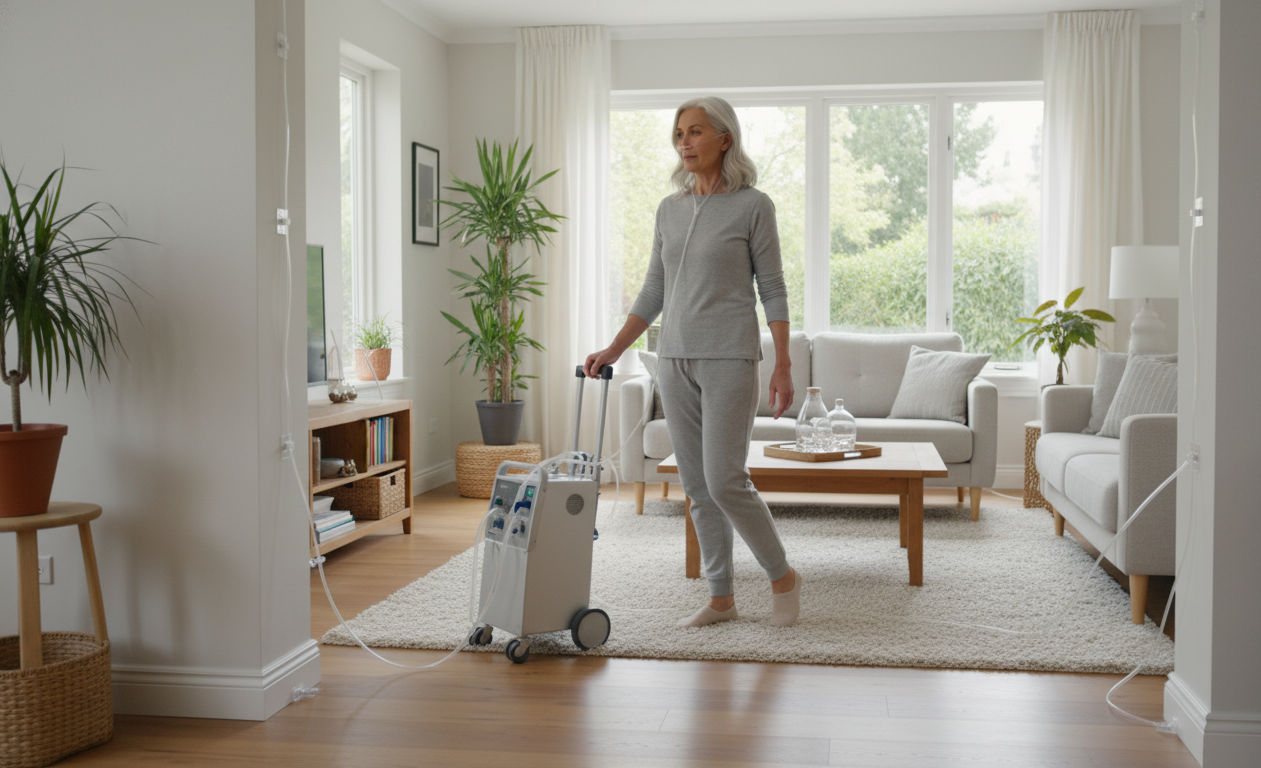
Place tubing along walls or under furniture edges so it stays out of walkways. Use gentle loops instead of sharp bends to keep the oxygen flowing freely.
Sleeping Comfortably and Safely With Oxygen
Keep your concentrator in a well-ventilated spot near your bed so tubing reaches without pulling. A soft clip or fabric wrap can help the nasal cannula stay in place through the night.
Moving Around the House and Outdoors With Confidence
Carry or roll your portable system so it stays upright and secure. Plan routes in your home that avoid sharp corners or tight spaces where tubing can snag.
Tips for Exercising With Oxygen Therapy
Light activity is often easier with oxygen, as long as you follow your prescribed flow rate. Start with slow movements and increase time or distance only when breathing feels steady.
Traveling and Leaving Home With Portable Oxygen Systems
Portable oxygen makes it easier to stay active, run errands, and enjoy time outside your home. A few small habits can help you travel safely and avoid interruptions in your oxygen supply.
Using Portable Oxygen for Short Outings
Check your battery level or tank pressure before leaving the house. Carry extra tubing or a spare cannula so you can replace them quickly if needed.
Airline, Vehicle, and Public Transportation Guidelines
Airlines require approved portable oxygen concentrators and may ask for advance notice. In cars or buses, keep your device upright and away from direct heat and never store tanks in a trunk.
Packing and Planning for Longer Travel
Bring extra batteries, charger cords, and enough supplies for the entire trip. Call ahead to confirm that your destination has accessible power outlets or space for your concentrator.
At-Home Troubleshooting and Handling Common Oxygen Issues
Occasional issues with oxygen equipment can happen, but many are easy to manage at home. Knowing what to look for helps you stay calm and keep your oxygen supply steady.
What to Do if Your Concentrator Stops Working
Check that the machine is plugged directly into a wall outlet and confirm the power switch is on. If it still does not turn on, switch to your backup oxygen supply right away.
How to Check for Flow Issues or Blocked Tubing
Look for bends or twists in the tubing that may slow airflow. Make sure the cannula is positioned correctly and that the tubing is fully connected at both ends.
Understanding Alarms, Alerts, and Low Oxygen Warnings
Alarms often signal blocked filters, low oxygen production, or power problems. Resetting the machine may stop the alert, but call your equipment provider if alarms continue or return quickly.
Emergency Preparedness for Home Oxygen Users
Preparing for emergencies helps you stay safe even when problems arise unexpectedly. A clear plan gives you confidence that your oxygen needs will be covered in any situation.
Building an Oxygen Backup Plan for Power Outages
Keep a fully charged portable concentrator or backup oxygen tanks ready in case your main unit loses power. Store these backups in a place that’s easy to reach during an outage.
Keeping Extra Supplies and Tanks on Hand
Having spare cannulas, tubing, and humidifier bottles ensures you won’t run out of clean equipment. Extra supplies also help you avoid delays if you encounter a sudden issue.
When to Seek Medical Help
Call a healthcare provider if you feel unusually short of breath even with your prescribed oxygen. Seek emergency care right away if you cannot keep your oxygen levels stable or experience sudden chest discomfort.
Common Mistakes to Avoid With Home-Based Oxygen Therapy
A few small errors can create safety risks or make your oxygen system less effective. Avoiding these habits helps your equipment work properly and keeps your home safe.
Incorrect Flow Rate Adjustments
Only use the flow rate prescribed for you, even if you feel short of breath. Changing it without guidance can make your symptoms worse or create safety concerns.
Poor Equipment Cleaning Habits
Skipping cleaning allows moisture and bacteria to build up in tubing or humidifier bottles. Staying on a simple cleaning schedule protects your lungs and keeps airflow clear.
Misplacing Tubing, Tanks, or Cords in Unsafe Areas
Loose tubing can become a tripping hazard, especially in busy rooms. Keep cords and tanks away from doorways, sharp corners, and high-traffic areas.
Using Flammable Products Around Oxygen
Petroleum products, aerosol sprays, and strong solvents can ignite easily near oxygen. Use unscented, water-based products to reduce fire risk.
Quick Reference Checklists for Daily Oxygen Use
These checklists make it easy to stay organized and safe while using oxygen at home. A quick review each day helps your equipment work smoothly and reduces stress.
Daily Safety Checklist
-
Keep oxygen away from flames and heat.
-
Make sure tubing has no bends or twists.
-
Check your flow rate setting before use.
Weekly and Monthly Maintenance Tasks
-
Rinse or replace filters as recommended.
-
Wash humidifier bottles and let them dry fully.
-
Inspect tubing and cannulas for wear or stiffness.
On-the-Go Oxygen Packing List
-
Extra batteries or tank supplies.
-
Backup cannula and tubing.
-
Charger cords or outlet adapters for portable units.
Topics to Read Further
Here are a few helpful topics to continue learning about safe oxygen therapy use:
.png)