older adults
Why Your Legs Feel Weak When Walking
Learn common causes of weak legs while walking, warning signs to watch for, and how HWY Physical Therapy Clinic may help improve mobility.
Discover the best gait training exercises for older adults to improve walking, balance, and confidence. Learn how HWY Physical Therapy Clinic helps seniors stay active.
Walking is something most of us do without thinking until it becomes difficult. If you've noticed that your steps have become shorter, slower, or less steady, you're not alone. Many older adults experience changes in the way they walk as they age. These changes can make everyday activities more challenging and increase the risk of trips and falls.
The good news is that walking ability can often improve with the right approach. Gait training exercises strengthen the muscles that support walking, improve balance and coordination, and help you move with greater confidence. Whether you're recovering from an injury, managing a chronic condition, or simply want to stay active, regular gait training can make a meaningful difference.
In this guide, you'll learn what gait training is, why walking patterns change with age, and the best gait training exercises for older adults. You'll also discover simple ways to improve your walking at home, common mistakes to avoid, and the signs that it's time to seek professional help.
With regular practice and the right guidance, you can improve your mobility, lower your risk of falls, and continue enjoying the independence that comes with walking safely and confidently.
Walking may seem simple, but it's actually a complex movement that depends on your muscles, joints, nerves, vision, and balance working together. When one or more of these systems doesn't function as well as it should, your walking pattern, also known as your gait, can change.
Gait training is a specialized form of physical therapy that helps improve the way you walk. It focuses on correcting walking patterns, improving balance and coordination, increasing strength, and making walking safer and more efficient. The goal is to help you move with greater confidence while reducing your risk of falls.
Unlike a general exercise program, gait training addresses the specific movement patterns involved in walking. The exercises are selected based on your individual needs and may focus on improving stride length, posture, foot placement, walking speed, or your ability to safely change direction.
Older adults often benefit from gait training after an illness, injury, surgery, or a period of reduced activity. It can also help people living with arthritis, Parkinson's disease, stroke, peripheral neuropathy, balance disorders, and other conditions that affect mobility.
Regular gait training offers many benefits that go beyond improving the way you walk. It can help you stay active, maintain your independence, and make everyday activities feel easier.
Some of the key benefits include:
The earlier walking changes are identified, the easier they are often to improve. With the right exercises and consistent practice, many older adults can develop a safer, more efficient walking pattern and continue enjoying an active lifestyle.
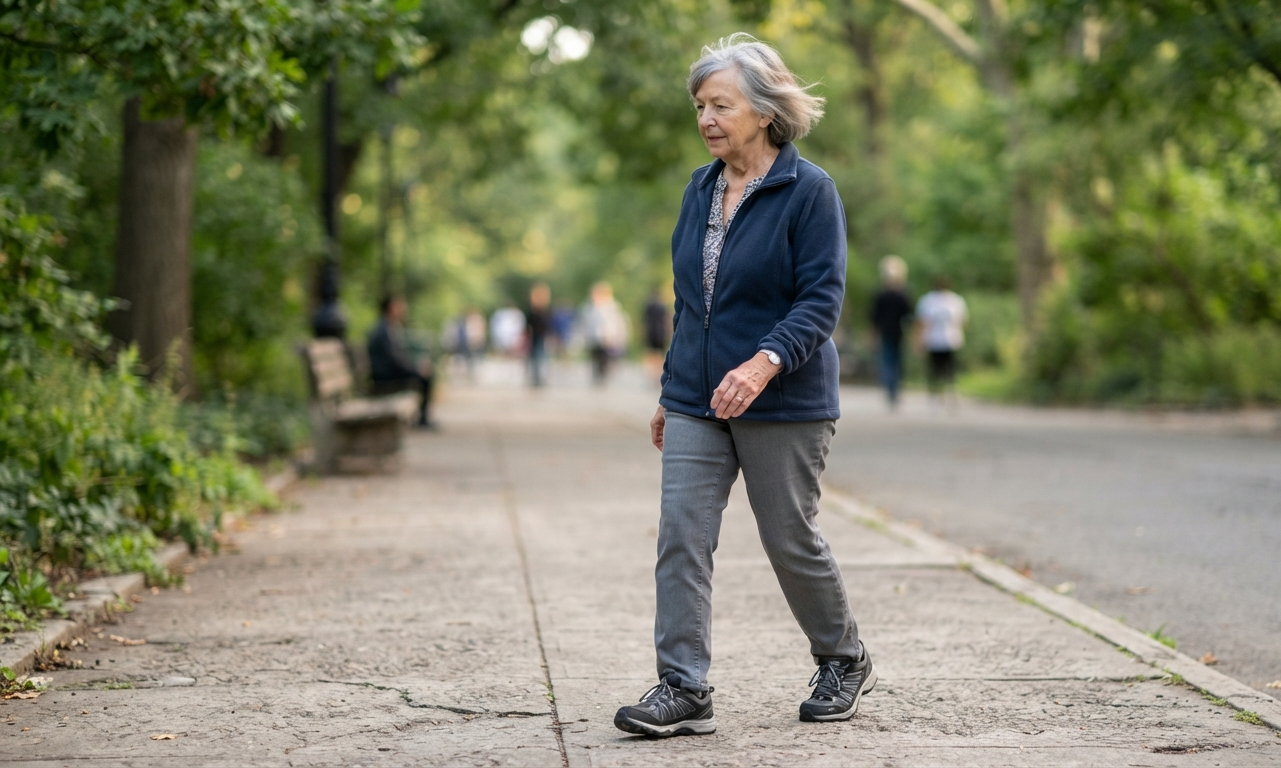
It's common for walking patterns to change with age, but those changes aren't caused by aging alone. Walking depends on strength, flexibility, balance, coordination, vision, and the nervous system working together. When one or more of these areas begins to decline, your gait can become slower, less stable, or less efficient.
Understanding why your gait has changed is the first step toward improving it.
As we age, our bodies naturally lose muscle mass and strength, particularly in the hips, thighs, and calves. These muscles play a vital role in supporting your body and moving you forward with each step.
Joint stiffness is another common change. Reduced flexibility in the hips, knees, and ankles can shorten your stride and make walking feel less comfortable. Many older adults also experience slower reaction times, making it harder to recover quickly if they trip or lose their balance.
It's also common to walk more cautiously after a near fall or injury. While this may feel safer, taking shorter, slower steps can sometimes make your gait less stable.
Several health conditions can change the way you walk by affecting your muscles, joints, nerves, or balance.
Some of the most common include:
These conditions don't always mean you'll lose your independence. Many people improve their walking with targeted exercises and a personalized rehabilitation program.
Your daily habits also influence how well you walk.
Long periods of sitting can weaken the muscles needed for walking and reduce flexibility. Poor posture, wearing unsupportive footwear, and avoiding activity because of a fear of falling can also contribute to changes in your gait.
Staying active, maintaining your strength, and addressing walking problems early can help prevent small changes from becoming bigger mobility challenges.
Recognizing the cause of your walking difficulties allows you to choose the right exercises and seek treatment when needed. In many cases, early gait training can improve walking efficiency, increase confidence, and reduce the risk of falls.
Walking patterns usually change gradually, making it easy to overlook early warning signs. You might assume you're simply slowing down with age, but certain changes can indicate that your balance, strength, or mobility needs attention.
Recognizing these signs early allows you to start gait training before a minor walking problem leads to a fall or limits your independence.
If your steps have become noticeably shorter, your body may be trying to compensate for weakness, stiffness, or reduced balance. A shorter stride can make walking less efficient and may increase your risk of tripping.
Instead of lifting your feet fully with each step, you may notice that your feet drag or shuffle across the floor. This walking pattern makes it easier to catch your toes on rugs, uneven sidewalks, or small obstacles.
It's natural for walking speed to decrease slightly with age. However, a significant change in your usual pace may indicate reduced muscle strength, poor balance, or an underlying health condition that should be evaluated.
Turning while walking requires good balance and coordination. If you need several small steps to turn around or feel unsteady when changing direction, your gait may benefit from targeted training.
Do you feel uncomfortable walking on grass, gravel, ramps, or uneven sidewalks? If you find yourself avoiding these surfaces because you don't feel steady, it may be a sign that your balance and walking mechanics need improvement.
Even one fall or near fall should be taken seriously. These incidents often signal that your body isn't responding as quickly or effectively as it once did. Addressing the problem early can help prevent future falls and improve your confidence while walking.
If you've noticed one or more of these warning signs, don't ignore them. Gait training exercises and a professional gait assessment can help identify the cause of your walking difficulties and create a plan to improve your mobility, safety, and independence.
If you're having trouble walking, a physical therapist can perform a gait assessment to identify what's affecting your movement. The goal isn't just to observe how you walk. It's to understand why your walking pattern has changed and develop a treatment plan that addresses the underlying cause.
A gait assessment is painless, non-invasive, and tailored to your individual needs.
Your physical therapist will begin by watching you walk at your normal pace. They will look for changes that may affect your safety and mobility, including:
These observations help identify movement patterns that may increase your risk of falling or make walking less efficient.
Walking and balance go hand in hand. Your therapist may ask you to perform simple functional movements to evaluate how safely you move during everyday activities.
This may include:
These tests provide valuable information about your balance, coordination, and overall mobility.
Weak muscles and stiff joints often contribute to changes in gait. Your physical therapist will evaluate the strength and flexibility of the areas that play the biggest role in walking, including your:
Identifying these limitations helps determine which exercises will provide the greatest benefit.
No two people walk exactly the same, so there isn't a one-size-fits-all exercise program. After completing your assessment, your physical therapist will develop a treatment plan based on your walking pattern, physical abilities, medical history, and personal goals.
Your program may include gait training exercises, strength training, balance exercises, flexibility work, and functional activities that help you move more safely during everyday life. As your walking improves, your exercises will be adjusted to keep you progressing toward your goals.
Gait training exercises are generally safe for most older adults, but taking a few simple precautions before you begin can help prevent injuries and build confidence. Creating a safe environment allows you to focus on improving your walking without unnecessary risks.
If you're new to gait training or have experienced a recent fall, start with easier exercises and progress at a pace that feels comfortable.
Practice your walking exercises in an area that is flat, well-lit, and free of obstacles. Remove anything that could cause you to trip, such as loose rugs, electrical cords, footstools, or clutter.
If you're walking indoors, hallways and open living spaces often provide enough room to move safely.
The shoes you wear can affect your balance and walking pattern. Choose footwear that fits well, provides good support, and has non-slip soles.
Avoid walking exercises while wearing flip-flops, loose slippers, high heels, or socks on smooth floors, as these can increase your risk of slipping.
There's no shame in using support while practicing gait exercises. Holding onto a sturdy countertop, handrail, or the back of a heavy chair can help you feel more secure as you learn new movements.
If your healthcare provider has recommended using a cane or walker, continue using it during your exercises unless a physical therapist advises otherwise.
Don't try to master every exercise in one session. Begin with simple movements, pay attention to your posture, and focus on taking slow, controlled steps. As your strength and confidence improve, you can gradually increase the difficulty of your exercises.
Stop exercising immediately if you experience:
These symptoms should never be ignored. If they occur, seek medical advice before continuing your exercise program.
Taking a few minutes to prepare before each session can make gait training safer and more effective. A safe environment, supportive footwear, and steady progress will help you build confidence while improving the way you walk.
Every step you take follows a predictable sequence called the gait cycle. It begins when one foot touches the ground and ends when that same foot touches the ground again.
A healthy gait cycle is smooth, balanced, and efficient. If one phase isn't working properly, your body often compensates by changing the way you walk. Over time, these changes can lead to slower walking, shorter steps, poor balance, or a higher risk of falling.
Understanding the gait cycle can help you see why certain exercises improve specific parts of your walking pattern.
The gait cycle begins when your heel makes contact with the ground.
During this phase, your heel should land first while your knee remains slightly bent to absorb impact. This creates a stable foundation for the rest of your step.
If your heel doesn't contact the ground properly, you may take shorter steps, shuffle your feet, or place more stress on your knees and hips.
Exercises that help:
After your heel touches the ground, your entire foot gradually comes into contact with the floor. Your body begins transferring weight onto that leg as you move forward.
This phase requires good balance and leg strength to keep you stable.
If you feel unsteady while standing on one leg or quickly shift your weight to the opposite foot, this phase may need improvement.
Exercises that help:
During mid-stance, your body passes directly over the foot that's supporting your weight. At this point, one leg is carrying almost your entire body weight while the other leg swings forward.
Strong hip muscles and good balance are essential during this phase. Weakness in the hips or core can cause your body to lean from side to side, making your gait less efficient and increasing your risk of falling.
Exercises that help:
As your body moves forward, your heel lifts off the ground and your toes push against the floor to propel you into the next step.
This phase provides the power needed for smooth, confident walking. Weak calf muscles or limited ankle movement often reduce push-off strength, leading to slower walking and shorter strides.
Exercises that help:
The final phase begins when your foot leaves the ground and swings forward to prepare for the next step.
Your foot should clear the floor without dragging, and your knee should bend enough to prevent your toes from catching on uneven surfaces.
If your foot drags or you frequently trip, weakness, poor coordination, or reduced flexibility may be affecting this phase of your gait.
Exercises that help:
Each phase of the gait cycle depends on strength, flexibility, balance, and coordination working together. A problem in one phase often affects the rest of your walking pattern.
That's why gait training focuses on more than just walking. A well-designed program strengthens the muscles that support each phase of the gait cycle, improves movement quality, and helps you walk more safely and confidently.
Understanding how a healthy gait works also makes it easier to recognize changes in your own walking. If you've noticed shorter steps, slower walking, shuffling, or difficulty clearing your feet, targeted gait training exercises can help address those specific challenges before they lead to falls or reduced independence.
No two people walk exactly the same, and gait problems can develop for different reasons. Some older adults take shorter steps, while others shuffle their feet or feel unsteady when turning. Identifying the type of walking difficulty you're experiencing can help you focus on exercises that address the underlying problem.
Taking shorter steps is one of the most common changes seen with aging. This often happens because of reduced hip mobility, weaker leg muscles, or a fear of falling.
Exercises that can help:
These exercises encourage a longer stride, improve hip movement, and help you walk with greater confidence.
A shuffling gait is characterized by feet that barely lift off the ground during walking. This increases the risk of tripping over rugs, curbs, and uneven surfaces.
Exercises that can help:
Focus on lifting your feet with each step instead of sliding them across the floor.
Walking more slowly isn't always a problem, but a noticeable decline in your usual pace may indicate reduced strength, balance, or endurance.
Exercises that can help:
As your strength and coordination improve, you'll often notice that walking becomes smoother and more efficient.
Turning requires good balance, coordination, and weight transfer. If you feel unsteady or need several small steps to change direction, targeted practice can help.
Exercises that can help:
Practice turning slowly and avoid pivoting quickly on one foot.
If your toes catch on the floor or you frequently stumble, you may not be lifting your feet high enough during the swing phase of walking.
Exercises that can help:
These exercises strengthen the muscles responsible for lifting your feet and improve coordination during each step.
Some older adults walk with flat, slow steps because they don't generate enough force when pushing off the ground.
Exercises that can help:
Strengthening your calves and ankles can help you take longer, more confident steps.
It's common to experience more than one walking challenge at the same time. For example, someone may have shorter steps, slower walking speed, and poor balance. Rather than focusing on a single exercise, combine gait training with strength, flexibility, and balance exercises for the best results.
If your walking pattern has changed significantly or you've experienced repeated falls, a professional gait assessment can identify the specific factors affecting your mobility and provide a personalized treatment plan.
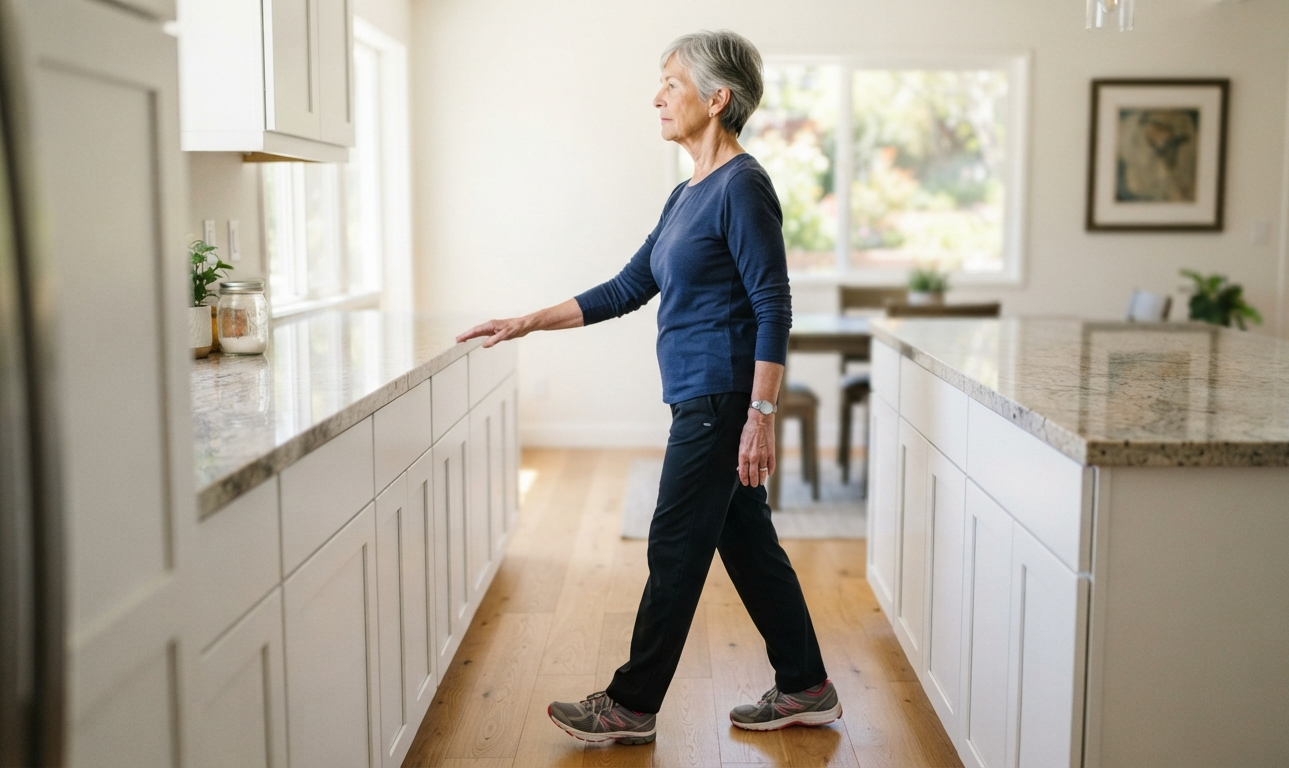
The best gait training exercises improve the specific movements involved in walking. They strengthen the muscles that support your hips, knees, ankles, and core while helping you develop better balance, coordination, and posture.
Before you begin, make sure you're in a safe, open area. Wear supportive shoes and keep a sturdy countertop, handrail, or heavy chair within reach for added stability.
Weight shifting is one of the first exercises physical therapists teach because walking requires you to transfer your weight smoothly from one leg to the other. Improving this movement helps you feel more stable with every step.
How to perform the exercise:
Common mistakes:
Make it easier: Keep both hands on your support.
Make it more challenging: Use one hand for support or briefly lift the opposite foot off the floor.
Marching in place strengthens the hip muscles, improves coordination, and encourages better foot clearance during walking.
How to perform the exercise:
Common mistakes:
Make it easier: Lift your knees only a few inches.
Make it more challenging: Pause for two seconds each time your knee reaches the highest point.
Heel-to-toe walking improves balance, coordination, and walking control by narrowing your base of support.
How to perform the exercise:
Common mistakes:
Make it easier: Leave a small gap between your heel and toes.
Make it more challenging: Perform the exercise without holding onto support if you can do so safely.
Side stepping strengthens the hip muscles that help keep your pelvis stable during walking and turning.
How to perform the exercise:
Common mistakes:
Make it easier: Take smaller steps.
Make it more challenging: Place a resistance band around your thighs.
Walking backward challenges your coordination and improves body awareness. It also strengthens muscles that aren't used as much during forward walking.
How to perform the exercise:
Common mistakes:
Make it easier: Hold onto a countertop with one hand.
Make it more challenging: Increase the walking distance.
Everyday life involves stepping around furniture, curbs, and other objects. This exercise improves coordination and prepares you for real-world situations.
How to perform the exercise:
Common mistakes:
Make it easier: Increase the space between objects.
Make it more challenging: Create a slightly more complex walking path.
Walking in a figure-eight pattern improves balance, turning ability, and coordination.
How to perform the exercise:
Common mistakes:
Make it easier: Make wider turns.
Make it more challenging: Reduce the distance between the objects.
Toe walking strengthens the calf muscles and improves push-off during walking.
How to perform the exercise:
Common mistakes:
Make it easier: Hold onto support throughout the exercise.
Make it more challenging: Increase the walking distance.
Heel walking strengthens the muscles at the front of your lower legs, helping you lift your toes and reduce the risk of tripping.
How to perform the exercise:
Common mistakes:
Make it easier: Walk a shorter distance.
Make it more challenging: Increase the number of steps.
Step-ups improve leg strength, balance, and coordination while preparing you for stairs and curbs.
How to perform the exercise:
Common mistakes:
Make it easier: Use a lower step.
Make it more challenging: Increase the repetitions as your strength improves.
Improving your gait takes time, but consistent practice can make a noticeable difference. As your strength, balance, and coordination improve, you'll likely find everyday activities such as walking, turning, climbing stairs, and navigating uneven surfaces becoming easier and more comfortable.
A stronger body supports a better walking pattern. While gait training teaches you how to walk more efficiently, strength training gives your muscles the power to maintain good posture, take longer steps, and stay steady on your feet.
The hips, glutes, thighs, calves, ankles, and core all play an important role in walking. Strengthening these muscle groups can improve stability, increase walking endurance, and make everyday activities feel easier.
The sit-to-stand exercise strengthens your thighs, hips, and core while improving one of the most common daily movements.
How to perform the exercise:
Common mistakes:
Make it easier: Use the chair's armrests for assistance.
Make it more challenging: Pause for three seconds before sitting down.
Strong glute muscles help stabilize your pelvis and generate power during walking.
How to perform the exercise:
Common mistakes:
Make it easier: Lift your hips only as high as comfortable.
Make it more challenging: Hold the position longer before lowering.
The muscles on the outside of your hips keep your pelvis level while you walk. Weakness in these muscles can cause your body to sway from side to side.
How to perform the exercise:
Common mistakes:
Make it easier: Lift your leg only a few inches.
Make it more challenging: Pause for two to three seconds at the top of the movement.
Heel raises strengthen your calf muscles, which help propel you forward during the push-off phase of walking.
How to perform the exercise:
Common mistakes:
Make it easier: Lift your heels only part of the way.
Make it more challenging: Perform the exercise using one hand for support.
Toe raises strengthen the muscles at the front of your lower legs, making it easier to lift your feet while walking and reducing the risk of tripping.
How to perform the exercise:
Common mistakes:
Make it easier: Hold the chair with both hands.
Make it more challenging: Pause for three seconds before lowering your toes.
Mini squats strengthen your thighs, hips, and glutes while improving your ability to walk, climb stairs, and stand up safely.
How to perform the exercise:
Common mistakes:
Make it easier: Perform a smaller squat.
Make it more challenging: Hold the lowered position for three to five seconds before standing.
Aim to include strength exercises at least two to three times each week alongside your gait training routine. As your muscles become stronger, you'll likely notice improvements in your walking speed, stride length, posture, and overall stability.
Remember that progress takes time. Focus on performing each exercise with good technique rather than rushing through repetitions. Consistent practice is what leads to stronger muscles, better walking mechanics, and greater confidence during everyday activities.
Walking in your home is very different from walking through a grocery store, crossing a parking lot, or stepping onto a curb. Real life requires you to change direction, adjust your speed, and react to your surroundings.
These walking drills help you practice those everyday movements in a safe and controlled environment. As your confidence grows, you'll find it easier to move around your home and community with less hesitation.
Many falls happen while changing direction rather than walking in a straight line. Learning to turn smoothly can improve your balance and reduce your risk of losing your footing.
How to perform the drill:
Tips:
Many people look down at their feet because they're afraid of tripping. Unfortunately, this habit can affect posture and make walking less efficient.
This drill helps you become comfortable looking ahead while remaining aware of your surroundings.
How to perform the drill:
Tips:
Walking in everyday life often involves doing more than one thing at a time. You may be talking with someone, carrying groceries, or thinking about where you're going.
Dual-task walking helps improve coordination and concentration.
How to perform the drill:
Begin with simple tasks and increase the difficulty as your confidence improves.
Stepping around obstacles safely is an important part of maintaining your independence.
How to perform the drill:
Always leave enough space between obstacles to move safely.
Once you feel confident indoors, gradually practice walking on different surfaces with someone nearby if needed.
You might practice on:
Each surface challenges your balance in a different way and helps prepare you for everyday activities.
Confidence doesn't return overnight. It grows with regular practice and positive experiences.
Start with simple walking drills in a familiar environment. As your balance, strength, and coordination improve, gradually introduce more challenging situations. Over time, you'll likely notice that everyday activities such as shopping, walking outdoors, and climbing stairs feel safer and more comfortable.
Gait training is most effective when exercises are performed correctly and progressed at a steady pace. Trying to do too much too soon or practicing with poor technique can slow your progress and increase your risk of injury.
By avoiding these common mistakes, you'll get more benefit from every exercise session.
Many older adults develop the habit of watching their feet because they're worried about tripping. While this may feel safer, constantly looking down changes your posture and can affect your balance.
Instead, keep your head up and look several feet ahead. This helps you maintain better posture while staying aware of your surroundings.
Trying to force longer strides can make you feel unstable and place extra stress on your hips and knees.
Focus on taking smooth, natural steps. As your strength, flexibility, and confidence improve, your stride length will increase naturally.
Speed should never be the goal during gait training. Walking too quickly often leads to poor posture, rushed movements, and reduced control.
Practice at a comfortable pace where you can maintain good form from start to finish. Quality of movement is always more important than speed.
Poor posture affects the way your entire body moves. Rounded shoulders, looking down, or leaning forward can make walking less efficient and increase your risk of losing your balance.
As you walk, try to:
Good posture improves balance and helps you walk with greater confidence.
Walking drills alone won't correct muscle weakness. Strong hips, thighs, calves, and core muscles provide the foundation for a stable gait.
Include strength exercises in your weekly routine to support the improvements you're making through gait training.
It's tempting to move on to more challenging exercises as soon as you start feeling better. However, progressing too quickly can increase your risk of falls and overuse injuries.
Master each exercise before increasing the difficulty. If an exercise still feels unsteady, continue practicing it until you can perform it with good control.
One or two exercise sessions won't produce lasting results. Improving your gait requires regular practice over time.
Aim to complete your gait training routine two to four times each week. Even short, consistent sessions are more effective than occasional long workouts.
Remember that progress isn't measured by how difficult an exercise is. It's measured by how confidently and safely you can move through your daily activities. Staying patient, practicing good technique, and following a consistent routine will help you build a stronger, safer, and more efficient walking pattern.
Improving the way you walk doesn't happen overnight. Like building strength or improving flexibility, better walking mechanics develop through consistent practice. This four-week program provides a gradual progression that helps you build strength, balance, and confidence without becoming overwhelmed.
If an exercise feels too difficult, stay at the same level for another week before progressing.
Focus on learning proper technique and becoming comfortable with the exercises.
Complete this routine 2 to 3 days during the week:
Take your time and concentrate on smooth, controlled movements.
Continue the Week 1 exercises and add:
Increase your walking time to 10 to 15 minutes if you're comfortable.
As your confidence grows, begin practicing movements that are common in everyday life.
Add:
Continue your daily walking routine and focus on maintaining good posture.
Combine your balance exercises, strength training, and walking drills into one complete routine.
Aim to:
At the end of each week, ask yourself these questions:
Small improvements add up over time. By following this program consistently, you'll develop better walking mechanics, improve your balance, and feel more confident during everyday activities.
The exercises you perform during gait training are only part of the equation. Your daily habits also influence how well you walk, how steady you feel, and how easily you move throughout the day.
Making a few simple lifestyle changes can support your progress and help you maintain your mobility as you age.
Walking improves when your body moves regularly. Even on days when you're not doing gait training exercises, try to stay active.
Simple activities include:
The goal is to avoid sitting for long periods, which can lead to muscle weakness and joint stiffness.
Good posture helps your body move more efficiently.
When walking:
These small adjustments can improve your balance and make walking feel more comfortable.
The right shoes can improve stability and reduce your risk of slipping.
Choose shoes that:
Replace worn-out shoes, as uneven soles can affect your walking pattern.
Your muscles and nervous system rely on proper nutrition and hydration to function well.
Drink water throughout the day and eat a balanced diet that includes lean protein, fruits, vegetables, whole grains, and calcium-rich foods. Good nutrition helps maintain muscle strength and supports healthy movement.
Your home should support safe walking.
Take a few minutes to:
These simple changes can reduce your risk of falls and give you greater confidence as you move around your home.
Healthy habits and regular gait training work together. By staying active, maintaining good posture, wearing supportive shoes, and creating a safe environment, you'll give yourself the best opportunity to walk with greater confidence, stability, and independence.
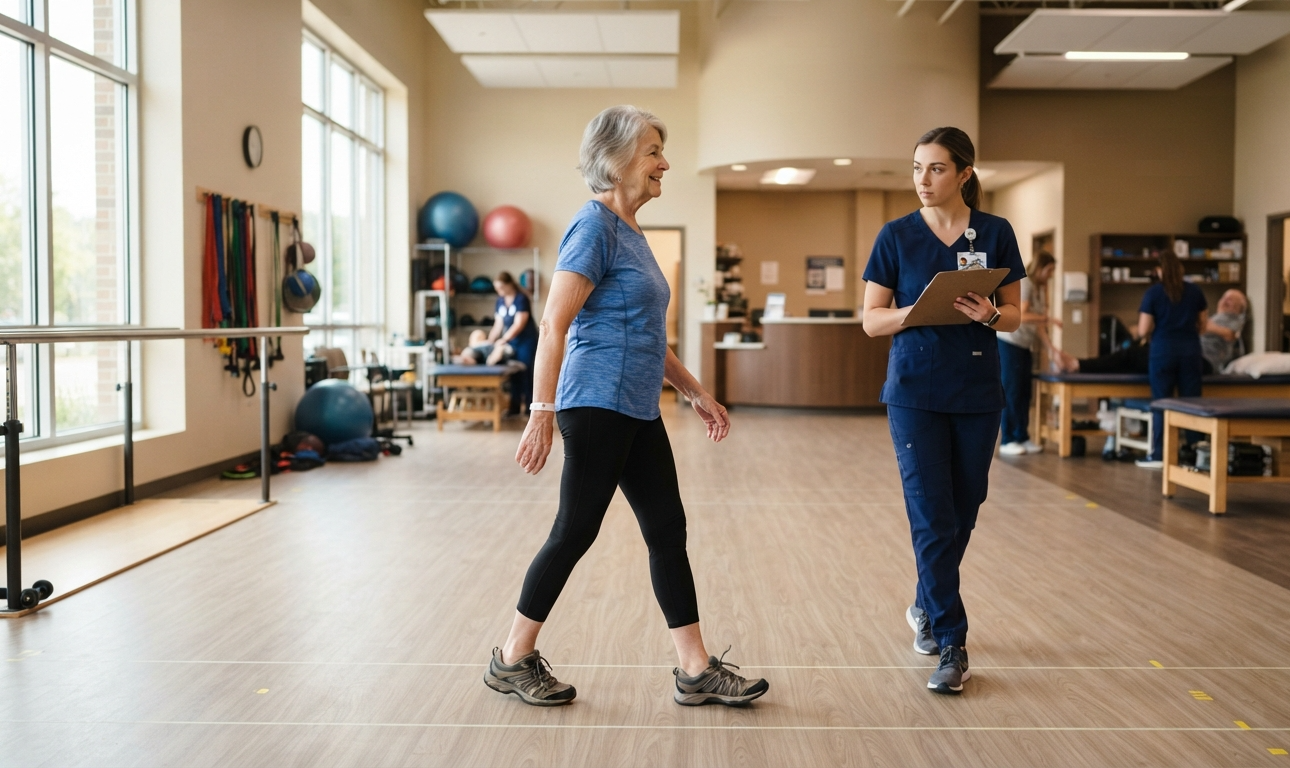
Many walking problems improve with regular exercise, but some require professional evaluation. If your gait continues to change despite practicing at home, or if you're becoming less confident while walking, it's a good idea to schedule a gait assessment with a physical therapist.
Early treatment can often prevent small walking problems from becoming more serious mobility issues.
Consider scheduling a gait evaluation if you:
These signs may indicate underlying issues that won't improve with general exercise alone.
A physical therapist will evaluate how you move and identify the factors affecting your walking pattern.
Your assessment may include:
Using this information, your physical therapist will create a treatment plan tailored to your specific needs.
Gait rehabilitation is about more than teaching you to walk differently. It addresses the underlying problems that affect your movement, helping you build strength, improve balance, and develop safer walking habits.
Your treatment plan may include:
The program is adjusted as you improve, helping you continue making progress safely.
If you're experiencing changes in the way you walk, don't wait until a fall limits your independence. A professional gait assessment can identify the cause of your walking difficulties and help you regain confidence with every step.
Dr. Raj at HWY Physical Therapy provides one-on-one gait assessments and personalized rehabilitation programs for older adults in Salem, Oregon. Every treatment plan is designed around your goals, whether you want to walk more comfortably, improve your balance, recover after surgery, or reduce your risk of falling.
HWY Physical Therapy
Center 50+, Salem City Building
2615 Portland Rd NE
Salem, OR 97301
Call 971-202-1979 to schedule your personalized gait assessment and take the first step toward safer, more confident walking.
Gait training is a specialized form of physical therapy that helps improve the way you walk. It focuses on correcting walking patterns, improving balance, increasing strength, and enhancing coordination so you can move more safely and efficiently.
Gait training is commonly recommended for older adults, people recovering from surgery, and individuals with neurological or orthopedic conditions that affect walking.
No. While the two are closely related, they are not the same.
Balance training focuses on helping you stay steady while standing or moving. Gait training focuses on improving the mechanics of walking, including stride length, foot placement, posture, walking speed, and coordination.
Many rehabilitation programs include both because better balance supports better walking.
Yes. Improving the way you walk can reduce your risk of falls by increasing stability, strengthening the muscles used during walking, and improving your ability to react to changes in the environment.
When combined with strength training and balance exercises, gait training is an effective way to improve mobility and reduce fall risk.
Most older adults benefit from practicing gait training exercises two to four times each week.
If you're recovering from surgery or working with a physical therapist, your exercise schedule may be different. Your therapist will recommend a program based on your condition, goals, and current level of mobility.
Everyone progresses at a different pace, but many people begin noticing improvements within four to eight weeks of consistent practice.
The amount of improvement depends on several factors, including:
Staying consistent is one of the most important factors in achieving lasting results.
Yes. Many gait training exercises can be performed safely at home, provided you have enough space and a stable surface for support.
If you've experienced recent falls, severe balance problems, or significant weakness, it's best to have a physical therapist evaluate you before beginning a home program.
A shuffling gait can develop for several reasons, including muscle weakness, reduced hip and ankle mobility, balance problems, Parkinson's disease, arthritis, or a fear of falling.
The first step is identifying the underlying cause. Once that's determined, a targeted exercise program can help improve foot clearance, stride length, and walking confidence.
Regular walking is excellent for maintaining mobility and endurance, but it doesn't always correct problems with the way you walk.
If you have poor posture, short steps, weakness, or balance deficits, walking alone may reinforce those movement patterns. Combining walking with gait training, strength exercises, and balance training usually leads to better results.
In many cases, Medicare may cover medically necessary physical therapy services, including gait training, when prescribed or documented according to Medicare guidelines.
Coverage depends on your individual plan and medical needs. Contact your insurance provider or speak with your physical therapy clinic to understand your specific benefits.
You should consider scheduling a gait assessment if you:
Early evaluation can identify the cause of your walking difficulties and help you begin treatment before your mobility declines further.
A personalized gait training program can improve your confidence, help you move more efficiently, and support your long-term independence.
If you'd like to learn more about improving your walking and maintaining your independence, these trusted resources provide practical, evidence-based information:
If you've noticed changes in the way you walk, don't assume it's simply part of getting older. Walking difficulties often develop gradually, and early treatment can help improve your mobility, reduce your risk of falls, and keep you active and independent.
At HWY Physical Therapy, Dr. Raj provides comprehensive gait assessments and personalized treatment plans for older adults experiencing walking difficulties. Whether you're recovering from surgery, managing a neurological condition, dealing with arthritis, or simply feeling less steady on your feet, you'll receive one-on-one care tailored to your needs.
Your treatment plan may include gait training, balance therapy, strength exercises, mobility training, and fall prevention strategies to help you move with greater confidence and comfort.
If you're ready to improve your walking and regain confidence with every step, we're here to help.
HWY Physical Therapy
Center 50+, Salem City Building
2615 Portland Rd NE
Salem, OR 97301
Call 971-202-1979 to schedule your personalized gait assessment today.
Learn common causes of weak legs while walking, warning signs to watch for, and how HWY Physical Therapy Clinic may help improve mobility.
Discover physical therapy exercises to improve walking in seniors. HWY Physical Therapy Clinic helps Salem older adults strengthen balance and...
Walking feels unsafe in old age? Learn how to improve balance, prevent falls, and stay independent with expert guidance from HWY Physical Therapy...
.png)
Whether you have questions about enhancing strength, increasing mobility, ensuring home safety, managing pain effectively, or preventing falls, I am here to provide expert guidance.
Limited Time Offer - $25 - Learn More