Foot weakness in seniors can affect walking and balance. Learn causes, exercises, neuropathy treatment, and Neubie therapy options in Salem.
Foot weakness in older adults can make everyday movement feel harder and less predictable. Some seniors notice they trip more often, shuffle while walking, or feel less stable on stairs and uneven ground. Others describe their feet as weak, numb, heavy, or disconnected during movement.
These changes are not always caused by aging alone. Foot weakness may develop because of peripheral neuropathy, muscle loss, reduced activity, poor circulation, nerve compression, or balance decline. In some cases, weakness happens gradually over time. In others, symptoms appear more suddenly and begin affecting walking confidence quickly.
Weak feet can also increase fall risk. The feet play an important role in balance, posture, and walking coordination. When muscles or nerve signals are not working properly, the body often compensates with slower walking, shorter steps, and less stable movement patterns.
The good news is that many people improve with the right rehabilitation approach. Physical therapy, balance training, gait retraining, and foot strengthening exercises may help improve mobility and stability. Some clinics also use neuromuscular rehabilitation technologies alongside movement therapy to support muscle activation and walking control.
Quick answer: What causes foot weakness in older adults?
Foot weakness in older adults can happen for several reasons. One of the most common causes is peripheral neuropathy, a condition that affects the nerves in the feet and legs. Muscle loss with aging, reduced activity levels, poor circulation, balance decline, and neurological conditions can also contribute to weakness and walking instability.
Some seniors notice symptoms like numb feet, weak ankles, difficulty lifting the foot, or frequent tripping while walking. Others feel less stable even without pain because the feet are no longer sending strong balance signals to the brain.
Conditions like foot drop, arthritis, diabetic neuropathy, spinal problems, and nerve compression may also affect foot strength and walking control.
Physical therapy often focuses on improving strength, walking patterns, balance, and coordination. Movement retraining, gait therapy, and foot strengthening exercises may help many older adults feel safer and more confident during daily activities.
What foot weakness feels like in older adults

Foot weakness can affect movement in several different ways. Some seniors notice their feet feel tired or heavy while walking. Others struggle with balance, slower walking speed, or difficulty lifting the front of the foot during steps.
Symptoms may begin gradually and become more noticeable over time, especially during longer walks or activities that require balance and coordination.
Common symptoms of weak feet
Weak feet often change the way a person walks and moves throughout the day. Common symptoms may include:
- Difficulty lifting the foot while walking
- Shuffling steps
- Weak or unstable ankles
- Frequent tripping
- Reduced push-off during walking
- Feeling unsteady on uneven surfaces
Some people also notice numbness, tingling, or reduced sensation in the feet, especially when neuropathy is involved.
How foot weakness affects balance and walking
The feet help stabilize the body during every step. Weak foot muscles or reduced nerve function can make it harder to react quickly during movement.
Many seniors begin walking more slowly or taking shorter steps to feel safer. Others may widen their stance or hold onto furniture, railings, or shopping carts for support.
These compensation patterns may temporarily improve stability, but they can also increase fatigue and reduce walking confidence over time.
Why some seniors feel unstable even without pain
Not all foot weakness causes pain. Some seniors feel unstable because the nerves and muscles in the feet are no longer communicating effectively with the brain.
Reduced foot sensation can make it harder to detect pressure, movement, and body position during walking. As a result, balance reactions may become slower and less coordinated even when the feet do not hurt.
Daily activities that become harder with weak feet
Weak feet can make simple daily activities feel more challenging, including:
- Climbing stairs
- Grocery shopping
- Walking outdoors
- Carrying objects while walking
- Getting in and out of cars
- Standing for longer periods
Over time, these difficulties may reduce independence and increase fear of falling during movement.
Simple signs your foot weakness may be getting worse
Foot weakness often develops gradually, which can make changes easy to overlook at first. Many seniors adapt their walking patterns without realizing their balance and mobility are slowly declining.
Paying attention to early warning signs may help prevent falls and reduce the risk of more serious walking problems later.
Common warning signs to watch for
Some of the most common signs of worsening foot weakness include:
- Tripping more often
- Difficulty lifting the toes while walking
- Foot slapping against the ground
- Increased walking fatigue
- Needing more support from railings or furniture
- Feeling less steady on uneven surfaces
Some seniors also notice they avoid longer walks or crowded environments because movement feels more tiring or unpredictable.
Changes in footwear wear patterns can also be a clue. Uneven shoe wear may suggest changes in walking mechanics or foot control.
When numbness and tingling may be progressing
Numbness and tingling that gradually spreads or becomes more noticeable may point to worsening nerve involvement. Burning sensations, reduced foot awareness, or nighttime discomfort are also common with neuropathy-related weakness.
Many people notice symptoms feel worse at night when there are fewer distractions and the nervous system becomes more aware of abnormal sensations.
If walking stability, balance, or foot control continues declining, a professional evaluation may help identify the cause and guide treatment options.
Symptoms that may point to different causes of foot weakness
Foot weakness can develop from several different conditions, including neuropathy, muscle weakness, circulation problems, or neurological disorders. The symptoms often give important clues about what may be affecting walking and balance.
Some people mainly notice weakness, while others experience numbness, burning sensations, instability, or coordination problems.
Symptom and cause comparison table
| Symptom | Possible Cause |
|---|---|
| Numb feet | Peripheral neuropathy |
| Burning or tingling feet | Nerve irritation or neuropathy |
| Difficulty lifting the foot | Foot drop |
| Weak or unstable ankles | Muscle weakness or instability |
| Frequent tripping | Gait and balance problems |
| Loss of foot sensation | Neuropathy or circulation issues |
| Walking fatigue | Muscle weakness or nerve dysfunction |
These symptoms do not always point to a serious condition, but worsening weakness, numbness, or walking instability should not be ignored. In many cases, early treatment may help improve mobility and reduce fall risk before symptoms become more limiting.
Common causes of foot weakness in older adults
Foot weakness in seniors can develop for many different reasons. In some cases, weakness comes from muscle loss and reduced activity. In others, nerve damage or neurological conditions affect how the feet move and respond during walking.
Sometimes more than one issue contributes to the problem at the same time.
Peripheral neuropathy and nerve damage
Peripheral neuropathy is one of the most common causes of foot weakness in older adults. This condition affects the nerves that carry signals between the feet, legs, and brain.
Neuropathy may cause:
- Numbness
- Tingling
- Burning sensations
- Reduced foot awareness
- Weakness during walking
Diabetes is a common cause, but neuropathy can also develop from circulation problems, vitamin deficiencies, medication side effects, or age-related nerve changes.
As nerve signaling becomes less effective, balance and walking control may gradually decline.
Why neuropathy symptoms often feel worse at night
Many people notice burning, tingling, or numbness becomes more noticeable at night. This may happen because there are fewer distractions, making abnormal nerve sensations easier to feel.
Reduced movement and circulation changes may also contribute to nighttime discomfort. Some seniors report that symptoms become more noticeable while trying to relax or sleep.
Nighttime symptoms can interfere with sleep quality and increase fatigue during the day, which may further affect balance and walking stability.
Muscle weakness and reduced mobility
Muscle weakness becomes more common with aging, especially in people who are less physically active. Weak calves, ankles, and foot muscles can make balance recovery more difficult during walking.
Long periods of sitting, previous injuries, and reduced exercise can all contribute to foot and ankle weakness. Over time, walking patterns may become slower and less stable.
Foot drop and walking instability
Foot drop happens when a person has difficulty lifting the front of the foot during walking. This can cause the toes to drag or catch on the ground.
Many people compensate by lifting the knee higher or swinging the leg outward during steps. Foot drop may develop from nerve compression, neuropathy, spinal conditions, or neurological disorders.
Even mild foot drop can increase tripping risk and make walking feel exhausting.
Arthritis and joint stiffness
Arthritis can affect the ankles, feet, and lower leg joints, making movement more difficult and uncomfortable. Joint stiffness may reduce walking flexibility and limit how well the foot adapts to uneven surfaces.
Some seniors also change the way they walk to avoid pain, which may create additional weakness and balance problems over time.
Poor circulation and vascular issues
Reduced circulation may affect muscle performance and nerve health in the feet and lower legs. Some people notice cold feet, cramping, walking fatigue, or slower healing because of circulation problems.
Poor blood flow may also worsen neuropathy symptoms in some older adults.
Neurological conditions affecting walking
Certain neurological conditions can affect coordination, balance, and foot control. Stroke, Parkinson’s disease, multiple sclerosis, and spinal conditions may interfere with muscle activation and walking mechanics.
Symptoms may include:
- Shuffling gait
- Toe dragging
- Weak ankles
- Reduced coordination
- Balance instability
Because neurological conditions affect movement differently in each person, individualized treatment and movement retraining are often important parts of rehabilitation.
Why foot weakness increases fall risk in seniors
Weak feet can affect much more than walking speed. The feet play a major role in balance, posture, and movement control during every step. When foot strength or nerve function declines, the body may struggle to react quickly enough to prevent slips, stumbles, or loss of balance.
Even mild weakness can increase instability over time.
How the feet help control balance
The feet constantly send information to the brain about pressure, movement, and body position. These signals help the body make small posture adjustments during standing and walking.
Strong foot and ankle muscles also help stabilize the body on uneven surfaces, during turns, and while changing direction. When the feet are not functioning properly, balance reactions may become slower and less effective.
How reduced foot sensation affects balance reactions
Many seniors with neuropathy experience reduced sensation in the feet. This can make it harder to feel the ground clearly during walking.
Without strong sensory feedback, the brain may have difficulty detecting subtle balance changes quickly enough. Some people begin walking more cautiously because they no longer trust where their feet are landing.
Reduced foot awareness may also lead to:
- Delayed movement reactions
- Poor coordination
- Increased stumbling
- Slower walking patterns
Why weak feet change walking patterns
People with foot weakness often change the way they walk to feel safer. Common compensation patterns include:
- Shuffling steps
- Shorter stride length
- Wider walking stance
- Toe dragging
- Slower movement
These adjustments may improve stability temporarily, but they can also increase fatigue and reduce walking efficiency.
Fear of falling and reduced activity
After repeated stumbles or near-falls, many seniors begin avoiding activities that feel risky. Some reduce exercise, stop walking outdoors, or avoid busy places altogether.
Less movement can weaken muscles further and reduce coordination even more. Over time, this cycle may increase fall risk and reduce overall independence.
Can physical therapy help foot weakness in older adults?
Yes, physical therapy can often help improve foot weakness, walking stability, and balance in older adults. Treatment focuses on strengthening weak muscles, improving coordination, retraining walking patterns, and helping seniors move more confidently during daily activities.
The right therapy program depends on the cause of the weakness. Some people mainly need strength and balance training, while others benefit from gait retraining or neuropathy-focused rehabilitation.
What happens during a physical therapy evaluation
A physical therapist usually begins by evaluating how a person walks, stands, and changes direction. The evaluation helps identify movement patterns that may increase fall risk or limit walking efficiency.
Testing may include:
- Walking assessment
- Balance testing
- Foot and ankle strength evaluation
- Flexibility checks
- Gait analysis
- Coordination testing
If numbness or dizziness is involved, therapists may also assess nerve-related balance problems and sensory changes.
Balance therapy and gait retraining
Balance therapy helps older adults improve stability and movement control during walking. Gait retraining focuses on correcting walking patterns that may contribute to tripping, shuffling, or instability.
Therapy may include:
- Walking drills
- Balance exercises
- Direction-change training
- Step control exercises
- Fall prevention strategies
These exercises are usually progressed gradually based on comfort level and fall risk.
Foot and ankle strengthening exercises
Weak foot and ankle muscles can reduce walking stability and reaction time. Physical therapy often includes exercises designed to improve lower leg strength and movement control.
Common exercises may include:
- Toe raises
- Heel raises
- Resistance band exercises
- Ankle mobility drills
- Balance-focused strengthening
Neuromuscular re-education for foot weakness
Neuromuscular re-education focuses on improving communication between the muscles, nerves, and brain. This type of training helps reinforce safer movement patterns and improve walking coordination.
Many seniors also gain confidence as movement becomes more controlled and predictable over time.
Neubie therapy and neuromuscular stimulation for neuropathy
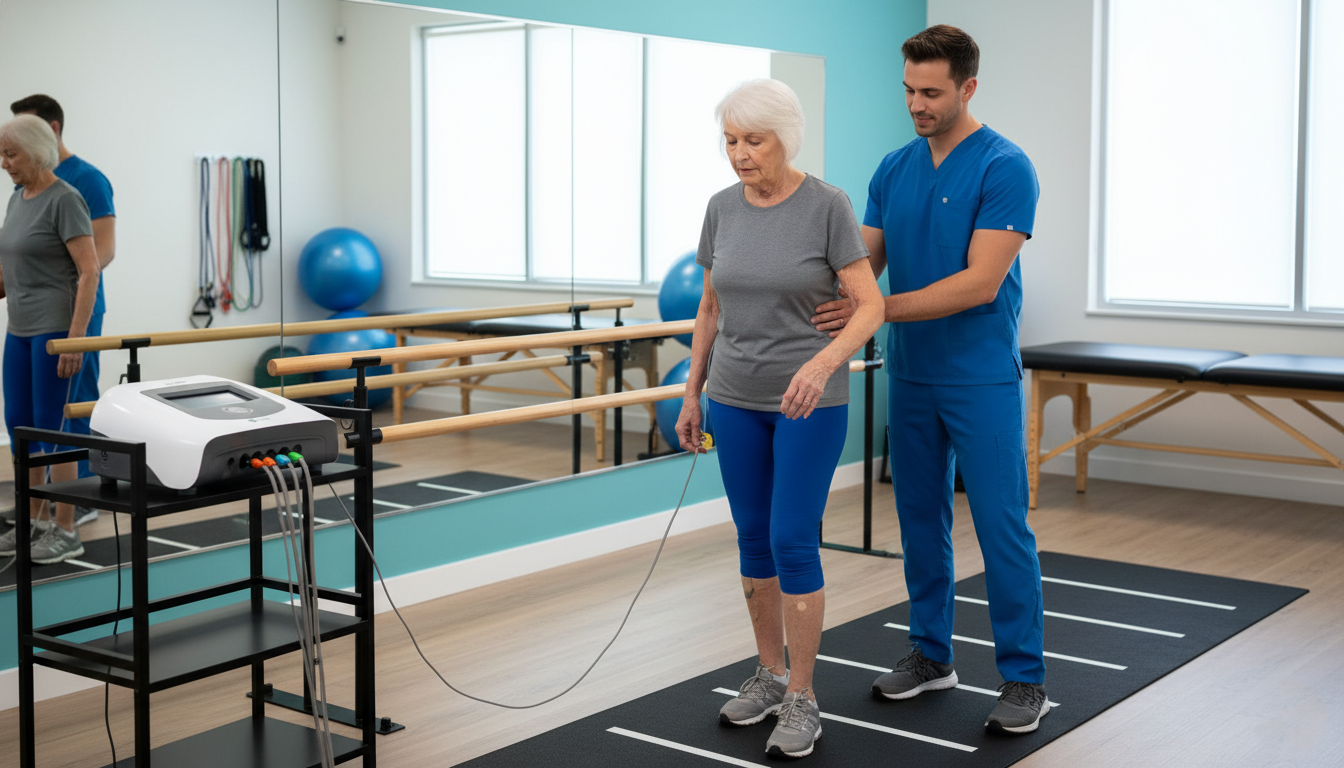
Some rehabilitation programs use neuromuscular electrical stimulation alongside physical therapy exercises to help improve muscle activation and movement control. These technologies are often used as part of a broader rehabilitation plan rather than as a standalone treatment.
For seniors dealing with neuropathy, walking instability, or weak foot muscles, neuromuscular stimulation may support movement retraining and balance rehabilitation.
What is the Neubie machine?
The Neubie machine is a form of neuromuscular electrical stimulation designed to work alongside active movement exercises. The goal is to help stimulate muscle activation while the person performs guided movements and rehabilitation exercises.
Unlike passive treatments where a person remains still, Neubie therapy is often combined with walking drills, strengthening exercises, and movement retraining activities.
How Neubie therapy may help foot weakness and neuropathy
Some people with neuropathy or foot weakness struggle to activate muscles effectively during walking. Neuromuscular stimulation may help improve awareness of movement patterns and support muscle engagement during rehabilitation exercises.
Therapy programs may focus on:
- Walking coordination
- Foot and ankle activation
- Balance retraining
- Sensory awareness
- Gait stability
Results can vary depending on the severity of nerve involvement, overall strength, and mobility limitations.
How neuromuscular stimulation is combined with movement therapy
Neuromuscular stimulation is usually used together with exercises, gait retraining, and balance therapy. The goal is to reinforce healthier movement patterns while improving stability and coordination during activity.
Many rehabilitation programs combine stimulation with:
- Strength exercises
- Walking drills
- Balance training
- Mobility exercises
- Functional movement practice
This combined approach may help improve confidence and walking control more effectively than passive treatment alone.
Neubie therapy for neuropathy rehabilitation
Some clinics also use technologies like the Neubie machine as part of neuropathy rehabilitation programs. Neufit’s neuropathy therapy approach explains how neuromuscular stimulation may support movement retraining and sensory awareness in people dealing with nerve-related foot weakness: https://www.neu.fit/neuropathy/
HWY Physical Therapy in Salem also offers the Neubie machine as part of individualized rehabilitation programs focused on walking stability, movement retraining, and balance support.
Exercises that may help strengthen weak feet in seniors

Exercises for weak feet should focus on improving strength, stability, balance, and walking control. The safest programs usually begin with simple movements and gradually become more challenging as coordination and confidence improve.
Consistency is often more important than intensity. Small improvements in foot control and walking stability can make everyday movement feel safer and more manageable.
Beginner foot strengthening exercises
Simple exercises can help activate the muscles in the feet and lower legs without placing too much stress on the joints.
Common beginner exercises include:
- Toe curls using a towel
- Ankle pumps
- Toe raises
- Heel raises while holding support
- Towel scrunches
- Seated ankle circles
These exercises may help improve circulation, muscle activation, and foot awareness during movement.
Standing balance and ankle stability exercises
Balance exercises help strengthen the muscles that support walking and posture. Many seniors begin with supported standing exercises before progressing to more dynamic movement drills.
Helpful exercises may include:
- Heel-to-toe standing
- Side-to-side weight shifting
- Supported single-leg balance
- Standing marches
- Controlled ankle shifts
These movements help improve stability and balance reactions during walking.
Walking exercises for gait stability
Walking drills can help retrain movement patterns and improve coordination. Physical therapists often use these exercises to improve step control and reduce compensation patterns caused by weakness or neuropathy.
Common walking exercises include:
- Tandem walking
- Controlled stepping drills
- Direction-change exercises
- Walking with slower controlled steps
- Obstacle navigation practice
These drills are often progressed gradually based on balance and walking confidence.
Beginner vs advanced foot strengthening progressions
Most rehabilitation programs start with seated or supported exercises before advancing to more challenging walking and balance activities.
Beginners may focus on:
- Seated strengthening
- Chair-supported standing
- Slow controlled movement
As strength improves, exercises may progress to:
- Unsupported balance drills
- Dynamic walking exercises
- Multi-direction stepping
- Uneven surface training
Safe progression is important because advancing too quickly may increase fall risk or fatigue.
Safety tips before starting exercises
Seniors should always exercise near a stable surface such as a countertop, railing, or sturdy chair. Supportive shoes and clutter-free spaces can also reduce fall risk during movement training.
Exercises should stop if severe dizziness, pain, sudden weakness, or worsening instability occurs. People with significant balance problems or frequent falls may benefit from professional guidance before starting a home exercise program.
When should foot weakness be evaluated?
Mild foot fatigue after activity is common, especially as people age. Still, ongoing weakness, numbness, or walking instability should not be ignored. Early evaluation may help identify problems before they begin affecting balance, mobility, and independence more seriously.
Warning signs that should not be ignored
Some symptoms may point to worsening nerve or mobility problems and should be evaluated promptly.
Warning signs include:
- Sudden foot weakness
- Frequent tripping or stumbling
- Rapid balance decline
- Trouble lifting the foot while walking
- Severe numbness
- Foot slapping against the ground
- New difficulty climbing stairs
Sudden weakness or major walking changes should always be taken seriously.
When neuropathy symptoms may be progressing
Neuropathy symptoms often develop gradually over time. Increasing numbness, burning pain, tingling, or reduced coordination may suggest worsening nerve involvement.
Some people also notice:
- Greater walking instability
- Reduced foot awareness
- More nighttime discomfort
- Increased fatigue during walking
As symptoms progress, walking confidence and balance may continue declining.
Why early treatment matters
Early treatment may help reduce fall risk and slow mobility decline. Physical therapy, balance training, gait retraining, and movement exercises can often help improve stability and walking control before symptoms become more severe.
Addressing weakness early may also help seniors maintain independence and stay active longer.
Foot weakness treatment and neuropathy therapy in Salem, Oregon
Foot weakness can make walking feel less stable and more exhausting over time. Many older adults begin avoiding activities because they worry about tripping, losing balance, or falling during movement. Early treatment may help improve walking confidence and reduce mobility decline before symptoms become more limiting.
Who may benefit from therapy
Physical therapy may help:
- Seniors with weak or unstable feet
- People experiencing neuropathy symptoms
- Older adults with frequent tripping
- Individuals with foot drop or walking instability
- Seniors struggling with balance and mobility decline
Treatment plans are adjusted based on each person’s symptoms, strength, walking ability, and overall mobility goals.
What to expect at HWY Physical Therapy
At HWY Physical Therapy in Salem, Oregon, treatment focuses on improving walking stability, balance, strength, and movement confidence. Therapy programs may include gait retraining, balance exercises, foot strengthening, fall prevention strategies, and neuromuscular rehabilitation.
The clinic also offers the Neubie machine as part of individualized therapy programs for some patients dealing with neuropathy-related weakness and walking instability.
When to schedule a professional evaluation
Professional evaluation may be helpful if foot weakness is causing frequent tripping, balance problems, reduced mobility, or fear of walking safely during daily activities.
Frequently asked questions about foot weakness in older adults
What causes foot weakness in elderly adults?
Foot weakness in older adults can happen because of peripheral neuropathy, muscle loss, reduced activity, poor circulation, arthritis, nerve compression, or neurological conditions. Aging may also affect balance, coordination, and walking stability over time.
Some seniors experience weakness gradually, while others notice sudden walking changes or increased tripping.
Can neuropathy cause balance problems?
Yes, neuropathy can affect balance because the nerves in the feet help send movement and position signals to the brain. When sensation decreases, it becomes harder to detect pressure and body position during walking.
Many people with neuropathy walk more cautiously because they feel less stable on uneven surfaces or during quick movements.
Can physical therapy improve weak feet?
Physical therapy may help improve strength, balance, walking control, and movement confidence. Treatment often includes gait retraining, balance exercises, foot strengthening, and neuromuscular re-education.
Many seniors notice improvements in walking stability and daily mobility with consistent therapy.
What exercises help foot weakness in seniors?
Helpful exercises may include:
- Toe raises
- Heel raises
- Ankle pumps
- Towel scrunches
- Heel-to-toe standing
- Balance exercises
- Walking coordination drills
The safest exercises depend on the person’s mobility level and fall risk.
Can the Neubie machine help neuropathy symptoms?
Some rehabilitation programs use the Neubie machine alongside exercises and gait retraining to support muscle activation and movement awareness. Neuromuscular stimulation may help some people improve walking coordination and sensory awareness during rehabilitation.
Results can vary depending on the severity of neuropathy and overall mobility limitations.
When should elderly foot weakness be evaluated?
Professional evaluation may be important if weakness is worsening, causing frequent falls, increasing tripping, or interfering with walking and daily activities. Sudden weakness, severe numbness, or rapid mobility decline should never be ignored.
Topics to read further
If you want to learn more about neuropathy, balance problems, and walking stability in older adults, these trusted resources are worth exploring:
- Fall prevention and walking safety tips for seniors
- Peripheral neuropathy symptoms, causes, and treatment options
Learning more about nerve-related foot weakness and balance problems can help seniors and caregivers recognize symptoms earlier and seek treatment before mobility declines further.
Contact HWY PT for Expert Advice and Support
Foot weakness can gradually affect balance, walking confidence, and overall independence. Many seniors begin limiting activity because they worry about tripping, instability, or falling during daily movement. Early treatment may help improve stability before mobility problems become more severe.
At HWY Physical Therapy, treatment programs are designed to help older adults improve walking control, foot strength, balance, and confidence during movement. Therapy may include gait retraining, fall prevention exercises, balance therapy, neuromuscular rehabilitation, and personalized movement programs based on each person’s needs.
HWY Physical Therapy also offers the Neubie machine as part of individualized rehabilitation programs for some patients dealing with neuropathy-related weakness and walking instability.
Whether symptoms involve numbness, weak ankles, foot drop, or walking fatigue, professional guidance can help seniors stay active and mobile longer.
HWY Physical Therapy
Center 50+
Salem City Building
2615 Portland Rd NE
Salem, OR 97301
Call: 971-202-1979
.png)