Balance problems can become frustrating and even frightening as people get older. Many seniors notice the issue most when turning around, pivoting quickly, or changing direction while walking. A movement that once felt automatic can suddenly feel unstable.
Turning is harder than walking straight because the body has to coordinate vision, inner ear signals, muscle strength, and reaction timing all at once. Even a small delay in balance correction can make an older adult feel dizzy, wobbly, or unsteady. In some cases, this can lead to near-falls or serious injuries.
Family members often notice the changes first. A parent may start holding onto furniture, moving more slowly, or avoiding crowded places because they no longer feel confident turning safely. Over time, fear of falling can reduce activity levels and make balance problems worse.
The good news is that balance problems in elderly adults are not something people simply have to accept. Many causes of dizziness and instability can improve with balance training, vestibular therapy, strength exercises, and fall prevention strategies. Seniors in Salem, Oregon are increasingly using physical therapy to improve stability, reduce dizziness, and regain confidence during daily movement.
Why turning around becomes difficult for many seniors
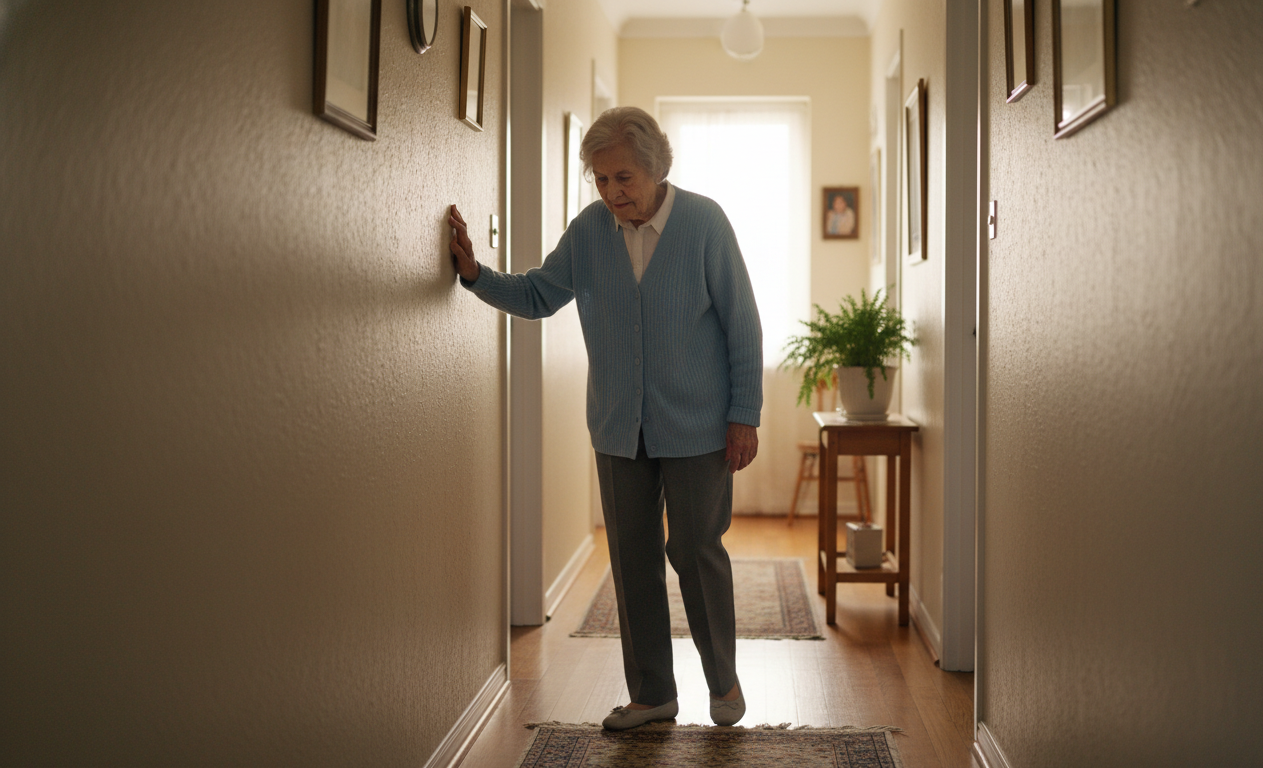
Turning around seems simple, but it is actually one of the most demanding balance movements the body performs. During a turn, the brain must quickly process information from the eyes, inner ear, muscles, and joints while the body shifts direction.
As people age, these systems may not respond as smoothly as they once did. That is why many seniors feel steady walking in a straight line but suddenly feel unstable when pivoting or turning quickly.
The body systems responsible for balance
Several body systems work together to keep a person upright and stable:
- The vestibular system inside the inner ear detects head movement and position.
- Vision helps track surroundings and maintain orientation.
- Leg and core muscles control posture and movement.
- The brain coordinates reactions and balance corrections.
If one or more of these systems slows down, balance problems can appear during turning movements.
Why walking straight may feel easier than turning
Walking forward follows a predictable movement pattern. The body keeps steady momentum, and the eyes stay focused ahead.
Turning changes everything quickly. The head rotates, weight shifts sideways, and the feet must reposition rapidly to avoid losing balance. Older adults often need more time to process those adjustments.
Why turning challenges balance more than straight walking
Turning places higher demands on coordination and stability. Even small timing delays can create wobbling or dizziness.
Common reasons include:
- slower reaction speed
- weaker leg muscles
- reduced ankle stability
- dizziness triggered by head movement
- difficulty controlling body rotation
Common situations where seniors notice imbalance
Many older adults first notice balance problems during everyday tasks like:
- turning in the kitchen
- getting out of bed
- pivoting in the bathroom
- carrying groceries while turning
- changing direction in crowded areas
These situations often require quick body adjustments, which can increase fall risk in seniors with poor balance.
Why turning around becomes difficult for many seniors
Turning around seems simple, but it is actually one of the most demanding balance movements the body performs. During a turn, the brain must quickly process information from the eyes, inner ear, muscles, and joints while the body shifts direction.
As people age, these systems may not respond as smoothly as they once did. That is why many seniors feel steady walking in a straight line but suddenly feel unstable when pivoting or turning quickly.
The body systems responsible for balance
Several body systems work together to keep a person upright and stable:
- The vestibular system inside the inner ear detects head movement and position.
- Vision helps track surroundings and maintain orientation.
- Leg and core muscles control posture and movement.
- The brain coordinates reactions and balance corrections.
If one or more of these systems slows down, balance problems can appear during turning movements.
Why walking straight may feel easier than turning
Walking forward follows a predictable movement pattern. The body keeps steady momentum, and the eyes stay focused ahead.
Turning changes everything quickly. The head rotates, weight shifts sideways, and the feet must reposition rapidly to avoid losing balance. Older adults often need more time to process those adjustments.
Why turning challenges balance more than straight walking
Turning places higher demands on coordination and stability. Even small timing delays can create wobbling or dizziness.
Common reasons include:
- slower reaction speed
- weaker leg muscles
- reduced ankle stability
- dizziness triggered by head movement
- difficulty controlling body rotation
Common situations where seniors notice imbalance
Many older adults first notice balance problems during everyday tasks like:
- turning in the kitchen
- getting out of bed
- pivoting in the bathroom
- carrying groceries while turning
- changing direction in crowded areas
These situations often require quick body adjustments, which can increase fall risk in seniors with poor balance.
Why some seniors feel dizzy specifically when turning their head or body
Some seniors feel stable while sitting or walking straight but suddenly become dizzy when they turn their head or body. This often happens because the balance system inside the inner ear becomes more sensitive or less coordinated with age.
The dizziness may feel mild at first, but repeated episodes can increase fear of falling and reduce confidence during daily movement.
How the vestibular system reacts to head movement
The vestibular system inside the inner ear helps the brain understand movement and position. When the head turns, tiny sensors inside the ear send signals to help maintain balance and stable vision.
If these signals become disrupted, the brain may struggle to process movement correctly. This can cause dizziness, spinning sensations, or instability.
Why quick turns can trigger dizziness
Fast turning movements create rapid head motion that challenges the balance system. Older adults may not adjust as quickly, especially if they already have vestibular weakness or inner ear problems.
Many seniors notice symptoms when:
- turning quickly in the kitchen
- looking over the shoulder
- getting out of bed
- turning while walking
The difference between vertigo and general imbalance
Vertigo usually feels like spinning or motion, even when standing still. General imbalance feels more like wobbling, drifting, or loss of stability without the spinning sensation.
Some seniors experience both at the same time.
Why some seniors feel delayed balance correction after turning
After turning, the brain and muscles must quickly stabilize the body. Aging can slow this response, causing delayed correction and temporary unsteadiness.
This is one reason older adults may feel off-balance for a few seconds after pivoting or changing direction.
Common causes of balance problems in elderly adults when turning around
Balance problems in older adults can happen for many reasons. In many cases, several small issues combine to make turning movements more difficult and less stable.
Some causes develop gradually with aging, while others are linked to medical conditions, medications, or inner ear problems. Understanding the cause is important because the right treatment often depends on what is affecting the balance system.
Inner ear and vestibular disorders
The inner ear plays a major role in balance. It helps the brain detect movement, direction, and head position.
Conditions like benign paroxysmal positional vertigo (BPPV) can trigger sudden dizziness during turning or head movement. Vestibular dysfunction may also cause drifting, wobbling, or motion sensitivity while walking.
Many seniors notice symptoms when:
- rolling in bed
- turning too quickly
- looking upward
- pivoting while standing
Muscle weakness and reduced leg strength
Balance depends heavily on strong legs, hips, ankles, and core muscles. As muscle strength decreases with age, the body may struggle to stabilize during quick movements.
Weakness can make it harder to:
- recover from a stumble
- control turning speed
- shift weight safely
- maintain posture during pivoting
Reduced ankle stability is especially common in seniors with balance problems.
Age-related vision changes
Vision helps the brain understand body position and movement. Aging eyes may have trouble tracking motion or adjusting to changing environments.
Poor lighting, reduced depth perception, and blurry vision can increase instability while turning around or walking through crowded areas.
Medication side effects and dizziness
Certain medications may affect balance and coordination. Blood pressure medications, sleep aids, sedatives, and some anxiety medications can increase dizziness or slow reaction time.
The risk becomes higher when multiple medications interact together.
Neurological and medical conditions
Some health conditions directly affect walking and balance control.
Common examples include:
- Parkinson’s disease
- peripheral neuropathy
- stroke history
- arthritis
- diabetes-related nerve problems
These conditions can slow movement, reduce coordination, and make turning feel unsafe or unstable.
For many seniors in Salem, Oregon, balance therapy and vestibular rehabilitation can help improve stability and reduce fall risk even when chronic conditions are involved.
Warning signs that balance problems may be getting worse
Balance problems often develop slowly, which makes them easy to overlook at first. Many seniors adapt their movements without realizing their stability is declining.
Family members are often the first to notice small changes in walking, turning, or daily activity. Paying attention to these warning signs early may help reduce the risk of serious falls later.
Early warning signs families often notice first
Small balance changes can appear during routine activities.
Common warning signs include:
- holding onto furniture while walking
- hesitating before turning
- shuffling steps
- walking more slowly than usual
- needing extra support on stairs
These behaviors may signal reduced confidence or early balance dysfunction.
What caregivers should watch for at home
Caregivers may notice emotional and behavioral changes before seniors openly discuss dizziness or instability.
Watch for signs like:
- avoiding errands or social outings
- fear during movement
- reluctance to walk on uneven surfaces
- sitting more often during daily tasks
- increased dependence on others
These changes sometimes happen because seniors fear falling again after a near-fall experience.
Signs the problem may require professional evaluation
Some symptoms should not be ignored, especially if they are becoming more frequent.
Important warning signs include:
- repeated stumbling
- sudden dizziness while turning
- drifting while walking
- near-falls
- trouble turning the head while walking
- needing walls or furniture for support
These symptoms may point to vestibular problems, muscle weakness, neurological conditions, or fall-risk issues.
The emotional impact of fear of falling
Fear of falling can quietly affect quality of life. Some seniors begin limiting movement to avoid feeling unstable.
Less movement often leads to weaker muscles, increased stiffness, and worsening balance over time. This creates a cycle that can reduce independence and confidence.
Why balance problems in seniors increase fall risk
Falls are one of the biggest health risks linked to balance problems in older adults. Many falls happen during turning movements because the body must quickly adjust direction, posture, and weight distribution at the same time.
Even a brief loss of stability can lead to a dangerous stumble or sudden fall.
Why falls often happen during turning movements
Turning requires precise coordination between the feet, legs, eyes, and inner ear. If one part of the balance system reacts too slowly, the body may lose alignment during the movement.
Common reasons falls happen during turning include:
- delayed reaction timing
- weak leg muscles
- poor foot placement
- dizziness during head movement
- difficulty controlling body rotation
Quick turns in tight spaces can increase the risk even more.
How reduced confidence changes the way seniors walk
Many seniors change the way they move after experiencing dizziness or a near-fall. They may take smaller steps, move stiffly, or turn very cautiously.
Ironically, overcorrecting movement can sometimes reduce natural balance control and increase instability.
Common changes include:
- slower walking speed
- stiff posture
- shorter steps
- wide turning movements
- hesitation during movement
Common injuries linked to senior falls
Falls can cause serious injuries that affect long-term independence and mobility.
Common injuries include:
- hip fractures
- wrist injuries
- head trauma
- shoulder injuries
- back pain after falling
Recovery can become more difficult with age, especially after long periods of reduced activity.
How fear of falling creates a cycle of worsening balance
After a fall or near-fall, some seniors begin avoiding movement altogether. Less activity weakens muscles and reduces coordination over time.
This often creates a cycle where reduced movement leads to poorer balance, which then increases fear and fall risk even further.
Balance exercises for elderly adults struggling with turning and dizziness
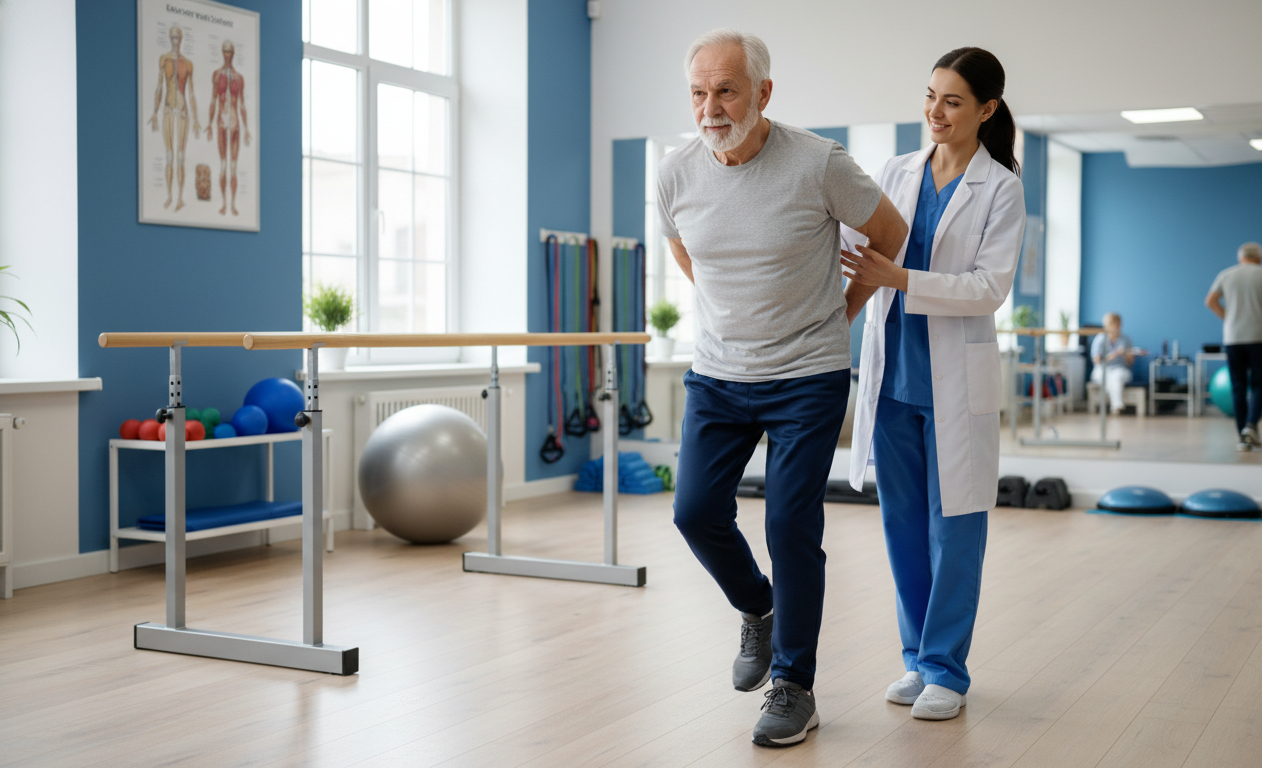
Balance exercises can help seniors improve stability, coordination, and confidence during daily movement. The goal is not just to strengthen muscles, but also to train the body to respond more safely during turning and directional changes.
Exercises should always start slowly and be adjusted to the person’s comfort and ability level.
Simple at-home balance exercises for seniors
Basic balance exercises can help improve posture control and lower-body stability.
Helpful beginner exercises include:
- Sit-to-stand practice from a sturdy chair
- Heel-to-toe walking along a countertop
- Gentle side-to-side weight shifting
- Standing with feet together while holding support
- Supported single-leg balance for a few seconds
These exercises help the body react more efficiently during walking and turning movements.
Turning and pivot training exercises
Many seniors need specific practice with turning because straight walking and pivoting challenge the body differently.
Useful turning exercises include:
- slow controlled turns in place
- clock-step drills
- stepping in different directions
- practicing wide turns before tighter turns
- controlled pivot training with support nearby
Rushing through turns often increases dizziness and instability. Slower movement usually improves control and confidence.
Vestibular exercises for dizziness when turning
Vestibular exercises help retrain the inner ear and brain to process movement more effectively. These exercises are commonly used in vestibular rehabilitation programs for seniors with dizziness or motion sensitivity.
Common vestibular exercises include:
- gaze stabilization drills
- turning the head slowly while focusing on an object
- visual tracking exercises
- head movement coordination practice
These exercises may feel challenging at first, but gradual repetition often improves tolerance to movement.
Safety tips before starting balance exercises
Safety should always come first during balance training. Seniors should avoid exercises that feel unsafe or create severe dizziness.
Important safety tips include:
- use a stable chair or countertop for support
- wear supportive non-slip shoes
- exercise in a clutter-free area
- stop if severe dizziness occurs
- have supervision nearby if balance is poor
For seniors with ongoing dizziness or repeated near-falls, supervised balance therapy may be safer and more effective than exercising alone at home.
How physical therapy helps elderly adults with balance problems
Physical therapy can help seniors improve stability, reduce dizziness, and move more confidently during daily activities. Many older adults assume balance problems are simply part of aging, but targeted therapy often improves movement and lowers fall risk.
Treatment plans are usually personalized based on the person’s symptoms, strength, walking pattern, and balance challenges.
What happens during a balance evaluation
A physical therapist begins by identifying the factors contributing to instability. The evaluation helps determine whether the issue is related to muscle weakness, inner ear dysfunction, walking mechanics, or multiple causes combined.
A balance evaluation may include:
- walking and gait assessment
- turning and pivot testing
- vestibular screening
- leg strength testing
- posture and coordination checks
- fall-risk evaluation
These assessments help guide a safer and more effective treatment plan.
Vestibular rehabilitation therapy for seniors
Vestibular rehabilitation focuses on retraining the inner ear and brain to respond more effectively to movement. This type of therapy is especially helpful for seniors who feel dizzy when turning their head or changing direction.
Treatment may include:
- gaze stabilization exercises
- controlled head movement drills
- turning practice
- visual tracking exercises
- balance retraining activities
Many seniors gradually feel more stable as the brain adapts to movement more efficiently.
Fall prevention therapy and gait training
Physical therapy also helps improve walking mechanics and overall movement confidence. Seniors often learn safer ways to turn, pivot, and recover from minor balance loss before it leads to a fall.
Treatment may focus on:
- strengthening hips and legs
- improving posture
- increasing reaction speed
- practicing directional changes
- reducing shuffling gait patterns
When seniors in Salem, Oregon should seek professional help
Seniors should consider professional balance therapy if they experience:
- repeated near-falls
- ongoing dizziness
- difficulty turning safely
- instability while walking
- reduced confidence during movement
Many older adults in Salem, Oregon use vestibular rehabilitation and fall prevention therapy to improve safety, mobility, and independence before balance problems become more serious.
Can balance problems in elderly adults improve with therapy?
Many seniors assume balance problems will continue getting worse with age, but that is not always true. In many cases, therapy and balance training can improve stability, reduce dizziness, and help older adults move with more confidence.
Improvement often depends on the cause of the balance problem, overall health, and how consistently treatment is followed.
How long balance therapy may take
Some seniors notice small improvements within a few sessions, especially if dizziness is related to vestibular dysfunction or muscle weakness. More complex balance problems may take several weeks of steady therapy.
Progress usually happens gradually rather than all at once.
What improvements seniors often notice first
Early improvements are often subtle but meaningful during daily activities.
Many seniors report:
- feeling steadier while walking
- less dizziness during turning
- improved confidence moving around the house
- easier transitions getting out of bed or chairs
- reduced fear of falling
These small changes can make daily life feel safer and less stressful.
Why consistency matters more than age
Regular practice is often more important than age itself. Balance exercises help train the brain, muscles, and inner ear to respond more efficiently during movement.
Skipping exercises frequently may slow progress and reduce long-term improvement.
When early treatment leads to better outcomes
Getting help early may prevent balance problems from becoming more severe. Seniors who start therapy before repeated falls often maintain mobility and independence more successfully.
For many older adults, early vestibular rehabilitation and balance therapy can reduce fall risk and improve quality of life significantly.
Home safety tips to reduce falls in elderly adults with balance problems
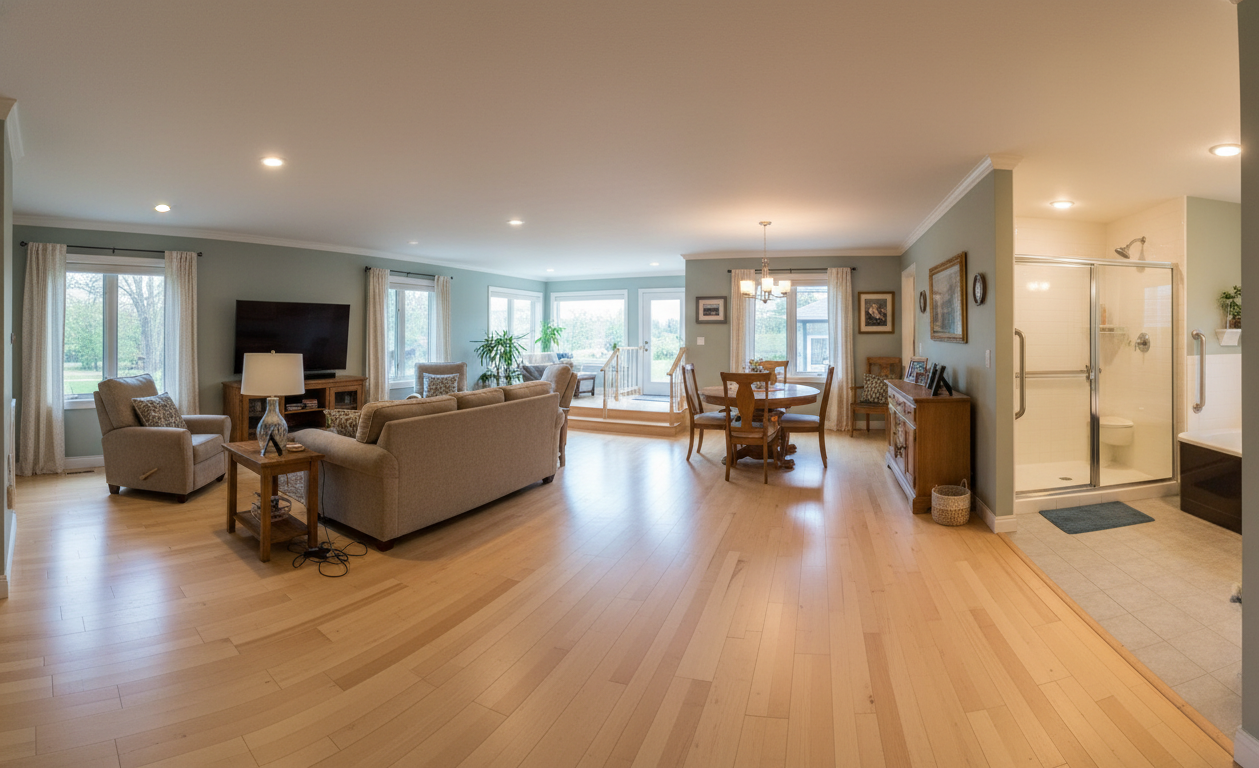
Making small safety changes at home can greatly reduce fall risk for seniors with balance problems. Many falls happen during everyday activities like turning in tight spaces, walking to the bathroom at night, or moving around cluttered areas.
A safer home environment can help older adults feel more confident and stable during daily movement.
Reducing turning hazards inside the home
Tight spaces and obstacles can make turning more difficult for seniors with dizziness or instability.
Helpful changes include:
- removing loose rugs and clutter
- improving lighting in hallways and bathrooms
- keeping walkways clear and wide
- installing grab bars near toilets and showers
- rearranging furniture to allow easier turning
Night lighting is especially important because poor visibility can increase imbalance during nighttime movement.
Helpful mobility aids and footwear
The right support tools may improve stability and reduce strain during walking and turning.
Helpful options include:
- canes or walkers fitted properly
- sturdy handrails on stairs
- non-slip supportive shoes
- shower chairs for bathroom safety
Poor footwear, especially slippery socks or loose sandals, can increase fall risk significantly.
Daily habits that support better balance
Simple daily habits can also help seniors maintain stronger balance and coordination.
Important habits include:
- staying physically active
- drinking enough water
- getting regular vision checks
- reviewing medications with a healthcare provider
- avoiding long periods of inactivity
Many seniors in Salem, Oregon benefit from combining home safety improvements with balance therapy and vestibular rehabilitation to reduce dizziness and improve overall stability.
Common myths about balance problems in elderly adults
Many seniors delay treatment because they believe balance problems are simply part of getting older. While aging can affect stability, persistent dizziness and imbalance should not be ignored.
Understanding the truth behind these common myths may help older adults seek help earlier and reduce fall risk.
“Balance loss is just a normal part of aging”
Some slowing of balance reactions can happen with age, but frequent dizziness, stumbling, or instability is not something seniors should simply accept.
Many balance problems are linked to treatable issues like vestibular dysfunction, muscle weakness, medication side effects, or poor walking mechanics.
“Nothing can improve dizziness in seniors”
This is one of the biggest misconceptions. Many older adults improve with vestibular rehabilitation, balance training, and targeted physical therapy.
Even small improvements in turning stability and walking confidence can lower fall risk and improve daily independence.
“Falls only happen to frail older adults”
Falls can happen to active seniors as well, especially during quick turning movements or sudden balance loss. A person may appear healthy but still have hidden balance deficits.
Early treatment and fall prevention strategies often help seniors stay active and safer for longer.
When dizziness and balance problems in elderly adults may be serious
Some balance problems develop gradually and improve with treatment, but certain symptoms may signal a more serious medical issue. Seniors and caregivers should pay close attention when dizziness appears suddenly or becomes severe.
Ignoring warning signs can increase the risk of falls, injuries, or delayed treatment for underlying conditions.
Symptoms that should never be ignored
Certain symptoms may point to neurological, cardiovascular, or inner ear problems that require prompt medical evaluation.
Warning signs include:
- sudden severe dizziness
- fainting episodes
- double vision
- sudden weakness
- numbness on one side of the body
- difficulty speaking
- severe headaches with balance loss
These symptoms should not be dismissed as normal aging.
When to seek immediate medical attention
Emergency care may be necessary if balance problems appear suddenly or are accompanied by other serious symptoms.
Seek immediate medical attention if a senior experiences:
- sudden falls without explanation
- confusion or disorientation
- chest pain
- stroke warning signs
- inability to walk safely
- sudden worsening of dizziness
Even milder symptoms should be evaluated if they continue getting worse over time. Early treatment often improves recovery and may help prevent serious complications or injuries from falling.
Frequently asked questions about balance problems in elderly adults
Is it normal for seniors to lose balance when turning around?
Mild slowing of balance reactions can happen with aging, but frequent dizziness or instability during turning should not be ignored. Repeated balance loss may be linked to vestibular problems, muscle weakness, medication side effects, or neurological conditions.
Can balance problems in elderly adults improve?
Yes, many seniors improve with balance exercises, vestibular rehabilitation, strength training, and physical therapy. Early treatment often helps reduce dizziness, improve stability, and lower fall risk.
What causes dizziness when turning the head in seniors?
Turning the head quickly can trigger dizziness when the inner ear balance system is not working properly. Conditions like BPPV and vestibular dysfunction commonly cause motion-related dizziness in older adults.
Does physical therapy help elderly balance problems?
Physical therapy often helps seniors improve walking stability, turning control, and reaction timing. Vestibular rehabilitation may also reduce dizziness caused by head movement or inner ear disorders.
What are the best exercises for balance problems in seniors?
Helpful exercises may include:
- sit-to-stand practice
- heel-to-toe walking
- weight shifting drills
- turning exercises
- gaze stabilization exercises
Exercises should match the person’s balance level and medical condition.
How do vestibular problems affect older adults?
Vestibular problems affect the inner ear’s ability to process movement and balance signals correctly. Seniors may feel dizzy, unstable, motion-sensitive, or unsteady while turning, walking, or changing direction.
Many older adults in Salem, Oregon improve with vestibular therapy designed to retrain balance coordination and reduce fall risk.
Topics to read further
Contact HWY PT for expert advice and support
Balance problems can become more serious over time, especially when dizziness and instability begin affecting daily movement. Early treatment may help seniors stay active, independent, and safer during walking and turning activities.
At HWY Physical Therapy Clinic, Dr Raj provides personalized balance therapy and vestibular rehabilitation for older adults in Salem, Oregon. Treatment plans focus on improving stability, reducing dizziness, strengthening walking mechanics, and lowering fall risk.
Seniors experiencing repeated near-falls, dizziness while turning, or reduced confidence during movement may benefit from a professional balance evaluation before symptoms worsen.
HWY Physical Therapy Clinic
Center 50+
2615 Portland Rd NE
Salem, OR 97301
Call: 971-202-1979
Whether the goal is improving mobility, preventing falls, or feeling safer at home, early balance therapy can make daily movement more comfortable and confident.
.png)