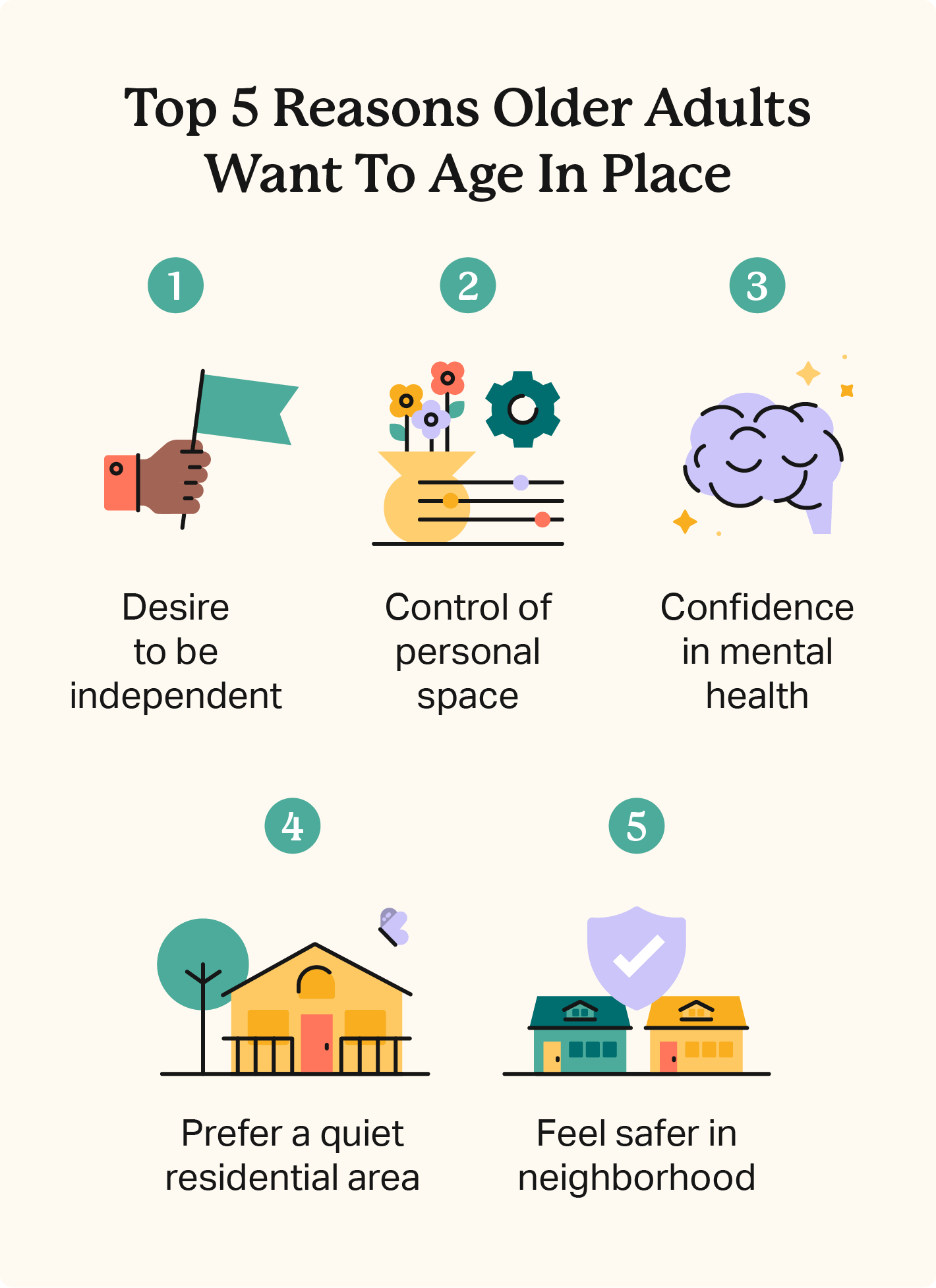
As a physical therapist dedicated to enhancing the well-being of older adults, I understand the profound desire many have to remain in their own homes as they age. This concept, known as “Aging in Place,” is about more than just staying put; it’s about creating a supportive environment that adapts to changing needs, ensuring safety, comfort, and independence.
Understanding Aging in Place
Aging in Place refers to the ability of individuals to live in their own homes and communities safely, independently, and comfortably, regardless of age or ability level. It’s a proactive approach that involves assessing and modifying one’s living environment to accommodate evolving physical and cognitive abilities.
The Growing Trend
The preference for aging in place is more than a personal choice; it’s a national trend. According to a 2024 AARP report, 75% of adults aged 50 and older wish to remain in their current homes as they age, and 73% hope to stay within their communities. This desire underscores the importance of preparing our homes and communities to support this choice.
Why Aging in Place Matters
Preserving Independence and Identity
Remaining at home allows older adults to maintain control over their routines and surroundings. This autonomy contributes to a strong sense of dignity and self-worth.
Emotional Comfort and Familiarity
Familiar settings are especially important for seniors with cognitive impairments like dementia or Alzheimer’s. A known environment reduces confusion, anxiety, and agitation.
Health Benefits
Studies show that aging in place can lead to:
• Lower rates of depression
• Reduced risk of institutionalization
• Better health outcomes through personalized care and fall prevention
Cost Savings
Aging in place can be more cost-effective than long-term care facilities. While modifications and in-home support may require an upfront investment, these often cost significantly less than assisted living or nursing home care, which can exceed $4,500–$8,000/month.
The 7 Dimensions of Quality of Life in Aging in Place
When planning for aging in place, consider the whole person, not just their medical needs. Use the 7 dimensions of quality of life as a framework:
1. Physical Well-being
This includes mobility, strength, endurance, and the ability to perform daily tasks. A physical therapist can assess risk factors for falls and design a custom exercise plan to maintain or improve function.
Ideas to support this:
• Weekly strength and balance routines
• Physical therapy after illness or hospitalization
• Use of assistive devices (e.g., walkers, grab bars)
2. Emotional Well-being
Seniors often face loneliness, grief, and anxiety. These emotional stressors can lead to isolation and depression if not addressed.
Ideas to support this:
• Encouraging journaling or memory boxes
• Involving a geriatric counselor
• Incorporating music therapy or faith-based practices
3. Intellectual Well-being
Cognitive health is key to decision-making, memory, and engagement. Keeping the mind active helps delay cognitive decline.
Ideas to support this:
• Regular reading, puzzles, or games
• Tech classes to learn email or video calling
• Enroll in local senior center workshops or lifelong learning programs
4. Social Well-being
Human connection is a basic need. Aging adults benefit immensely from regular social interaction with friends, family, and community.
Ideas to support this:
• Weekly family calls or visits
• Community programs like those at Center 50+ in Salem, Oregon
• Friendly visitor or senior companion programs
5. Spiritual Well-being
Spirituality offers comfort, purpose, and connection, especially in later stages of life.
Ideas to support this:
• Access to faith communities or clergy
• Quiet reflection or meditation spaces at home
• Books or podcasts that explore meaning and legacy
6. Environmental Well-being
This focuses on creating a safe, accessible, and welcoming home. Even small adjustments can make a big impact.
Ideas to support this:
• Installing brighter lighting, removing tripping hazards
• Adding a walk-in shower or stairlift
• Keeping frequently used items within easy reach
7. Occupational Well-being
This relates to meaningful activity—whether hobbies, volunteer work, or creative expression.
Ideas to support this:
• Gardening, painting, or woodworking
• Mentoring younger generations
• Participating in local library or civic groups
Key Considerations for Aging in Place
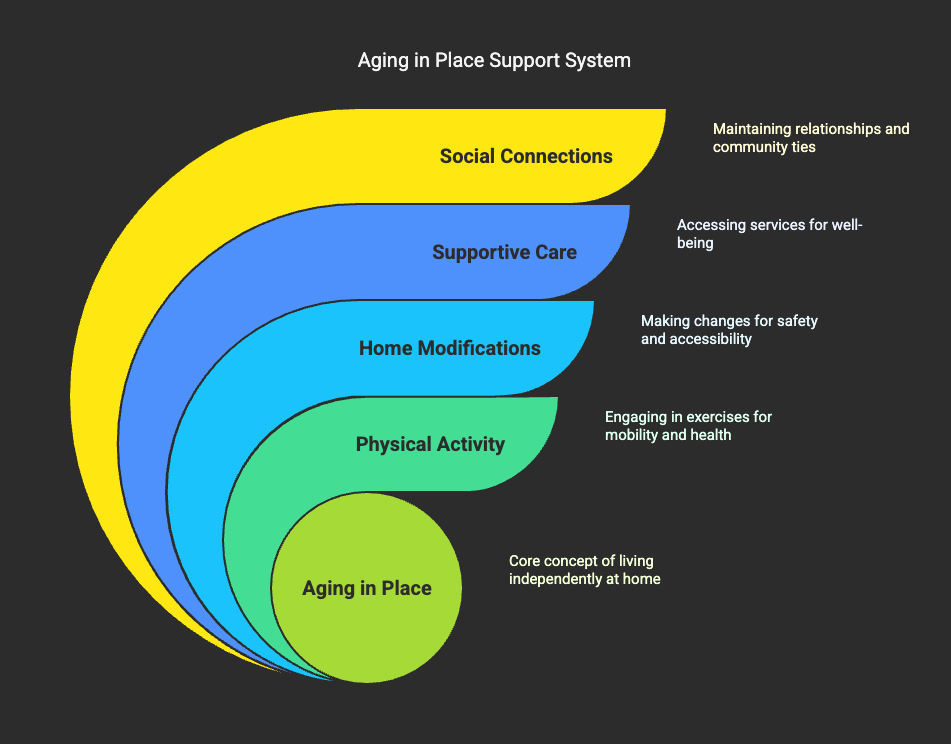
Step-by-Step Guide to Planning for Aging in Place
Step 1: Start the Conversation Early
Begin talking with your parents before a health crisis occurs. Ask about their preferences, fears, and goals. Listen openly and validate their feelings.
Sample questions to ask:
• What does “home” mean to you?
• What worries you most about getting older?
• What kind of help would make daily life easier?
Step 2: Conduct a Home Safety Assessment
Enlist a physical therapist or occupational therapist to perform a home safety evaluation. They will identify risks such as:
• Slippery bathroom floors
• Inaccessible kitchens
• Poor lighting or lack of handrails
• Trip hazards like rugs and cords
Use this information to prioritize modifications.
Step 3: Create a Health and Wellness Plan
Work with healthcare providers to understand your parent’s health conditions and how they might evolve. Ask:
• How will these conditions affect mobility?
• Are there exercises or therapies to maintain strength and balance?
• Is home physical therapy available after hospitalizations?
Step 4: Modify the Home Environment
Make thoughtful, future-focused changes such as:
• Lever-style door handles
• Walk-in tubs or curb-less showers
• Raised toilet seats
• Non-slip flooring
• Emergency alert systems
• Bedroom relocation to the main floor
These updates support both safety and comfort.
Step 5: Build a Support Network
Aging in place doesn’t mean doing it alone. Surround your loved one with a team that includes:
• A primary care physician
• A physical therapist or occupational therapist
• A home health agency
• A geriatric care manager
• Neighbors, friends, and faith leaders
Step 6: Plan for Emergencies
Prepare for the unexpected:
• Keep a list of emergency contacts by the phone
• Post medication instructions and health history in an accessible place
• Install smoke detectors, carbon monoxide alarms, and security systems
• Consider a medical alert service with fall detection
Step 7: Address Transportation Needs
Loss of driving ability can create isolation. Explore:
• Ride services for seniors (like NEMT)
• Public transportation training
• Community volunteer driver programs
• Family carpool calendars
Step 8: Monitor, Reassess, and Adapt
Aging in place is not a “set it and forget it” plan. Revisit your strategy regularly:
• Check in monthly or quarterly
• Look for changes in mobility, mood, memory, or hygiene
• Adjust care and home setup as needed
What Statistics Tell Us About Aging in Place
📊 According to AARP (2024):
• 75% of adults 50+ want to stay in their current homes
• Only 10% of U.S. homes are aging-ready (grab bars, step-free entry)
• 1 in 4 adults aged 65+ experiences a fall each year, many of which happen at home
📊 According to the CDC:
• Falls are the leading cause of injury-related deaths among seniors
• Exercise and home modifications reduce fall risk by up to 40%
Practical Steps to Begin
1. Assess Your Home: Conduct a thorough evaluation to identify necessary modifications.
2. Consult Professionals: Engage with physical therapists, occupational therapists, and certified aging-in-place specialists for personalized recommendations.
3. Explore Funding Options: Research grants, loans, and insurance coverage that may offset modification costs.
4. Stay Active and Engaged: Incorporate regular physical activity and social interactions into your routine to maintain health and well-being.
Conclusion
Aging in place is a viable and desirable option for many older adults, offering the comfort of familiar surroundings and the preservation of independence. By proactively addressing home modifications, health maintenance, and social engagement, individuals can create a safe and supportive environment that adapts to their changing needs. As a physical therapist, I encourage you to take these steps to ensure that your home remains a haven of comfort and safety in your golden years.
.png)